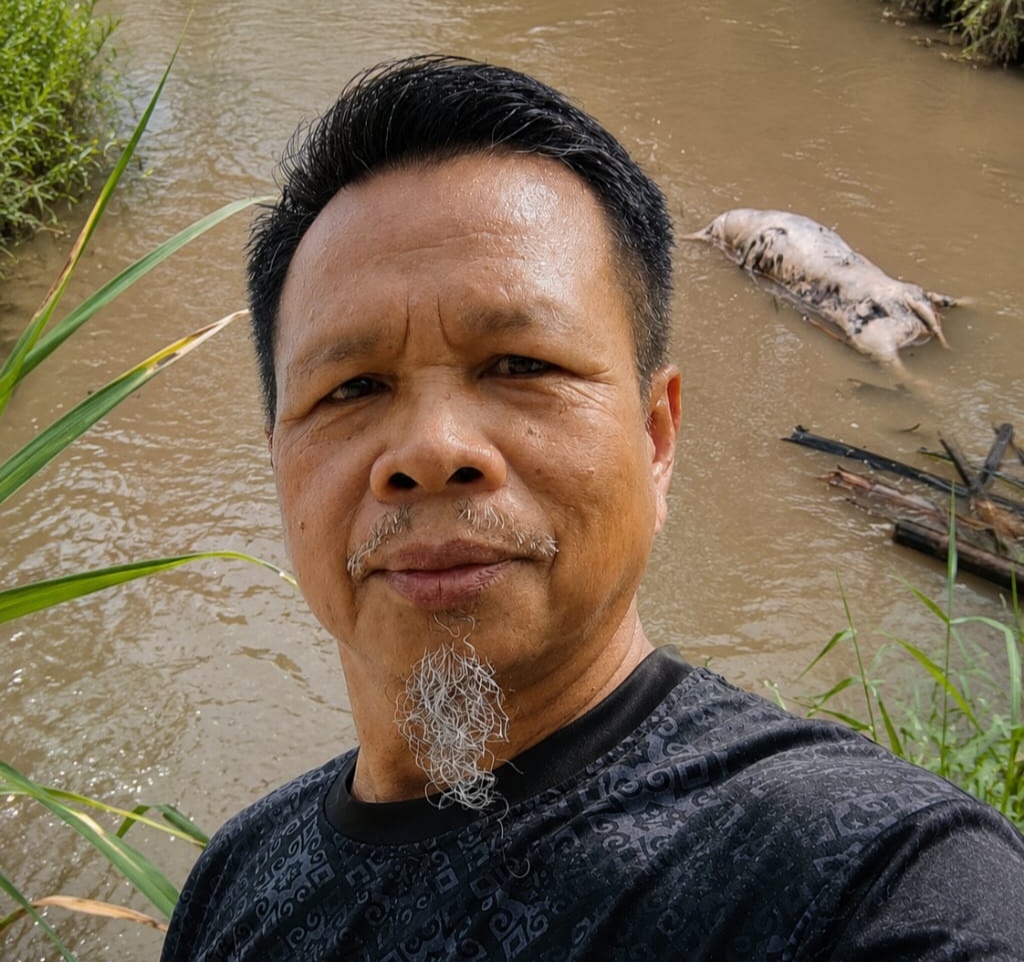
TUARAN: Dumping livestock remains into rivers can no longer be dismissed as an isolated or trivial matter, said Gundohing Simon Malubi, Chairman of the Sabah River Anti-Pollution Public Awareness Campaign.
Instead, he emphasized, it represents a significant danger to public health, food safety, and the integrity of Sabah’s water supplies.
His statement follows reports of livestock carcasses seen floating in river waters—sources believed to be used for farming and daily community needs.
Local observers and environmental advocates say such incidents reveal that some individuals or groups continue to place financial gain above the protection of vital water resources.
“Rivers are not dumping grounds, nor should they be used to dispose of dead animals,” Simon stated.
Doing so doesn’t just degrade water quality—it risks spreading dangerous bacteria, elevating ammonia levels, and endangering the health of people, livestock, and crops irrigated with contaminated water.
He stressed that the consequences of polluted rivers fall hardest on everyday citizens, particularly small-scale farmers, fruit growers, fishermen, and rural residents who rely directly on these water sources.
Sabah cannot seriously discuss food security or boosting agricultural output, he added, while ignoring the contamination of its waterways.
“Government leaders speak of higher yields, yet allow agricultural water sources to remain vulnerable to pollution,” he noted.
“How can farmers grow safe food when their rivers are tainted with animal remains and sewage?”
In this regard, he urged the government and enforcement agencies to take more aggressive action, including:
-immediate investigation into the cause of pollution,
-periodic river monitoring,
-water quality laboratory tests,
-prosecution against the perpetrator,
-and harsher penalties for those who pollute the river.
He said that light actions would only cause the same mistake to continue recurring because some parties see small fines as “operating costs.”
“Water security is not a small issue. Water
is the source of life for the people, agriculture, and the future of Sabah.
“If the river continues to be polluted, the people will ultimately bear the consequences — in terms of health, economy, and food security,” he said.
Simon also suggested that the government consider implementing a Clean and Safe Water Source Certification system for agricultural areas to protect consumers and help farmers obtain certifications such as MYGAP and MyOrganic.