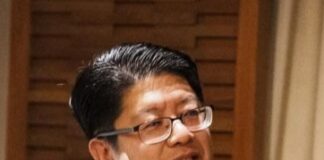
By DANIEL JOHN JAMBUN, President Borneo’s Plight in Malaysia Foundation (BoPiMaFo)
KOTA KINABALU: Borneo’s Plight in Malaysia Foundation (BoPiMaFo) welcomes the proposal by the Premier of Sarawak, Abang Jo, that Sabah and Sarawak should receive 70% of any carbon tax revenue generated from the forests and carbon resources of the two Borneo States.
The proposal is an important acknowledgment that the forests of Sabah and Sarawak are valuable natural assets whose environmental services benefit not only Malaysia but the global community.
However, BoPiMaFo respectfully submits that the constitutional and policy starting point should not be 70%, but 100%.
The forests, land and natural resources of Sabah and Sarawak are State resources. If carbon tax revenue is generated because of those resources, the logical and equitable principle is that such revenue should belong to the respective States in the first instance.
The Federal Government may have legitimate responsibilities in administering national taxation, climate reporting and international obligations. Those functions can be fairly compensated through an agreed contribution from Sabah and Sarawak. Such an arrangement would respect both the constitutional position of the States and the practical needs of the Federation.
Negotiations should therefore begin from the principle that Sabah and Sarawak retain 100% of the revenue generated from their own carbon resources. If, after good-faith negotiations, the States agree to contribute a small percentage to the Federal Government for administrative and national purposes, that would represent a cooperative federal arrangement rather than a surrender of State ownership.
As the saying goes, if you negotiate from 70%, you may end up with 50%. If you negotiate from 100%, retaining 95% would still represent a fair and meaningful outcome for the people of Sabah and Sarawak.
BoPiMaFo believes that this principle should apply not only to carbon revenue but also more broadly to revenues derived from the natural resources of Sabah and Sarawak, consistent with constitutional federalism, fiscal fairness and the original understanding that the Federation should respect the rights and interests of its constituent States.
The time has come to move beyond asking for a larger share of State resources. The discussion should instead begin by recognising that those resources belong to Sabah and Sarawak, with any contribution to the Federation being based on mutual agreement and constitutional principle.