Daniel John Jambun, President Borneo’s Plight in Malaysia Foundation (BoPiMaFo)
KOTA KINABALU: Borneo’s Plight in Malaysia Foundation (BoPiMaFo) calls upon the GRS-led Sabah Government to finally disclose the full history, present status and benefits arising from the enormous areas of Sabah land placed under FELDA development.
We want to make one point absolutely clear from the beginning.
We are not accusing the present GRS Government of making the original decision in 1979.
The historical record shows that on 4 December 1979, the Sabah Government entered into an agreement with the Federal Land Development Authority (FELDA) under which approximately 247,000 acres were to be developed with cocoa and oil palm over ten years.
The stated purpose was to open settlement schemes, eradicate poverty and improve the living standards of Sabah’s rural population.
The Chief Minister of Sabah at that time was Datuk Harris Mohd Salleh. Official Sabah records confirm that Harris was Chief Minister in 1979.
That is history.
Our question today is directed at GRS:
YOU DID NOT MAKE THE 1979 DECISION — BUT YOU GOVERN SABAH TODAY. WHAT ARE YOU DOING ABOUT IT?
The present State Government cannot simply say:
“That happened under a previous government.”
Hundreds of thousands of acres of Sabah land do not disappear from the responsibility of the State Government merely because governments change.
The land remains in Sabah.
The titles and leases should be recorded in Sabah.
The Lands and Surveys Department remains a Sabah State authority.
The original agreements, subsequent amendments, title conditions, maps and land records should therefore be available to the Government of Sabah.
So why have Sabahans not been given the complete picture?
247,000 ACRES WAS ONLY THE BEGINNING — WHAT IS THE FINAL FIGURE?
The historical report records approximately 247,000 acres under the original 1979 arrangement.
But Sabahans have repeatedly heard that FELDA’s landholdings and development footprint in eastern Sabah subsequently became much larger.
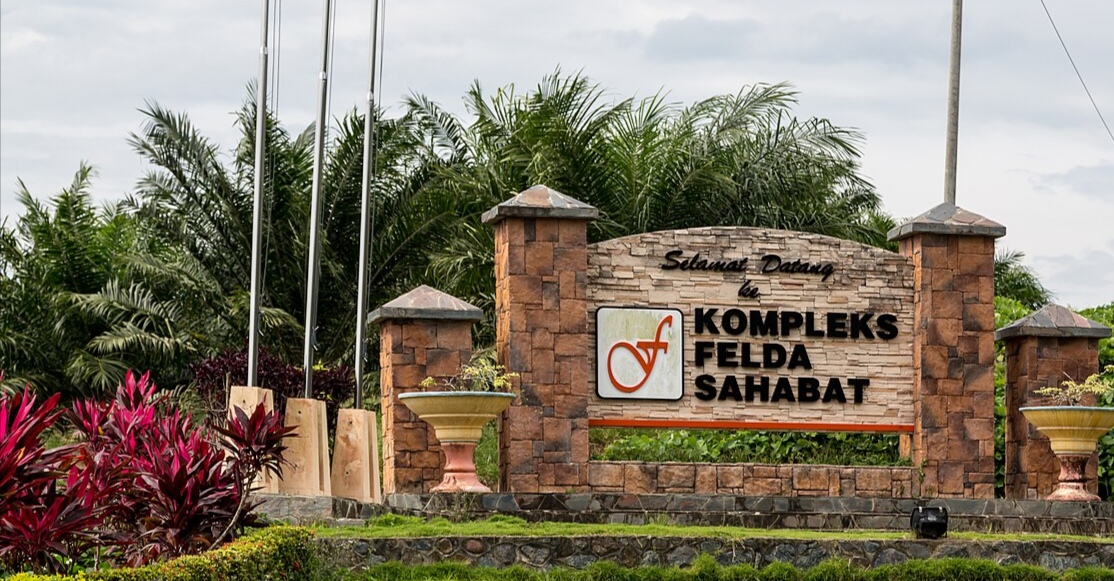
FELDA’s own current records show multiple Sabah schemes, including FELDA Sahabat 1, 2, 3, 4/5 and FELDA Umas 1, 2/3 and 4.
Therefore, GRS should answer one simple question:
WHAT IS THE TOTAL ACREAGE OF SABAH LAND CURRENTLY HELD, LEASED, OCCUPIED, MANAGED OR CONTROLLED BY FELDA, FGV OR THEIR RELATED ENTITIES?
Sabahans should not have to speculate.
The State Government has the land records.
Publish the figure.
WHAT WAS SABAH PROMISED?
FELDA itself states that its historical purpose was land development and resettlement, with poverty eradication through agricultural development at the centre of its mission.
That makes the original Sabah arrangement especially important.
If Sabah surrendered access to enormous areas of State land for a settlement and poverty-eradication programme, then Sabahans are entitled to know:
How many Sabahans were supposed to become settlers?
How much land was each settler supposed to receive?
How many Sabahans actually received individual titles?
How many Sabah families ultimately became permanent landowners?
These are not minor administrative details.
They go directly to whether the original purpose of giving access to such enormous areas of Sabah land was fulfilled.
HOW MANY SETTLERS WERE SABAHANS?
GRS should also publish the demographic composition of the original FELDA settlement schemes in Sabah.
We ask:
How many settlers were Sabah-born?
How many came from Peninsular Malaysia?
From which states did they originate?
How much land was allocated to each group?
How many original settlers or their descendants eventually received individual titles?
This information should not be controversial.
If the scheme benefited Sabahans overwhelmingly, publish the figures and demonstrate it.
If substantial numbers of settlers were brought from outside Sabah, then Sabahans are equally entitled to know the extent of that policy and who authorised it.
HOW DID A POVERTY-ERADICATION PROJECT BECOME A COMMERCIAL PLANTATION EMPIRE?
There is another question that cannot be avoided.
The original justification recorded in 1979 was development, settlement, poverty eradication and improvement of rural living standards.
Over subsequent decades, however, FELDA developed substantial commercial operations and corporate entities, including FELDA Holdings, FELDA Plantations and FGV. FELDA itself describes this corporate evolution in its institutional history.
There is nothing inherently wrong with commercial development.
But where Sabah State land was originally provided for a defined public purpose, the people are entitled to know whether that purpose remained intact.
Therefore:
HOW MUCH OF THE LAND BECAME SETTLER LAND — AND HOW MUCH BECAME COMMERCIAL ESTATE LAND?
That distinction must be disclosed.
SABAHANS ALSO WANT TO KNOW: WHERE DID THE MONEY GO?
These lands have produced agricultural commodities for decades.
So BoPiMaFo asks the GRS Government to table:
The total land premium paid to Sabah;
Annual rent or lease payments;
Quit rent and land revenue;
State sales tax or other State-derived revenue where applicable;
Payments arising from timber clearance or land development, where applicable;
Dividends or other direct financial benefits received by Sabah entities;
And the cumulative economic return to the State from the FELDA land arrangement since 1979.
Then Sabahans can answer the most fundamental economic question:
SABAH PROVIDED THE LAND — WHAT DID SABAH RECEIVE IN RETURN?
DO NOT TELL US ONLY ABOUT DEVELOPMENT — SHOW US THE BALANCE SHEET
Roads, employment, schools and economic activities are benefits.
Nobody disputes that.
But they do not answer the ownership question.
If hundreds of thousands of acres of valuable Sabah land were committed for generations, then the State Government must show both sides of the transaction:
WHAT SABAH GAVE
versus
WHAT SABAH RECEIVED.
Only then can Sabahans judge whether the arrangement represented fair value to the State and its people.
WAS THE ORIGINAL PURPOSE FULFILLED?
BoPiMaFo therefore calls for an independent land and performance audit of the entire FELDA arrangement in Sabah.
The audit should establish:
1. The original acreage committed in 1979.
2. Every subsequent addition, extension or variation.
3. Every title and lease issued.
4. The duration and expiry date of every lease.
5. The original title conditions.
6. The number of settlers contemplated under the agreements.
7. The actual number of settlers placed.
8. Their states or places of origin.
9. The number of Sabahans who received individual land titles.
10. The acreage retained for commercial plantation operations.
11. The total financial return received by Sabah.
12. Whether every title condition and development obligation was fulfilled.
13. Whether any land is unused, underutilised or no longer being used for its original purpose.
14. Whether any land may lawfully revert or be recovered by Sabah.
IF THE CONDITIONS WERE NOT FULFILLED, SABAH MUST EXAMINE RECOVERY
BoPiMaFo is not prejudging the legality of any particular title or lease.
That determination must be made from the actual documents.
But the principle should be straightforward.
If land was granted for a particular purpose and that purpose has been fulfilled according to law, the Government should demonstrate it.
If conditions remain outstanding, if land has ceased to be used for its approved purpose, or if circumstances exist under Sabah law permitting reversion, enforcement or recovery, then the State Government must examine those remedies in the interests of Sabah.
GRS cannot claim to defend Sabah’s rights against the Federal Government while refusing to investigate one of the largest historical transfers of control over Sabah land to a federal agency.
CHIEF MINISTER, WE ARE NOT ASKING YOU TO DEFEND 1979
This is the central message of this open letter.
Chief Minister Datuk Seri Hajiji Noor, BoPiMaFo is not asking you to defend a decision made before GRS existed.
We are asking you to disclose what your Government knows today.
The historical actors can answer for 1979.
GRS must answer for 2026.
If the original FELDA arrangement was excellent for Sabah, publish the documents and prove it.
If all obligations were honoured, publish the records.
If thousands of Sabahans obtained land, publish the figures.
If Sabah earned substantial revenue, publish the accounts.
If there is nothing questionable about these arrangements, transparency should strengthen FELDA and the Sabah Government rather than weaken them.
FIVE QUESTIONS GRS MUST ANSWER
BoPiMaFo therefore asks the Chief Minister and State Cabinet five simple questions:
1. EXACTLY HOW MANY ACRES?
What is the total acreage of Sabah land ever granted, alienated, leased or otherwise made available to FELDA and its associated entities?
2. HOW MANY SABAHANS RECEIVED LAND?
How many Sabahans ultimately obtained individual agricultural titles as a direct result of these schemes?
3. HOW MANY SETTLERS CAME FROM OUTSIDE SABAH?
Provide the complete breakdown by state or place of origin.
4. HOW MUCH DID SABAH RECEIVE?
What is the cumulative financial return to the Sabah Government from these lands from 1979 until today?
5. WILL GRS PUBLISH THE DOCUMENTS?
Will the Government table in the Sabah State Legislative Assembly:
– the original 1979 agreement;
– every supplementary and subsequent agreement;
– every relevant land title and lease;
– maps showing the original and present boundaries;
– settler numbers and origins;
– individual titles issued;
– revenue received by Sabah; and
– the present ownership, leasehold, operational and expiry status of the land?
YES OR NO?
THIS IS BIGGER THAN FELDA
This issue should also cause Sabahans to ask a much larger question:
HOW MUCH SABAH LAND IS TODAY CONTROLLED BY FEDERAL AGENCIES, GOVERNMENT-LINKED ENTITIES AND LARGE CORPORATIONS OUTSIDE SABAH?
And under what agreements?
For how long?
For whose benefit?
And what has Sabah received?
A comprehensive State land audit may ultimately be necessary.
Sabah cannot intelligently plan its economic future if Sabahans themselves do not know who controls some of the largest areas of their own land.
SABAH’S LAND IS AN INHERITANCE, NOT AN UNLIMITED GIVEAWAY
Governments come and go.
Chief Ministers come and go.
Political parties come and go.
But land once alienated for 60, 90 or 99 years can affect several generations.
That is why this matter transcends BERJAYA, BN, Warisan, GRS or any particular political party.
It concerns Sabah itself.
We therefore say to the GRS Government:
Do not hide behind history.
Open the files.
Publish the agreements.
Show us the titles.
Show us the settlers.
Show us the money.
Show us whether the promises were fulfilled.
And where Sabah’s land can lawfully be recovered for the benefit of future generations, recover it.
The people are entitled to know.
WHAT DID SABAH GIVE?
WHAT DID FELDA PROMISE?
WHAT DID SABAHANS ACTUALLY RECEIVE?
AND WHAT WILL GRS DO ABOUT IT NOW?