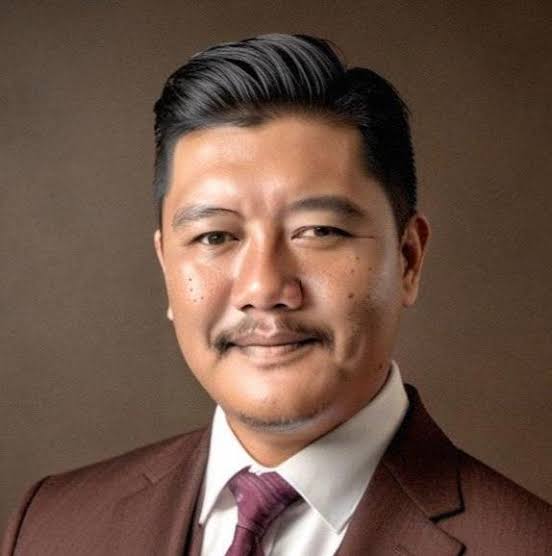
By Remy Majangkim
SANDAKAN — The Majangkim Office (Borneo Fortress) addresses the ongoing public debate surrounding the collective identity of Sabah’s indigenous people.
While entities like the Kadazandusun Cultural Association (KDCA) argue that maintaining “Kadazandusun” as the sole official designation preserves stability, this stance fails to recognize that our current disunity is born out of a stagnant, archaic legal framework—not a lack of sub-ethnic pride.
By continuing to cling to a rigid framework that resists legislative evolution, we are trapping the indigenous sons and daughters of Sabah in an artificial scarcity, forcing our communities to engage in a divisive battle over acronyms.
The Native American Model: Political Power vs. Tribal Pride
Opponents of the term “Momogun” frequently express fear that a singular macro-label will erase or dilute the distinct cultural identities of groups like the Rungus, Murut, Lotud, or Tobilung. This argument collapses under international comparison.
Consider the Native American framework in the United States:
The Macro-Legal Status: “Native American” functions as a broad, sovereign political status before the federal government, granting massive collective bargaining power, land rights, and constitutional protections.
The Micro-Cultural Identity: Holding this macro-status has never erased individual tribal pride. A Navajo remains fiercely Navajo, and a Cherokee remains Cherokee within their territories and homes.
Momogun is our macro-legal umbrella. It is not a cultural blender meant to homogenize our people; it is a sophisticated political shield designed to give all indigenous Sabahans a singular, unshakeable legal status before the law while keeping our distinct sub-ethnic heritage completely intact at the grassroots.
The Stagnant Ordinance and Political Inaction
The dependency on “Kadazandusun” as an all-encompassing legal term masks a glaring constitutional failure. Legally, even the term “Kadazan” is entirely absent from the definition of “Native” in the ancestral Sabah Native Interpretation Ordinance.
This omission forces us to ask a critical, uncomfortable question: Why has no native leader been willing to touch, update, and amend the Native Interpretation Ordinance to this day?
Because our political leadership refuses to modernize this colonial-era legislation, sub-ethnic groups are systematically sidelined.
To gain visibility and state recognition, they are forced to demand their own alphabetical representations, leading to an exhausting “alphabet soup” of shifting acronyms (from KDM to KDMR, KDMRS, and beyond). This constant fracturing is a direct symptom of an outdated law. If the legal framework fails to provide an inclusive umbrella, the people will naturally fragment to protect themselves.
The “Bumiputera” Illusion vs. The Constitutional Reality
To understand the depth of our legal vulnerability, we must contrast our position with the structural protections afforded to others in the federation.
The definition and privileges of a “Malay” are meticulously codified and explicitly protected under Article 160 of the Federal Constitution. It is a rigid, unassailable legal fortress. Conversely, the term “Bumiputera” does not exist as a defined constitutional right within the text of any state or federal constitution.
Instead, “Bumiputera” operates as an administrative policy mechanism—an illusion of inclusivity. We willingly embrace this uncodified label for housing discounts and government contracts, yet we watch as those systemic benefits rarely reach the intended native grassroots of Sabah, flowing instead to a politically dominant race.
Conclusion: Momogun is the Remedy, Not the Poison
Insisting on “Kadazandusun” as our sole macro-label forces a micro-identity to do a macro-legal job. It linguistically represents only two groups while leaving the Murutic and Paitanic families feeling like second-class citizens under someone else’s banner.
Embracing Momogun is not an act of disunity; it is the opposite. It is the practical application of the lessons learned from the Native American struggle. It provides a dignified, ancestral macro-political identity that unites every indigenous group in Sabah into an unbreakable legal bloc.
The Majangkim Office calls upon our leaders to stop fighting over the crumbs of the alphabet soup, confront the systemic stagnation of our native laws, and legally secure the umbrella that truly belongs to all Momogun people.