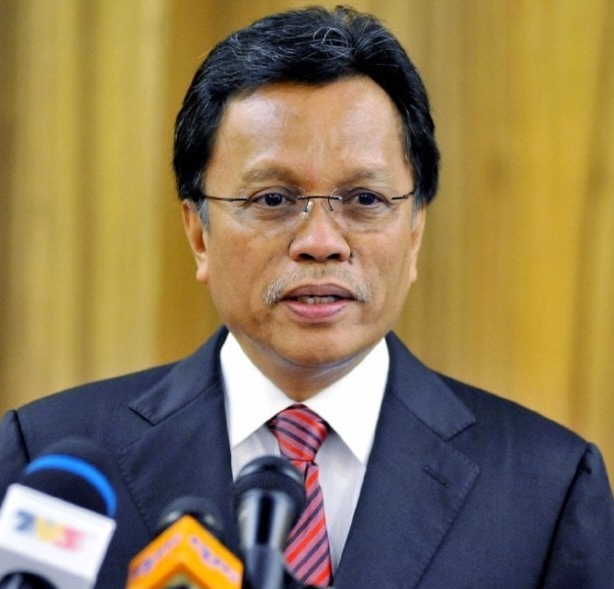
KOTA KINABALU: Parti Warisan president and Opposition Leader, Datuk Seri Mohd Shafie Apdal, has raised concerns over the Sabah government’s decision to convert a RM200 million fixed deposit held with the Sabah Development Bank (SDB) into Redeemable Preference Shares (RPS), questioning whether this amounts to a de facto bailout of the state-owned financial institution.
Addressing reporters during a break in the State Legislative Assembly session, the Senallang assemblyman dismissed the government’s explanation—that the move is purely an accounting adjustment—as unconvincing.
“If SDB is indeed in strong financial health, why is public money that was previously accessible for development now being transformed into capital to prop up the bank?” he asked.
Shafie pointed out that this is not the first time public funds have been directed toward supporting SDB, referencing the government’s role in the October 2023 restructuring involving both Sabah International Petroleum and SDB.
“Once again, taxpayer money appears to be used to shore up SDB. The public deserves clarity—does the bank face liquidity challenges?” he said.
He questioned the rationale behind injecting additional capital into SDB, which is fully owned by the state.
“Since the state already holds 100% ownership, why convert an existing fixed deposit into RPS? What justifies the need for fresh capital infusion?” he asked.
Shafie emphasized the fundamental difference between the two financial instruments: a fixed deposit remains liquid state funds that can be withdrawn for public projects, while RPS constitutes an equity stake that cannot be freely accessed unless the issuer chooses to redeem it.
“Unlike fixed deposits, which guarantee returns and preserve principal, RPS offers no such assurance,” he noted.
“By converting the deposit into shares, the government is effectively channeling new funds into SDB.”
He rejected the notion that this is merely a bookkeeping change, stressing that once converted, the RM200 million will no longer be available for immediate government use.
“It’s misleading to claim no new money is involved. That amount belongs to the state and was previously withdrawable at will. Turning it into equity means locking it into SDB as permanent capital,” he said.
In his view, the transaction resembles a capital-raising exercise aimed at rescuing (bailout) the bank rather than a neutral accounting update.
He urged the Finance Minister to clarify the true intent behind the move, particularly given that the original sum could have been allocated to development initiatives.
“Why increase investment in a company you already fully own? If this isn’t a bailout, then what purpose does expanding shareholding serve?” he added.