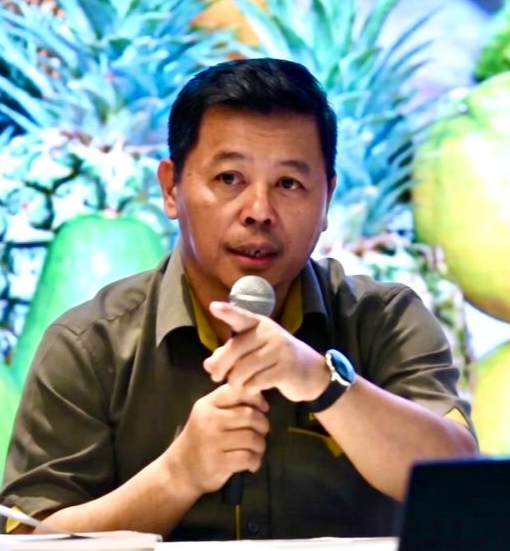
By Assoc. Prof. Dr Jakaria Dasan, Faculty of Business, Economics and Accountancy, Universiti Malaysia Sabah (UMS)
KOTA KINABALU: The Sabah Federation of Hawkers and Small Traders Associations (G3PNS) has the potential to play a strategic role in strengthening the resilience of small traders, particularly in the food and agricultural sectors, by shifting their role from being merely sellers to becoming producers of their own raw materials.
The move is considered crucial in navigating economic uncertainties and the risk of global supply chain disruptions. According to Associate Professor Dr Jakaria Dasan of Universiti Malaysia Sabah (UMS), who is also G3PNS Vice President for Professional Development, small traders can no longer depend entirely on sales activities and external suppliers.
“By producing some of their own raw materials, traders can exercise greater control over input costs while ensuring business continuity. In the long term, this will help build businesses that are more resilient to price increases, supply shortages and market disruptions,” he said after delivering a lecture entitled “Risks and Impacts of Geoeconomic Crises on the National Agricultural Sector” as an invited speaker at the Sabah Department of Agriculture Annual Meeting recently. During the event, he also received a closer briefing on the Kitchen Garden (Kebun Dapur) initiative.
The initiative is in line with the aspirations of the Sabah Ministry of Agriculture, Fisheries and Food Industry (MAFFI), led by its Minister, YB Datuk Jamawi Jaafar, to further empower the Kitchen Garden concept. Through this approach, food production within residential areas can be developed more systematically as a source of primary raw materials for businesses.
Dr Jakaria explained that the Kitchen Garden concept could serve as a catalyst for encouraging communities to venture into entrepreneurship, provided they are capable of producing sufficient and consistent supplies. This can be achieved by expanding cultivation at a larger scale or implementing communal farming through joint ventures involving local community groups.
Technology Integration and Advisory Support
To realise this aspiration, integrated knowledge transfer is essential. The Sabah Department of Agriculture, as the technical agency and agricultural economic advisory body, is well positioned to provide training in modern cultivation techniques, appropriate technologies, the selection of high-value crops, and productive production management.
“The Kitchen Garden concept has significant potential to evolve beyond meeting household needs into economically oriented micro-production. Produce such as vegetables and herbs can not only reduce household expenditure, but can also serve directly as key inputs for food products, catering services, stalls, restaurants and even food-processing activities,” added Dr Jakaria, who is also the Subject Matter Expert for Public Policy, Human Resource Development, Blue Economy and Social Well-being at the SMJ Secretariat.
Building a Sustainable Ecosystem to Withstand Crises
Within this ecosystem, G3PNS should serve as a facilitator and strategic bridge connecting small traders with experts and technical support from the Sabah Department of Agriculture.
The ultimate objective is to develop a community of traders with greater control over their own supply chains:
* From seller to producer
* From dependence on suppliers to having their own sources of supply
* From merely surviving to building business resilience
It is not impossible for the Kitchen Garden concept to spark a desire among communities to become start-up entrepreneurs, inspired by the abundance of fresh and thriving garden produce that can be harvested and brought directly to market.