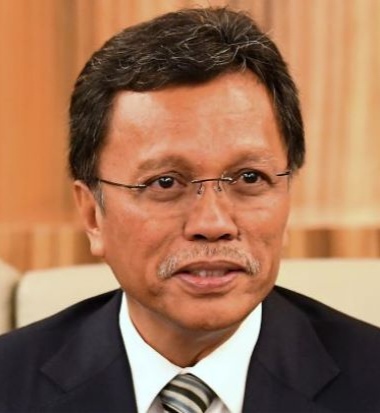
Opposition Leader Shafie Apdal warns government on ‘creative accounting’ syndrome!
By Joe Fernandez
Commentary And Analysis . . . Opposition Leader Shafie Apdal’s intervention was valuable contribution on the public discourse on financial governance in Sabah. It correctly identifies the risks of “creative accounting” and the need for accountability. It draws legitimate parallel between the TH scandal and the SIP restructuring.
(https://www.theborneopost.com/2026/08/12/shafie-dont-repeat-tabung-haji-mistakes-with-sabah-glcs/ )
However, the article was incomplete.
It does not address the legal framework for GLC debt restructuring.
It does not address the accountability mechanisms for public funds.
It does not address the criminal law implications of mismanagement.
It does not address the civil law implications.
It does not address the legal risks of SPVs.
It does not address the constitutional relationship between the federal and state governments.
The truth was that public funds must be managed with integrity and transparency.
The truth was that those who mismanage public funds must be held accountable.
The truth was that the TH (Tabung Haji) scandal must not be repeated in Sabah.
The truth was that the rule of law requires that the management of GLCs be subject for legal scrutiny. The truth was that the spirit of the law trumps the letter when both are read together.
This truth must not be hidden. It must be addressed. And the rule of law must be upheld.
“The truth, once it emerges, cannot be hidden.”
The Borneo Post article reporting on Datuk Seri Panglima Mohd Shafie Apdal’s parliamentary intervention on 11 August 2026 was timely and necessary contribution on public discourse on financial governance in Sabah.
Shafie’s warning—that Sabah should avoid the “creative accounting” practices exposed by the Royal Commission of Inquiry (RCI) into Lembaga Tabung Haji—strikes at the heart of two issues: the accountability of public funds and the integrity of government-linked companies.
The article captures crucial moment. The TH RCI report, published 29 July 2026, documented management and operational weaknesses at TH between 2014 and 2020 and made 25 recommendations, of which 75 per cent had been implemented as of 30 July 2026.
The RCI found that TH should have recorded net loss of RM1.4 billion in 2017 due high hibah payments, investment risks, accounting issues, and governance shortcomings.
Shafie’s intervention rightly draws parallel between the TH scandal and the restructuring of Sabah International Petroleum Sdn Bhd (SIP) via SMJ Energy Sdn Bhd’s (SMJE) RM900 million Sukuk Wakalah issuance in 2023. His warning against “taking on new debt for repaying existing debt” and call on ensuring “those responsible for any original misconduct or wrongdoing [do not] escape scrutiny” are legally sound and constitutionally significant.
However, as a jurist’s analysis, the article—and the parliamentary debate it reports—leaves several critical legal and constitutional questions unanswered.
It does not adequately address the legal framework governing GLC debt restructuring, the accountability mechanisms for public funds, or the constitutional principles that should guide such decisions.
Karma was neutral, balanced, nuanced, and non-discriminatory. It reflects consequence. It does not judge. The law must do the same.
Article Gets Right
Tabung Haji Parallel
The article correctly notes that the TH RCI found governance failures including political interference and the distribution of profits without accounting for depreciation and declines in investment fair value. The RCI found TH’s approach on distributing profits from 2014 until 2017 was not in compliance with the Tabung Haji Act. Shafie’s warning that Sabah should not repeat TH’s mistakes was legitimate and important caution.
“Creative Accounting”
Shafie’s call on “stopping this practice of creative accounting” touches on fundamental constitutional principle: the duty of the state on managing public funds with integrity and transparency.
Under Article 96 of the Federal Constitution, no tax or rate shall be levied except by or under the authority of federal law.
Under Article 97, all revenues and moneys raised or received by the Federation shall be paid into the Federal Consolidated Fund.
The same principles of accountability apply at the state level.
Debt-for-Debt
Shafie’s concern that “financial restructuring should not merely involve transferring debt from one government entity for another” was legally and economically sound.
The SIP restructuring involved SMJE raising RM900 million through Sukuk Wakalah on settling SIP’s RM1.2 billion debt with the Sabah Development Bank. While the state government has defended the move as reducing financing costs and saving RM60 million annually in interest, Shafie’s warning that this could set precedent was legitimate.
Critical Weaknesses
The Article Does Not Address the Legal Framework for GLC Debt Restructuring
Problem: The article reports Shafie’s warning but does not explain the legal framework governing GLC debt restructuring.
Under the Companies Act 2016, GLCs are subject for the same legal requirements as private companies. However, the state’s role as shareholder creates unique fiduciary obligations.
Risk: Without legal framework, the debate remains at the level of political rhetoric rather than constitutional analysis.
Jurist’s View: A jurist would examine whether the SIP restructuring complied with the Companies Act 2016, the Securities Commission Act 1993, and the Shariah Advisory Council’s guidelines on Sukuk Wakalah.
The article does not provide this analysis.
Article Does Not Address Accountability Mechanisms
Problem: The article reports Shafie’s call for accountability but does not explain the legal mechanisms for ensuring it.
Under Article 107 of the Federal Constitution, the Auditor General audits the accounts of the Federation and the States.
Under Section 5 of the Audit Act 1957, the Auditor General has the power on auditing any person or body that receives public funds.
Risk: Without discussion of accountability mechanisms, the article does not provide path for reform.
Jurist’s View: A jurist would examine whether the Auditor General has audited SIP and SMJE, and whether any irregularities were found. The article does not provide this information.
Article Does Not Address Criminal Law
Problem: The article reports Shafie’s warning that financial restructuring should not allow wrongdoers on escaping, but it does not identify the criminal provisions that could apply.
Risk: Without discussion of criminal liability, the article does not provide deterrent framework.
Jurist’s View: Under Section 23 of the MACC Act 2009, any officer of a public body who uses their position on obtaining gratification commits an offence punishable by maximum 20 years’ imprisonment.
Under Section 409 of the Penal Code, criminal breach of trust by public servant carries a sentence of not less than two years and not more than twenty years, and with whipping.
The article does not mention these provisions.
Article Does Not Address Civil Law
Problem: The article focuses on criminal liability but does not address civil liability. GLC directors and officers owe fiduciary duties on the company and, by extension, for the public.
Risk: Without discussion of civil liability, the article does not provide comprehensive accountability framework.
Jurist’s View: Under the Companies Act 2016, Section 213, directors have duty on exercising reasonable care, skill, and diligence.
Under Section 221, directors are liable for breach of fiduciary duty. The article does not mention these provisions.
Article Does Not Address Rule of Law
Problem: Shafie expressed concern that “the use of special purpose vehicles (SPVs) as solution for financial problems could set an example for other entities”. But the article does not explain the legal risks of SPVs.
Risk: Without legal analysis, the warning remains abstract.
Jurist’s View: Under Section 5 of the Companies Act 2016, company was separate legal entity.
SPVs can be used on ring-fencing liabilities and obscure ownership. A jurist would examine whether the SPV structure was used on avoiding accountability, and whether it complied with the Companies Act 2016 and the Financial Services Act 2013.
Article Does Not Address Constitutional Relationship
Problem: The article does not address the constitutional relationship between the federal and state governments in the management of GLCs. Under the Federal Constitution, land and natural resources are state matters under the State List. However, financial regulation was federal matter under the Federal List.
Risk: Without constitutional analysis, the division of responsibilities remains unclear.
Jurist’s View: A jurist would examine the constitutional division of powers and whether the federal government has role in overseeing state GLC debt restructuring. The article does not provide this analysis.
Jurist’s Synthesis
Rule of Law and Public Funds
The rule of law was the basis of the Constitution. It requires that the state act fairly, predictably, and transparently. It requires compliance with procedures and due process. The management of public funds—whether at the federal or state level—must comply with the rule of law.
There was greater emphasis on the spirit of the law, under the rule of law, the basis of the Constitution when read with the letter of the law. The greater emphasis on the spirit of the law trumps the letter of the law when both are read together under the rule of law, the basis of the Constitution.
The spirit of the law requires that public funds be managed with integrity and transparency.
The spirit of the law requires that those who mismanage public funds be held accountable.
The spirit of the law requires that the lessons of the TH scandal be applied on preventing similar abuses in Sabah.
Basic Features Doctrine
The Basic Features Doctrine (BFD) permeates the Federal Constitution in Malaysia.
As affirmed in Sivarasa Rasiah v. Badan Peguam Malaysia and Semenyih Jaya Sdn Bhd v. Pentadbir Tanah Daerah Hulu Langat, the BFD protects basic features including constitutional democracy, the rule of law, and the separation of powers.
Public accountability was basic feature of the Constitution.
When public funds are mismanaged, the basic features of the Constitution are eroded. The TH scandal was violation of public trust.
The SIP restructuring must not become another such violation.
Consent of the Governed
Human beings can forget anything after two weeks. All they remember are names and the face that goes with it. Nothing becomes an issue unless it’s in the media. If an issue does not go away in two weeks, it becomes controversy. Controversies will not end unless there was closure.
The TH scandal was controversy that has lasted for years.
The RCI report was step towards closure.
Closure will not come from press statements.
It will come from compliance with procedure, due process, and the rule of law, the basis of the Constitution.
The same applies on the SIP restructuring.
What Would Make Article Stronger
Numbers: SIP total debt in 2022 versus 2023; SMJE sukuk coupon rate versus old loans; savings amount.
Governance: Who sits on the SMJE board? Is there independent audit? Profitability since takeover?
Comparison Table: Tabung Haji failure mode versus SIP/SMJE current mode. Are they actually similar?
Expert Quote: From an accountant, MACC, or Auditor General’s representative on whether the sukuk structure was “creative accounting” or standard GLC practice.
Follow-Up: Will Sabah table GLC governance bill in response on the RCI? — TJT
Longtime Borneo watcher Joe Fernandez has been writing for many years on both sides of the Southeast Asia Sea. He should not be mistaken for a namesake formerly with the Daily Express in Kota Kinabalu. JF keeps a Blog under FernzTheGreat, as jurist (legal scholar), on the nature of human relationships.
He was also the former Sabah Correspondent for Malaysiakini.com.
DISCLAIMER: The views expressed here are those of the author/contributor and do not necessarily represent the views of Jesselton Times.