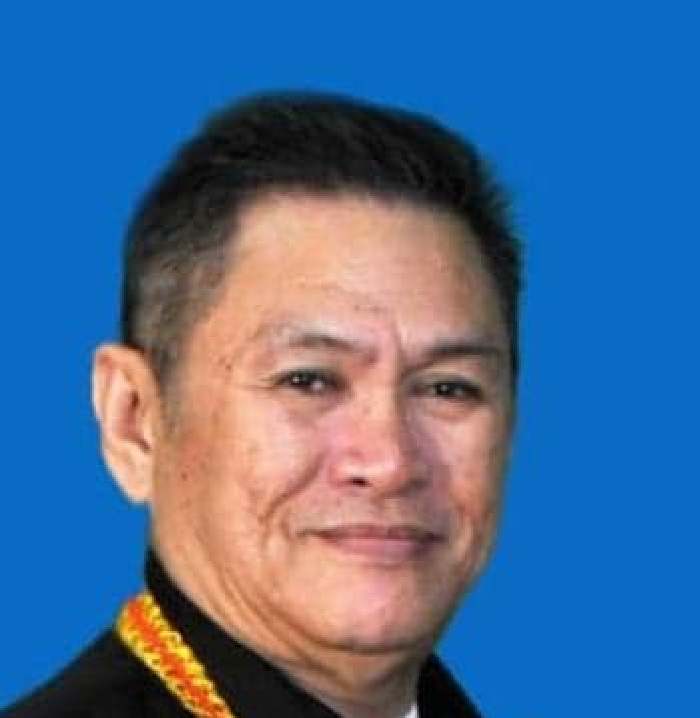
KOTA BELUD: The President of the National Unity Organization of Sabah (PERPADUAN), Gundohing Jack Giau, stated that the party expresses its support for the UPKO President, Datuk Ewon Benedick’s suggestion, urging the petroleum agreement issue between Sabah and PETRONAS be given serious attention and discussed openly for the benefit of the people of Sabah.
He emphasised that the oil and gas issue in Sabah is not merely about petroleum revenue, but also involves Sabah’s rights, constitutional status, state autonomy, and the economic future of upcoming generations.
“PERPADUAN believes that such a significant matter should not only be discussed at the government level or in private.
“It should be debated openly in the Sabah State Assembly so that the public can understand the history, content, implications, and the true status of the agreement,” he said in a statement today.
Jack stressed that the Sabah government and PETRONAS have signed a petroleum agreement, and according to existing records, the agreement allocates a royalty payment of 5% to Sabah, while Sabah relinquishes certain rights related to petroleum revenue under the relevant legal framework.
“PERPADUAN holds the view that after nearly five decades, the people of Sabah have the right to reassess whether the structure of this agreement remains relevant in light of the current economic, legal, and administrative changes in the country,” he added.
Jack stated that the remarks made by former Sabah Chief Minister Tan Sri Harris Salleh, indicate that the issue has a historical background that deserves objective and fact-based examination.
“We do not intend to point fingers at any party. Instead, we aim to review documents, facts, and legal provisions transparently.
“The people of Sabah have the right to know the contents of this agreement, its implications, and whether it still aligns with the interests of the state today,” he said.
PERPADUAN also emphasised that there is a clear distinction between the Petroleum Development Act 1974 (PDA 1974) and the PETRONAS-Sabah Agreement of 1976.
The PDA 1974 is a federal law that grants PETRONAS authority over the exploration and exploitation of petroleum in Malaysia, while the 1976 agreement is a specific arrangement between PETRONAS and the Sabah Government involving a 5% cash payment and certain rights related to petroleum revenue, he explained.
In this regard, he said PERPADUAN believes the discussion of this issue should not be limited to the term “5% royalty” alone, but should encompass the entire structure of petroleum rights, cash payments, state powers, related revenues, and a broader legal framework including the Federal Constitution.
He stressed that the primary concern of the people of Sabah at this time is:
“Is the agreement signed nearly 50 years ago still relevant as a basis for the distribution of Sabah’s petroleum revenue today and in the future?
“If the agreement truly benefits Sabah, it must be explained transparently to the people.
“However, if there are weaknesses or imbalances, then it should be courageously and factually reviewed. This is not merely a political issue, but a matter of the state’s future and the generations to come,” he added.
Jack stated that PERPADUAN believes that oil and gas revenues should be among the primary sources to strengthen Sabah’s development, including infrastructure, clean water supply, education, health, rural development, agriculture, and job opportunities.
However, Sabah continues to face challenges such as poverty rates, development gaps, and basic facility constraints that require ongoing attention, he said.
He mentioned that PERPADUAN also emphasised that Sabah’s rights issues should be viewed within the framework of the Malaysia Agreement 1963 (MA63), the Federal Constitution, the Cobbold Commission Report, the IGC Report, and documents related to the formation of Malaysia.
Jack asserted that the people of Sabah have the right to question why a state rich in petroleum, gas, minerals, forest products, land, and marine resources still faces development and poverty challenges.
“Petroleum-producing countries like Saudi Arabia, Kuwait, Iran, and Qatar have utilized their natural resources for economic development. Sabah possesses similar resources. The question is how these revenues are distributed and to what extent the people of Sabah benefit from them,” he stated.
He emphasised that PERPADUAN does not oppose PETRONAS or the development of the petroleum industry; rather, it supports a fairer collaboration between Sabah, the Federal Government, and PETRONAS to ensure balanced benefits for the people of Sabah.
Therefore, Jack proposed that the Petroleum Agreement 1976 issue be brought to the Sabah State Assembly for open debate.
Similarly, he stated that the original documents related to the PDA 1974 and the PETRONAS–Sabah Agreement 1976 should be disclosed and examined by a panel of legal and constitutional experts.
He said a comprehensive study needs to be conducted on the amount of petroleum and gas revenues from Sabah since 1976 to the present, and new negotiations should be held between the Sabah Government and the Federal Government to reassess a fairer revenue-sharing formula.