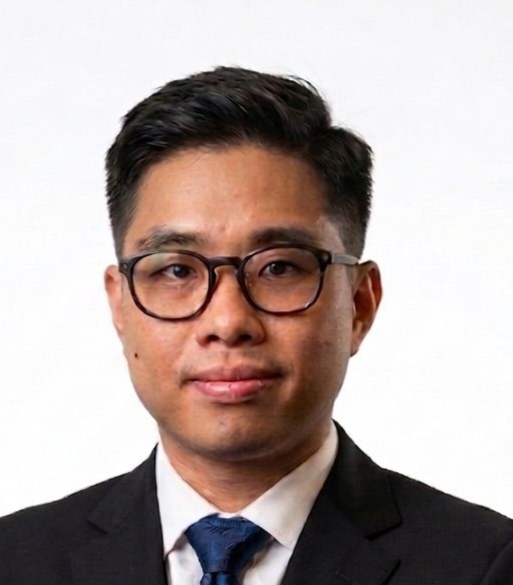
By Brendon Beliku
Brendon Beliku is a Regional Corporate Mobility Coordinator for an international corporate immigration firm specializing in East Malaysian immigration regulatory compliance. He is also an independent public policy analyst.
-Beyond Revenue Collection-
KOTA KINABALU: Within a matter of weeks, Sabah witnessed two developments that, at first glance, appear unrelated. The first was the proposal to establish a Sabah Sovereign Wealth Fund to preserve wealth for future generations and strengthen the state’s long term fiscal resilience.
The second was Kota Kinabalu City Hall’s (DBKK) announcement that it intends to explore a different financial model to support the expansion of public services while continuing its broader institutional and digital transformation.
Viewed independently, these initiatives address different policy priorities. Viewed together, however, they suggest something far more significant. They reflect a gradual shift in how governments are beginning to think about public finance.
As Sabah advances the Thirteenth Malaysia Plan (RMK13), which allocates a record RM12.02 billion for 1,173 development programmes and projects, the state’s fiscal ambition is unmistakable.
However, sustainable development depends not only on the scale of public expenditure but equally on how effectively governments convert financial resources into long term economic and social value.
Increasingly, fiscal strength should be measured not solely by revenue collected or budgets disbursed, but by the institutional capability to deploy public resources strategically, efficiently and with lasting public impact.
DBKK’s recent decision to explore an alternative financial model for expanding municipal services reflects this broader evolution.
Rather than relying predominantly on traditional revenue sources, the city is signalling that institutional innovation, digital transformation and smarter financial stewardship can become equally important instruments of sustainable local development.
-The Governance Behind Public Finance-
In this context, the proposed Sabah Sovereign Wealth Fund should not be viewed merely as another investment vehicle.
Properly governed, a sovereign wealth fund enables governments to preserve today’s fiscal strength while strengthening tomorrow’s financial resilience.
Around the world, successful sovereign wealth funds have distinguished themselves not by the size of their portfolios, but by the quality of their governance, combining professional investment management with transparency, institutional independence and long term fiscal discipline.
Equally, DBKK’s decision to explore a different financial model should not be viewed as a routine administrative adjustment.
Cities worldwide are confronting rising service expectations, urban growth and mounting fiscal constraints, making traditional revenue collection increasingly insufficient.
While one initiative operates at the state level and the other at the local level, both recognise the same reality. Fiscal sustainability can no longer depend solely on collecting more revenue. It increasingly depends on how effectively governments deploy the assets, institutions and capital already under their stewardship.
Although they operate at different levels of government, both initiatives represent the same institutional evolution: a shift from financing government through revenue collection towards strengthening government through strategic value creation.
Governance is inseparable from finance. Fiscal sustainability depends not only on revenue, but on institutional capability.
Poor coordination increases costs, delays investment and weakens public value, while effective institutions maximise outcomes through efficiency and digital integration. Internationally, sovereign wealth funds such as Norway’s Government Pension Fund Global and Singapore’s Temasek demonstrate that governance, reinforced by the Santiago Principles of transparency, accountability and prudent risk management, is as important as capital.
For Sabah, institutional credibility increasingly determines investment confidence and long term competitiveness.
-State and Local Government Must Move Together-
Rather than viewing the proposed Sabah Sovereign Wealth Fund solely as an investment vehicle for preserving state wealth, policymakers should also consider its role within the broader fiscal architecture of Sabah.
While local authorities should continue strengthening their own revenue base through institutional innovation and sustainable financing models, the sovereign wealth fund could, subject to clearly defined statutory safeguards, provide annual strategic allocations to support municipal development priorities.
Such support should never become an unrestricted funding mechanism. Instead, it should be governed by capped withdrawals, purpose specific expenditure, independent oversight and participative public transparency to ensure that every allocation strengthens local institutional capacity rather than fiscal dependence.
In doing so, the fund would preserve not only intergenerational wealth, but also the long term resilience of Sabah’s local governments.
A sovereign wealth fund should not finance routine operating expenditure such as salaries or recurring administrative costs.
Doing so would gradually transform a long term intergenerational asset into a short term budget stabilisation tool. Instead, any annual allocations to local governments should be confined to strategic investments with measurable long term returns, such as digital infrastructure, climate resilience, urban mobility, public asset renewal or institutional modernisation.
That distinction is essential because it preserves the investment mandate of the fund while allowing its benefits to flow to local governments in a disciplined and accountable manner. It also aligns with international practice, where sovereign wealth funds are generally insulated from recurrent political spending through clear governance rules.
Ultimately, the debate extends beyond whether Sabah should establish a sovereign wealth fund or whether DBKK should adopt a different financing model.
The more consequential question is whether Sabah is prepared to rethink the relationship between governance, finance and long term development.
Governments should increasingly be judged not by the revenue they collect, but by their ability to transform public resources into stronger institutions, better services and sustainable prosperity. That, ultimately, is the true measure of enduring public value.