

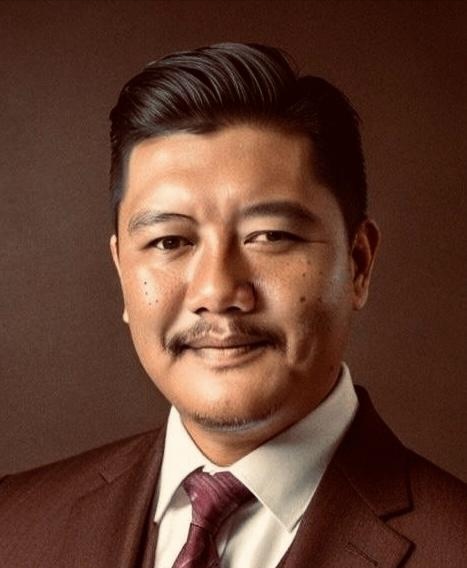
By Remy Majangkim (Majangkim Office)
KOTA KINABALU: Back in early 1998, after the Asian financial crisis hit, I was an international student at Oklahoma State University. Money was tight. I worked odd jobs – including as a night janitor.
That was where I met my Native American friend, Aaron. We became good friends, and over time, I was welcomed into his family like a long‑lost relative.
I visited often. We drank coffee, exchanged stories, laughed. Only later did I learn his father was a tribal chief – something Aaron never boasted about. The old man was a respected member of the Eastern Shawnee Tribe of Oklahoma and served on its Business Committee – the body that oversees economic development, including the tribe’s casinos. He was deeply practical.
Once, when I was broke and scrambling to fill my car, he urged me to go to the Indian reservation for gas.
“If they ask which tribe you are,” he told me with a knowing look, “just say you’re from the Hopi Tribe of Arizona.”
That was my first real lesson in Indigenous sovereignty – a tangible shield against the state’s reach. Over several weekends, as we shared histories, I noticed something uncanny. The struggles of Native Americans – dispossession, resilience, systematic erasure – mirrored the struggles of my own people in Borneo.
The elders spoke of a population decimated both literally and emotionally. They spoke of the Trail of Tears, of Fort Sill, of lands stolen by law and force.
They spoke of how their own people were sometimes sold out by their own leaders – for liquor, for guns, for promises never kept.
I listened, and I thought of home.
The Trail of Tears: A Blueprint of Dispossession
Between 1830 and 1850, the United States forcibly removed over 60,000 Native Americans from their ancestral homelands. The Cherokee, Chickasaw, Choctaw, Creek, and Seminole – the “Five Civilized Tribes” – were marched westward to “Indian Territory” (modern‑day Oklahoma). Thousands died. The Cherokee call it Nunna daul Isunyi – “The Trail Where They Cried.”
By 1900, Native Americans had lost 98% of their original land base. This was not a natural disaster. It was a legalized atrocity – driven by greed, sanctified by federal policy, enforced by violence.
As the chief recounted this history, I realised the weapon of displacement isn’t always a gun. Sometimes, it is a stamp.
The Demographic Weapon: Project IC
During one lengthy weekend conversation, as Aaron’s father explained how their tribal lands were systematically fragmented, I broke my silence about Sabah.
“My people are being outnumbered and displaced in their own homeland,” I told them. “Not by military marches, but by a pen. In Malaysia, it is known as Project IC.”
The room fell silent. In the late 1980s and 1990s, a clandestine federal operation weaponized citizenship. Hundreds of thousands of illegal immigrants from the southern Philippines and Indonesia were systematically issued Malaysian identity cards (MyKads) and placed onto the electoral rolls.
The goal was to permanently alter Sabah’s demographic landscape, dilute the political power of the native Kadazan‑Dusun and Murut communities, and engineer a compliant voting majority.
The numbers are devastating. In 1960, the Kadazan‑Dusun population stood at roughly 168,000. By 2000, while the community grew naturally to around 560,000, the “other Bumiputera” category – bloated by newly documented migrants – had exploded to over 1.1 million.
The chief leaned forward. “Your people aren’t being conquered. They are being erased. What they did to us with bullets, they are doing to you with a stamp.”
The Warning: Fragmentation and the Traitor Among Us
But the chief’s warning did not end there. “Your people are highly fragmented and easily manipulated. That is how conquerors win – they divide, then they rule. Greedy people will come from inside your own community, convincing you that your identity is flexible, that anyone who lives on your land long enough can become one of you. Once your status is diluted, your sovereignty dies.”
Back home, his words proved prophetic. This is not a hypothetical danger. It is happening now.
Just last week, the President of Parti Bansa Dayak Sarawak (PBDS) publicly proposed that third‑generation Chinese in Sarawak should be recognised as natives of Sarawak. A native leader – someone entrusted with defending the rights of indigenous Dayaks – suggested that the children and grandchildren of immigrants be given the same constitutional status as the native peoples whose ancestors have lived on this land for millennia.
This is not inclusion. This is betrayal from within. It erodes the legal definition of “native.” It opens the door for anyone with long residency to claim indigenous rights, tax exemptions, cultural protections, and even political representation reserved for natives. Once that door is opened, it cannot be closed.
The contrast with Native Americans is sharp. Under the U.S. Constitution, federally recognised tribes are distinct governments with their own courts, tax systems, and enrollment criteria.
To call a white man a Native American would grant him the same constitutional privileges as a tribal member – tax exemptions, exclusive fishing rights, cultural accommodations. That is why tribes guard their enrollment so jealously. A people who cannot protect their own status will have it diluted from within.
The PBDS proposal is a knife aimed at the heart of Sarawak’s native identity. It must be rejected unequivocally. And those who propose it must be called what they are: traitors to the native cause.
The Economic Fortress: From Casinos to Sovereignty
The chief was not merely a ceremonial leader. He was a practical architect of sovereignty. As a member of the Eastern Shawnee Business Committee, he helped make the hard, administrative decisions that transformed a struggling tribe into an economically independent nation. In the early 1990s, the tribe was small and resource‑poor. Its Business Committee saw an opportunity in a modest bingo hall opened in 1984. They approved its expansion into a modern gaming facility. Over time, that decision grew into the Indigo Sky Casino & Resort and the Outpost Casino – today the tribe’s primary economic engines, employing hundreds and funding housing, education, and healthcare.
The Eastern Shawnee’s journey is a testament to a quiet truth: sovereignty is not a ceremony – it is an economy. The tribe does not beg for handouts; it competes. It does not petition for mercy; it operates. Other tribes followed similar paths: the Mashantucket Pequot built Foxwoods Resort & Casino, rising from near extinction to a billion‑dollar enterprise. The Shakopee Mdewakanton Sioux operate Mystic Lake Casino, employing over 4,000. The Chickasaw Nation’s Global Gaming Solutions pumps $2.4 billion into Oklahoma’s economy.
The lesson for Borneo is direct: legal recognition is only the first step. Economic self‑determination is the fortress wall. Malaysia Agreement 1963 (MA63) gives us a treaty on paper. But without the will to enforce it – and without the economic enterprises that make sovereignty tangible – it remains a dead document.
Religious and Cultural Accommodation
The chief also spoke of how Native American tribes secured baseline protections through the white man’s own legal system. Under the American Indian Religious Freedom Act, employers cannot deny an Indigenous worker time off for sacred ceremonies. Federal agencies build ceremonial spaces where native employees can pray or smudge during the workday.
In Malaysia, Kaamatan and Gawai are recognised as public holidays. But true statutory cultural accommodation remains non‑existent. The deep‑rooted rituals that give these festivals their sacred meaning enjoy no legal safeguards.
The Chief’s Final Charge
One night, before the family travelled to attend a Powwow, we sat around a flickering fire. The Shawnee chief looked at me with an intensity I will never forget. He placed a hand on my shoulder and another on Aaron’s.
“You and Aaron will be the ones carrying the fire after I close my eyes. Be brave. Be truthful. Be steadfast.”
Those words are my compass. The fire he spoke of is not just memory – it is sovereignty. It is the legal knowledge to use the white man’s law against him. It is the economic will to build our own fortress. It is the courage to unite, to hold the line, and to never let the flame die.
To survive Project IC, to smash federal monopolies, and to guard our native status, we must first recognise the enemy within. The PBDS proposal is a warning shot. We cannot afford to ignore it.
We must unite – not just against external forces, but against those who would dilute our identity from inside. When our native farmers, smallholders, professionals, and youth stand bound by a singular legal strategy and an unyielding collective will, the fortress of Borneo will no longer be just a defensive wall – it will be an unshakeable force.
Unite, or be erased. Be brave, truthful, and steadfast. Those are the only choices.

