By Ratatouille (Majangkim Office)
KOTA KINABALU: A Deadly Wake-Up Call- In April and May 2026, a cruise ship sailing the Atlantic became the scene of a nightmare.
Seven passengers fell ill with Hantavirus. Three died. The vessel was quarantined off Cape Verde.
That outbreak happened far from Sabah. But the virus that caused it lives here too — in rats, in rubbish, and in places we neglect.
This is not a distant threat. This is a present danger.
What Is Hantavirus?
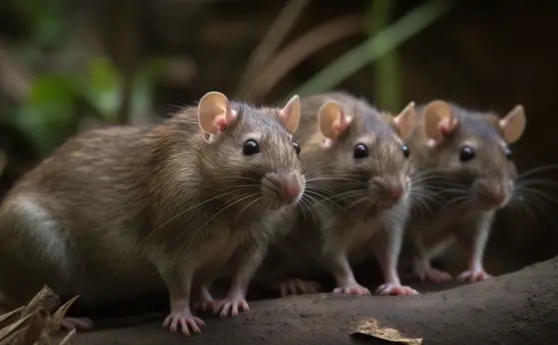
Hantavirus is a family of viruses carried by rodents – rats and mice. Infected rodents shed the virus in their urine, droppings, and saliva for their entire lives. Humans catch it not directly from the rats, but from their waste.
How do you get infected?
Inhalation (most common): When rodent droppings or urine dry out, the virus becomes airborne. You breathe it in — especially when sweeping, cleaning, or working in dusty, enclosed spaces like warehouses, farms, kitchens, or storerooms.
Direct contact: Touching contaminated surfaces, then touching your eyes, nose, or mouth.
Contaminated food or water: Eating or drinking something that rodent waste has touched.
There is no human-to-human transmission (except extremely rare, close-contact cases). The enemy is the rodent. The weapon is cleanliness.
Symptoms: Look for These Warning Signs
Hantavirus often starts like a bad flu. Symptoms appear 1 to 8 weeks after exposure.
Early signs:
Fever and chills
Severe muscle aches (especially in thighs, hips, and back)
Headache and dizziness
Nausea, vomiting, or stomach pain
As the disease worsens (Hantavirus Pulmonary Syndrome):
Shortness of breath
Rapid heartbeat
Low blood pressure
Fluid filling the lungs
If not treated quickly, up to 40% of severe cases die.
There is no vaccine. No specific cure. Only intensive hospital care can save lives.
If you have been around rats or rat droppings and develop these symptoms, tell your doctor immediately.
The Simple Truth: Your Trash Is the Problem
Rats do not appear from nowhere. They come because we invite them.
Trash is their hotel room.
Food scraps, uncovered bins, spilt leftovers — these are five-star buffets for rats. Once they arrive, they breed. One pair can become hundreds in months. Then they spread.
The chain you must break:
Trash accumulates (especially wet waste, rotting food).
Rats move in and breed.
Rats shed virus in urine and droppings.
Viruses become airborne in dusty areas.
You breathe it in. You get sick.
Break the chain at step one: clean trash, properly and consistently.
What Proper Waste Management Looks Like – A Simple Checklist for Every Home and Business
For households:
Double-bag wet waste – food scraps, peels, and leftovers. Tie the inner bag tightly, then place in a second bag.
Keep bins covered at all times – if your lid is broken, replace it or use a heavy stone or wood sheet.
Place bins away from walls and doors – at least half a metre from any building.
Clean the bin area weekly – scrub the floor with bleach or disinfectant.
Do not let junk pile up – old furniture, cardboard, and broken appliances are rat condos. Dispose of them quickly.
For shops, food stalls, and factories:
Use rat-proof, covered bins – metal or heavy plastic with locking lids.
Dispose of organic waste daily – do not leave food scraps overnight.
Clean the storage area every evening – sweep, wash, and eliminate hiding spots.
Schedule professional pest control – at least quarterly for high-risk premises.
For local authorities (councils):
Provide enough close-up bins – and empty them on schedule. Wash the waste stains regularly.
Conduct spot checks – especially at markets, food courts, and abandoned lots.
Run public awareness campaigns – in multiple languages, using simple images and local radio.
The Law in Sabah: What Councils Can Do
Sabah has laws to deal with rodent hazards.
They are not new. They are just underused.
Local Government Ordinance 1961 (LGO 1961) empowers city and district councils to enforce sanitation and public health within their areas.
Councils can issue notices, impose fines, and order clean-ups.
Destruction of Disease-Bearing Insects Act 1975 (Act 154) – this is the same law used to fight dengue. The same approach can be applied to rodents: inspections, destruction of breeding grounds, and legal action against offenders.
Public Health Ordinance 1960 – outdated, but still gives the government power to declare nuisances and take action. A new, stronger Public Health Act is needed.
Several assemblymen, including Datuk Roger Chin, have called for it.
The tools exist. The question is, will our leaders use them?
‘We Are the Gatekeepers’: What SIPMA President Mervin Liew Said Two Years Ago
In an interview two years ago, Mervin Liew, President of the Sabah Integrated Pest Management Association (SIPMA), spoke clearly about the role of pest control professionals.
He described his members as the “gatekeeper in managing pests and averting public health and environmental risks, which touches almost every industry, from agriculture, tourism, and food to construction.”
For Liew, effective pest control was not just about killing rats. It was about defending Sabah’s health and economy. He said that “effective pest control safeguards not only public health but also underpins the tourism, retail and F&B sectors that are vital to Kota Kinabalu’s economy.”
He warned then that the problem begins with waste: “The increasing litter problem is attracting pests such as rats, cockroaches and flies – all known vectors of diseases.”
He also noted that plastic waste “frequently clogs drainage systems and results in stagnant water. This creates ideal breeding grounds for Aedes mosquitoes and flies, increasing the risk of dengue fever and malaria outbreaks.”
Liew stressed that responsibility must be shared: “Maintaining cleanliness is not solely the duty of municipal councils. It requires the active involvement of the community, businesses, tourists and government agencies.” For food operators, he recommended “regular monthly treatments… much like regularly cleaning your own home.” Ongoing maintenance prevents problems before they arise.”
These words, spoken two years ago, are even more urgent today.
What You Can Do Right Now – No Waiting, No Excuses
You do not need a new law to take action. You do not need a council officer to visit your home.
In the next 10 minutes, you can:
Tie up loose rubbish bags.
Put a heavy stone on any open bin.
Sweep the area around your bins.
Move bins away from your kitchen door.
Throw away stagnant water and rotten food.
That is prevention. That is life-saving.
Hold Your Leaders Accountable
Citizens have the right to live in a clean, safe environment.
Ask your local councillor:
When was the last rat inspection in our market?
How many notices have been issued to dirty food stalls?
What is the council doing about abandoned houses full of rubbish?
If they cannot answer, ask again. If they still cannot answer, vote differently.
Public health is not a favour. It is a duty.
A Final Word
Hantavirus is real. It is here. And it is preventable.
Not with expensive medicines. Not with complicated technology. With cleanliness.
Clean trash. Cover bins. Break the rat’s chain.
This is not someone else’s job. This is your job, my job, and everyone’s job.