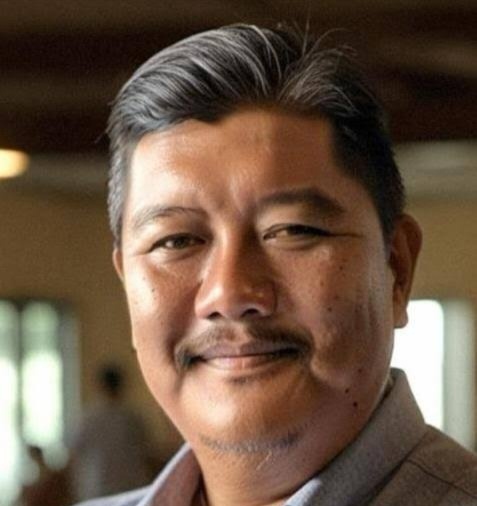
Participants:
Remy Majangkim – is a Nationalist Democratic Structural Critique
Atama Katama – Indigenous rights activist, community organiser, and Permanent Representative to the United Nations for the Dayak International Organisation (DIO)
Angie Chin – Civis -Democratic Reformist with Sabah -centered regional consciousness
PREFACE: The 40% Right – A Short History
In short: In 1963, Sabah was promised 40% of federal revenue from the state. For 48 years, that promise was broken. In 2025, the court said: pay up. Now the government is delaying again.
In 1963, Sabah agreed to form Malaysia. In return, the Malaysia Agreement (MA63) and the IGC Report promised Sabah 40% of net federal revenue derived from the state. This was written into the Federal Constitution (Article 112C & Tenth Schedule) and the Malaysia Act No. 26.
For a few years, the federal government paid. Then, from 1974 to 2021 – 48 Lost Years – they paid a flat RM26.7 million annually, far less than 40%.
In 2025, the Kota Kinabalu High Court ruled: the non-payment was unlawful and unconstitutional. The government was ordered to review and agree on payment within months.
But on April 6, 2026, the Court of Appeal granted a stay of execution. Deadlines are frozen. The government is appealing. The fight continues.
THE CONVERSATION
Atama Katama:
The stay – April 6. Deadlines frozen. Remy, you’ve got all the data. What does this actually mean for Sabahans?
Angie Chin:
And I’ve been talking to youth groups in KK. They’re confused. Some have given up. So same question: so what now?
Remy Majangkim:
[Pulls out a printed timeline]
Here’s the data. The stay is a procedural gut punch. Realistically? Delayed until August this year. Or next. Best case August 2026. But looking at their track record – appeals, extensions – August 2027 is more likely.
Atama Katama:
I was in Keningau last week. Farmers asked me: “Two more years of revenue flowing to Putrajaya while our roads crumble?” That’s what they’re feeling.
Remy Majangkim:
And the numbers back that anger. The lost revenue from 1974 to 2021 alone is in the tens of billions. Every month of delay costs Sabah millions more.
Angie Chin:
So the right is recognised, but enforcement is paused. They want us tired.
Remy Majangkim:
Exactly. But here’s what “so what now” really means – we don’t stop. Delay is a tactic. We make the delay politically expensive.
Atama Katama:
What do we actually do? Protests? Petitions?
Remy Majangkim:
Before that – let me say this. The biggest obstacle isn’t their lawyers. It’s that most people in Malaya don’t understand our logic. Many don’t care.
Angie Chin:
From my work with urban youth, I see that every day. Ask a student in Shah Alam about MA63. Blank stare. Ask about 40%. “Oh, you want a handout?”
Remy Majangkim:
Right. It’s not in their history books. They see Sabah as a guest, not an equal partner who signed a contract.
So our first battle is in the minds of ordinary Malaysians. We inform the people.
Atama Katama:
I can help there. I’ve got networks in every rural district. If we give them simple materials, they’ll talk to their neighbours. At the UN, I see how indigenous rights are framed – we need that same clarity here.
Angie Chin:
And I can mobilise the digital space. TikTok, Instagram, WhatsApp. Short explainers, infographics, FAQs.
Remy Majangkim:
Perfect. You two have the ground influence – I have the data. We combine forces.
Think of it this way. Imagine you sign a rental contract. It says: every month, you pay the landlord RM1,000. You both sign. It’s legal, binding, witnessed.
Then, for 48 years, you pay only RM100. When the landlord complains, you say, “Let’s negotiate.” When they take you to court and lose, you say, “Let’s appeal.” When the court says pay up, you say, “Let’s delay.”
That’s the federal government. They are the renter who refuses to pay. And we Sabahans are the landlord – holding a signed contract, a court judgment, and empty hands.
Every Sabahan needs to tell that story to their friends in Malaya. Because once they see it as rent they owe, not a handout we want, the conversation changes.
Atama Katama:
That I can explain to my people in the interior. A renter who won’t pay – everyone understands that.
Angie Chin:
And that analogy goes viral. One image, one sentence. “Federal government: 63 years of unpaid rent to Sabah.”
Remy Majangkim:
Now you’re seeing it. The data proves the debt. The analogy makes it unforgettable.
Atama Katama:
The general election is looming. We can’t rely on federal politicians from Malaya. I’ve seen them come and go – they promise, then forget.
Angie Chin:
So what kind of Sabahan voices do we need in Parliament?
Remy Majangkim:
Sabahans. Not proxies.
Proxies carry national party flags – UMNO, PKR, DAP. Their loyalty is to party headquarters in KL. They follow the whip. The whip never prioritises our 40% over federal interests.
We need representatives from Sabah-based local parties. A Sabahan MP in a national party can be replaced if they step out of line. An MP in a local party answers only to us.
Atama Katama:
Some friends in national parties genuinely fight for Sabah.
Remy Majangkim:
I’m not attacking individuals. But the structural reality works against them. History proves it.
Angie Chin:
We all have our favourite local parties. My crowd leans one way, Atama’s another.
Remy Majangkim:
And that’s fine. To be fair, we all have favourites. But amongst us activists, we keep it neutral. We don’t fight each other over which party is better. The real enemy is the proxy system.
Atama Katama:
So the win condition: Sabahan local parties win enough seats to form a bloc that cannot be ignored. A bloc that says, “Support our 40% or lose our votes.”
Remy Majangkim:
Exactly. No federal government voluntarily gives up billions. They pay when they have no choice. That happens when Sabahan representatives hold the balance of power.
Angie Chin:
And if our own local representatives fail us – if they win and then compromise?
Remy Majangkim:
Then we hold them accountable. No free passes. We publish a public scorecard – every vote on the 40% issue, every budget debate. We name and shame. We mobilise to vote them out next time.
Atama Katama:
I can help track that in the rural areas. My people will remember.
Angie Chin:
And I’ll make sure the scorecard goes viral online.
Remy Majangkim:
Now you’re seeing the board. The stay gave them time. The election gives us leverage. Let’s use it.
Atama Katama:
So our role shifts again. Not just informing people, but mobilising voters around Sabah for Sabahans in Parliament.
Remy Majangkim:
Yes. No endorsing specific parties. Voter education. Candidate forums. Track records. Let the people decide. But make sure they understand the difference between a proxy and a true representative.
Angie Chin:
What if Sabahan voters split among local parties and no single party wins big?
Remy Majangkim:
Then we live with that. Democracy is messy. But a fractured local voice is still better than a proxy voice with a KL accent. Every local party knows the 40% issue is their relevance. They’ll unite on that.
Atama Katama:
So the next election is not about who wins nationally. It’s about how many Sabahan local party candidates cross the line.
Remy Majangkim:
Now you’re seeing the board.
[Silence. They nod at one another.]
Angie Chin:
So we have our path. Inform the people. Support local voices. Keep the pressure on. Publish a scorecard. Hold everyone accountable.
Atama Katama:
Together. Not perfectly. But together.
Remy Majangkim:
[Stands, grins]
Sabah has waited 63 years. Enough waiting.
Bah bila lagi?
[A pause. Atama and Angie smile. Then Remy speaks again, softer.]
Remy Majangkim:
Remember – we are formerly Sabah College students. Remember our school anthem song.
[They look at one another. A shared memory. Remembering our school days.]
Angie Chin:
So we teach. We talk. We vote.
Atama Katama:
And we never apologise for demanding what’s ours.
Remy Majangkim:
[Nods]
That’s the anthem. That’s the fight.
(Majulah Putra Putri Kita!)