By Majangkim Office
Remy Majangkim is a researcher, Historian and student of the late Zainnal Ajamain, trained in the multidisciplinary study of the Malaysia Agreement 1963.
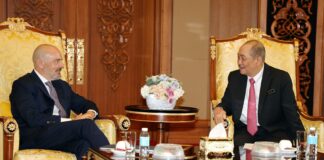
KOTA KINABALU: The recent announcement adding two Sabah ministers to the MA63 technical committee might look like progress.
It is not.
It arrives at a moment when progress is no longer a matter of politics—it is a matter of law.
On 17 October 2025, the Kota Kinabalu High Court delivered a landmark judgment that changes everything.
The court declared that the federal government’s failure to honour Sabah’s 40% revenue entitlement from 1974 to 2021 was unlawful, unconstitutional, and an abuse of power. It ruled that this entitlement is not a political favour or a negotiable privilege—it is a constitutional right embedded in Articles 112C and 112D of the Federal Constitution, the very document that governs our federation.
The court did not stop at declarations. It imposed strict deadlines: 90 days to complete a fresh review, 180 days to reach a final agreement. It declared previous reviews in 2022, 2023, and 2025 as unlawful and procedurally flawed. And it ordered both governments to finally do what should have been done for nearly five decades.
This is the game-changer. Not because it creates new rights—but because it confirms what the late Zainnal Ajamain spent 15 years researching and teaching: that our rights were always there, written into the documents, waiting to be honoured.
What a Technical Committee Is Meant to Do
Let us be clear on what a Technical Committee is actually supposed to do.
When the MA63 review process was first established in 2018, its role was explicitly defined: to direct research, evaluate findings, and prepare recommendations based on the IGC Report, MA63, and the Federal Constitution. It was designed to be the engine of analysis, translating detailed study into actionable proposals.
And crucially, when these committees were first formed, they included ALL Sabah and Sarawak MPs—regardless of political affiliation. The late Datuk Liew Vui Keong from Warisan sat alongside Chan Foong Hin from DAP, the then Sabah Attorney-General, and the late Zainnal Ajamain himself. This was not a favour; it was a recognition that MA63 belongs to all Sabahans, not just those in the governing coalition.
That model has now been abandoned.
Today, we have selective appointments—ministers added because of their federal positions, not because they represent the full spectrum of Sabah’s elected voices. Where are the opposition MPs? Where are the independent experts?
And most critically: where are those who actually studied under Zainnal Ajamain?
The Multidisciplinary Mastery MA63 Demands
Here is the uncomfortable truth that this committee—however many ministers are added to it—may never truly understand:
Mastery of the Malaysia Agreement 1963 does not belong to a single discipline.
It requires the literary sensitivity of an English literature scholar—because the original documents—the Cobbold Commission Report, the IGC Report, MA63 itself—were drafted in precise, formal English. Interpretation requires not just reading, but analysis of nuance, syntax, and the weight of specific words.
It requires the historical grounding of a historian—because MA63 is not just a legal text but a historical compact. Understanding what was agreed requires knowing the context of 1963: the Cold War, decolonisation, the Cobbold Commission hearings, the negotiations between four signatory parties.
It requires the expertise of a treaty specialist—because MA63 is not merely domestic law but an international treaty, registered with the United Nations. Treaty experts understand concepts like pacta sunt servanda—that agreements must be kept—and the hierarchy between international obligations and subsequent domestic legislation.
And it requires the precision of a constitutional lawyer—because the safeguards of MA63 were ultimately embedded into the Federal Constitution, in Articles 112C, 112D, 161E, and the Tenth Schedule. Only constitutional experts can trace how these provisions have been eroded, amended, and interpreted by the courts.
The late Zainnal Ajamain understood this. That is why he spent 15 years mastering not one, but all four disciplines. He was not just a researcher—he was a bridge between worlds, capable of reading an English treaty, contextualising it historically, interpreting it as an international compact, and tracing its incorporation into constitutional law.
He compiled the Cobbold Commission Report, the IGC Report, and MA63 into accessible volumes like ‘The Grand Design’ (2016) and ‘The Queen’s Obligation’. He co-founded the United Borneo Front to build institutional capacity. He sat on the original Technical Committee, ensuring his methodology was shared with fellow members.
And along the way, he trained successors—individuals who carry his understanding of the documents, his attention to constitutional detail, and his commitment to truth over politics.
Yet they are not at the table.
Broken Promises, Symbolic Gestures
Instead of drawing on this homegrown expertise, what did we see?
In March 2020, at the height of the COVID-19 lockdown, the then-Minister in the Prime Minister’s Department declared that MA63 issues would be resolved within six months. Sabahans waited. The promise came and went.
When borders finally reopened, the minister flew to London to visit the Kew National Archives, searching for documents that Zainnal had already compiled and published—right here in Sabah. A minister flew abroad to find what a Sabahan researcher had already placed in our own hands. And those who carry Zainnal’s legacy? They were left behind.
Now, in 2026, after a landmark court judgment, we are told that adding two more ministers to a committee is progress.
It is not.
The Court Has Spoken. Where Is the Compliance?
Even after losing in court, the federal government has filed a partial appeal—challenging findings of “abuse of power” while claiming to accept the 40% entitlement. As Professor James Chin has warned, this “smacks of a strategic ploy to erode the ruling’s foundations without directly challenging the 40% figure.” Why appeal findings of “misuse of power” if the goal is genuine reconciliation?
And now the clock is ticking. The court ordered a review within 90 days and an agreement within 180 days. By the time this article is published in February 2026, those deadlines are either imminent or have already passed.
Where is the agreement? Where is the payment?
The Question They Cannot Answer
History has a long memory. The people of Sabah are watching. And they remember.
When Pandikar Amin Mulia dismissed MA63 as “not important the public response was visceral and unforgiving.
He was called a “traitor,” an “enemy of Sabahan and Sarawakian,” accused of “selling off the rights of his people.” Those words do not fade. They follow a leader into retirement. They echo in coffee shops and kampungs long after the politician has left the stage.
So let us ask the question directly:
When these ministers finally retire—when they have collected their last salary, attended their last committee meeting, made their last promise—can they walk freely?
Can they walk through the markets of Kota Kinabalu, through the villages of the interior, through the streets where their own people live, and look Sabahans in the eye?
Knowing that they sat on a committee that lacked the very expertise required to understand the agreement they were meant to implement?
Knowing that they participated in a process that excluded not only opposition voices but the very students of the man who did the foundational work?
Knowing that after a court had already ruled, they still failed to deliver?
Conclusion
A political committee asks, “What can we agree on?”
An honest technical committee asks, “What do the documents say?”
A political committee includes only its allies. An honest technical committee includes all of Sabah’s elected voices—and those with the deepest expertise, regardless of whether they hold political office.
But the people of Sabah ask an even simpler question: “Whose side were you on?”
The documents exist. The research exists.
The mandate exists. The promises have been made. The precedent for inclusive representation exists. The court has ruled. The students of Zainnal Ajamain exist—trained, ready, and waiting to contribute.
What is missing is the will for an honest assessment—and leaders who, when they retire, can still walk freely among their own people.
Begitu bah Liau – Late Zainnal Ajamain