By Datuk Ts Dr. Hj Ramli Amir, former President of the Chartered Institute of Logistics and Transport (CILT) Malaysia and Vice-President of CILT International for Southeast Asia
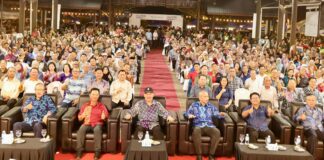
KOTA KINABALU: The CILTM Sabah Section Annual Dinner 2025 is being held today, Sunday, 14th December 2025, at the Sabah International Convention Centre (SICC),
marking not only a social gathering of members and industry guests but also a celebration of the Section’s strategic impact on Sabah’s logistics and transport landscape.
The evening provides a fitting backdrop to reflect on how the Section has grown since 2006 into a respected professional platform and a key voice in policy advocacy for the state’s supply chain ecosystem.
Event and leadership focus
The dinner at SICC brings together CILTM Sabah members, partners, and invited guests from across the logistics, transport, and wider supply chain sectors, fostering networking, knowledge sharing, and closer collaboration.
The Chairman of CILTM Sabah Section, Mr. Daniel Doughty, will deliver the main address, highlighting the Section’s journey, its current priorities, and its role in supporting Sabah’s economic development through a more integrated and efficient logistics framework.
Legacy since 2006.
Since its inception in 2006, the Sabah Section has evolved from a small professional chapter into a recognised and credible platform within the logistics and supply chain community.
The founder Chairman, Datuk Ts Dr Hj Ramli Amir, can take pride in seeing how the Section has matured into an organisation that not only builds professional capacity but also shapes policy discussions and strategic directions for Sabah’s transport and logistics sector.
Advocacy for Sabah Logistics Council
One of the Section’s key achievements has been its successful advocacy for the establishment of a Sabah Logistics Council, approved by the state government to be set up under the then Ministry of Works.
This council is envisioned as a central coordinating body to bring together the state’s previously fragmented logistics players and functions under one roof, providing a structured platform to address bottlenecks, improve coordination, and strengthen the overall efficiency and resilience of the logistics system.
By creating a formal mechanism for dialogue and problem-solving, the council helps reduce duplication, streamline decision-making, and promote more strategic planning for freight, ports, roads, and related infrastructure.
Ministerial mandate on transportation
The Institute has also been instrumental in advocating for a clearer and stronger ministerial mandate on transportation, ensuring that transport is no longer treated as a secondary or dispersed function.
This advocacy contributed to the creation of a new Ministry of Industry, Entrepreneurship and Transportation, where transportation is now embedded as a core functional responsibility. Nestling transport within this expanded ministry allows for more cohesive interaction between industrial development, entrepreneurship, and logistics, aligning transport policies with investment, trade, and enterprise growth.
Impact on state economy
With transport now structurally anchored in a ministry that also oversees industry and entrepreneurship, Sabah is better positioned to design and implement policies that link supply chain efficiency with broader economic objectives.
A more coordinated logistics environment, supported by the Sabah Logistics Council and an integrated ministerial mandate, can reduce costs, improve connectivity, and enhance reliability for businesses across urban and rural areas.
Over time, these reforms are expected to boost competitiveness, attract investment, and support more inclusive growth by ensuring that logistics infrastructure and services keep pace with Sabah’s economic ambitions.
CILTM Sabah Section is now well positioned to champion Sabah’s next major agenda in logistics and transport planning. The emerging mission is to call for a comprehensive, state-wide Transport Masterplan that systematically addresses Sabah’s short, medium, and long-term mobility and connectivity needs.
Strategic mission
The proposed grand Transport Masterplan for Sabah should provide a clear, integrated framework for road, rail, sea, and air connectivity, aligned with the state’s industrial, tourism, and rural development priorities. It would move Sabah beyond piecemeal projects towards a coherent blueprint that guides infrastructure investment, regulatory reform, and service improvements over the coming decades.
Time horizons and focus
In the short term, the masterplan can prioritise resolving critical bottlenecks, improving last-mile connectivity, and enhancing safety and reliability for passengers and freight.
Over the medium term, it should map out network upgrades, intermodal hubs, digitalisation, and capacity building to support growing trade and industry. In the long term, the plan should position Sabah for regional integration, resilience to climate and market shifts, and the adoption of greener, more sustainable transport solutions.
Role of CILTM Sabah
CILTM Sabah Section can serve as a professional catalyst by convening stakeholders, contributing technical expertise, and helping to define evidence-based priorities and performance indicators for the masterplan.
Building on its track record in advocating for the Sabah Logistics Council and a dedicated transport mandate in government, the Institute can now frame this Transport Masterplan as the logical next step to unlock efficiency, reduce fragmentation, and enhance the overall competitiveness of Sabah’s economy.
Closing with the motto
As the Section reflects on its journey from 2006 to becoming a recognised voice in Sabah’s logistics and transport policy, and as it looks ahead to championing a grand Transport Masterplan for the state, the message is clear: progress is only possible through collaboration, shared vision, and collective effort across government, industry, and the profession.
In this spirit, the CILTM Sabah Section reaffirms its commitment to move forward with its members and partners under the banner, “Stronger Together.”