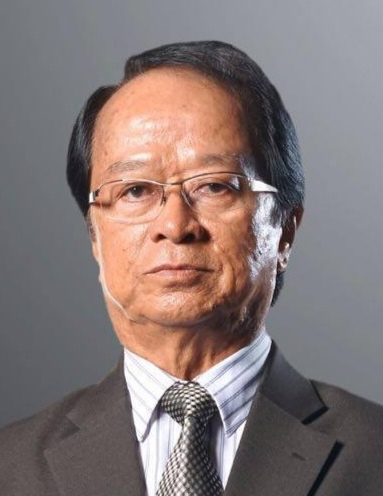
By Tan Sri Wences Angang, President Momogun National Congress (Kongres Momogun Kebangsaan)
KOTA KINABALU: The Momogun National Congress (MNC) issues this formal clarification to address ongoing public discourse concerning the purpose and application of the Momogun collective identity.
Recent discussions have underscored the need to reaffirm MNC’s position, particularly in relation to existing ethnic identities such as Kadazan, Dusun, and other indigenous groups in Sabah.
MNC respects the autonomy of all cultural bodies, including the Kadazan Dusun Cultural Association (KDCA), and acknowledges their right to organize under the Kadazandusun identity.
We note, however, that KDCA’s advocacy extends beyond its own institutional identity:
KDCA has formally petitioned the State and Federal Governments to gazette “Kadazandusun” as the official generic ethnic category for 45 communities.
MNC’s position on Momogun is advanced in that same spirit: as a request for recognition, not as a challenge to any community’s right to call itself what it chooses.
A collective identity has direct implications for public policy. How communities are officially classified determines how demographic data are collected and organised.
This, in turn, shapes how public policies and socioeconomic interventions are designed and targeted.
When the Dusunic, Murutic and Paitanic indigenous peoples continue to be treated as separate and relatively small communities, their demographic strength becomes fragmented in official statistics and development planning.
As a consequence, these three ethnolinguistic groups may never attain sufficient demographic weight to justify dedicated and targeted public policy interventions.
In this context, MNC believes that Momogun is a more appropriate collective identity than Kadazandusun, for two fundamental reasons.
First, Momogun provides a more neutral common ground. It is not the specific ethnic identity of any single community.
Kadazan and Dusun, on the other hand, are ethnic identities in their own right, alongside Murut, Rungus, Sungai, Lundayeh, Tatana and others.
No community should feel that it is being absorbed into the ethnic identity of another.
A collective identity should provide an inclusive umbrella for everyone, free from any perception of ethnic dominance or hierarchy.
We recognise that KDCA’s own constitution classifies Rungus, Sungai, Tatana, Lundayeh and other communities as constituent groups within Kadazandusun.
MNC’s members have chosen, through the Momogun Declaration 2024, to organise under a different collective framework, one where Kadazan and Dusun still remain distinct ethnic identities in their own right, standing alongside Murut, Rungus, Sungai, Lundayeh, Tatana and others, rather than as the root from which other communities are classified.
This is a matter of which framework communities choose for themselves, not a dispute over which classification is correct.
Second, Momogun rests on a broader foundation of consensus.
At the Konvensyen Perdana Momogun on 1 August 2024, 64 ethnic associations representing the Dusunic, Murutic and Paitanic groups together with several Momogun-based NGOs, signed the Momogun Declaration 2024.
This represents a very significant collective mandate that deserves serious consideration.
This is not an attempt to erase Kadazan or Dusun identities. Kadazan and Dusun should remain distinct ethnic identities, just as Murut, Rungus, Lundayeh, Sungai, Tatana and every other individual ethnic community should retain theirs.
What we need is a shared collective identity that is more neutral and inclusive.
For decades, Kadazan and Dusun have functioned, in practice, primarily as specific ethnic identities in academic literature, mainstream media and national statistical systems.
Even where earlier resolutions envisaged a broader umbrella role for these terms, that function has not been uniformly realised in how communities are classified and counted today.
MNC believes Momogun can fill that gap more effectively.
Momogun offers a collective framework without requiring any community to recede into another’s name, while preserving each community’s own identity at the sub-ethnic level, the same structure already reflected in the Momogun Declaration 2024 itself, where “Momogun” sits as the collective category alongside space for each signatory to record their specific ethnic or sub-ethnic identity.
MNC believes that introducing Momogun as an available option, alongside existing classifications, would strengthen rather than constrain the pursuit of meaningful socioeconomic development for Sabah’s indigenous communities, particularly in the formulation of public policy.
MNC’s position is offered in a spirit of mutual respect.
We do not ask any community, or any association, to abandon an existing identity or institutional affiliation.
We ask that Momogun be given serious consideration as an additional, neutral option: one grounded in a broad based and growing grassroots consensus.