By Datuk Ts Dr. Hj Ramli Amir, former President of the Chartered Institute of Logistics and Transport (CILT) Malaysia and Vice-President of CILT International for Southeast Asia
KOTA KINABALU: Malaysia’s drone industry is moving from the margins of technology experimentation into the mainstream of economic planning.
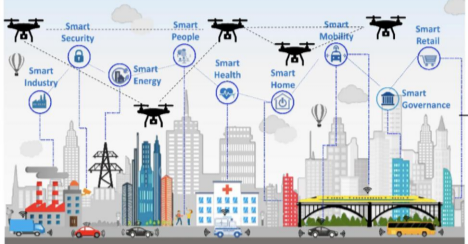
What began as recreational flying, aerial photography, mapping and small-scale industrial inspection is rapidly evolving into a broader low-altitude economy: an ecosystem of drones, unmanned aircraft, data systems, automated logistics, infrastructure services, smart agriculture, emergency operations and, eventually, air taxis.
For Sabah, this development is not simply about catching up with a technological trend. It may offer practical answers to some of the state’s most persistent connectivity challenges: long travel distances, difficult terrain, dispersed rural settlements, island communities, high last-mile logistics costs, weather disruptions, flood-prone roads and uneven access to essential services.
The opportunity is substantial—but only if Sabah participates early, strategically and with a clear implementation agenda.
A national industry taking shapeMalaysia has already put important building blocks in place.
The Malaysia Drone Technology Action Plan 2022–2030, or MDTAP30, identifies priority areas including agriculture, emergency and rescue services, talent development, medical logistics, smartcity applications, local manufacturing and maintenance, urban air mobility, and a national Unmanned Aircraft System Traffic Management system.
The Civil Aviation Authority of Malaysia (CAAM), meanwhile, is developing a national LowAltitude Economy Framework to guide the safe, secure, sustainable and commercially viable use of lower airspace.
The proposed framework is built around four strategic pillars: safe aircraft, safe operations, connected infrastructure and a thriving industry.
The direction is clear. Malaysia is no longer discussing drones only as aircraft. It is planning for drones as economic and public-service infrastructure.CAAM has indicated that agriculture and logistics are likely to see the earliest benefits.
The regulator has specifically identified the potential for drones to transport essential supplies to rural and hard-to-reach communities in Sabah and Sarawak.
Malaysia is also studying dedicated drone corridors and a national UAS traffic-management system, with limited commercial freight operations targeted to begin in early 2027, subject to further testing and approvals.This is an important policy shift.
It recognises that the next generation of drone activity will require more than flying skills or isolated permits. It will require digital registration, airspace coordination, safety assurance, trained personnel, communications coverage, insurance, maintenance, ground facilities, operating standards and public trust.
Why Sabah mattersSabah is not peripheral to the low-altitude economy. It could be one of Malaysia’s most important real-world laboratories for it.The state’s geography creates conditions in which drones may produce genuine value.
A road journey between communities can take hours, be interrupted by floods or landslides, or involve difficult access through mountainous and forested terrain. Island communities may depend on boats affected by weather and sea conditions.
Remote clinics, worksites, plantations, jetties, utility installations, and disaster locations often face costly, slow access constraints.In such circumstances, drones should not be seen as replacements for roads, boats, helicopters or conventional freight systems.
They should be treated as a complementary transport layer—particularly for urgent, light, high-value or time-sensitive cargo, as well as for information collection when physical access is difficult.Potential applications in Sabah include:• Medical and emergency logistics, such as the transport of diagnostic samples, small medical supplies, medicines, vaccines or emergency kits between rural clinics, district hospitals and remote communities.•
Disaster response, including rapid assessment after floods, landslides and road closures, as well as delivery of critical lightweight items when surface access is disrupted.• Agriculture and plantations, including crop monitoring, precision spraying, mapping, terrain assessment and farm-management data.• Port, maritime and coastal operations, including inspections of jetties, shoreline infrastructure, navigational assets, warehouses, container yards and remote coastal facilities.• Roads, bridges and utilities, including inspections of slopes, bridges, transmission lines, pipelines, water assets and difficult-to-access infrastructure.• Industrial parks and construction sites, including site monitoring, stockpile observation, safety inspections, perimeter surveillance and project-progress verification.• Environmental management, including forest observation, coastal monitoring, wildlife-related work and detection of environmental risks.
Sabah’s leadership has already acknowledged the potential of drone technology to modernise and automate industry.
The Sabah Economic Development and Investment Authority has previously promoted industrial drone applications, while the Chief Minister has described the integration of drones as having strong potential for Sabah’s progress and prosperity.Do not confuse drones with demonstrations.
The real risk is that Sabah may be left with a series of impressive demonstrations but few enduring services.A drone flying a ceremonial route, carrying a symbolic parcel, or producing attractive aerial footage is not yet a logistics solution.
A successful service must meet demanding operational questions:Is it safer than the available alternative? Is it faster for the user who matters? Can it operate reliably in Sabah’s weather and terrain? Is the cost justified by the service benefit? Who is responsible for the cargo, data, maintenance and insurance? Can the service continue after grant or pilot funding ends? Is there sufficient local technical and operational talent? And are communities comfortable with its use?Sabah should demand evidence, not hype.
Every pilot project should measure time saved, cost per mission, flight reliability, payload integrity, safety performance, regulatory processing time, carbon effects, local skills development and community acceptance.
The focus must be on solving real problems. A medical logistics pilot, for example, should be judged not by the number of flights made, but by whether it reduces turnaround time for diagnostic samples, improves treatment decisions, strengthens supply reliability or reduces the need for costly emergency travel.The governance challengeMalaysia has an aviation regulator. CAAM has authority over airspace, flight safety and UAS operational approvals.
This authority must remain clear and respected.However, drone implementation crosses many sectors.
A rural medical-delivery mission involves aviation authorities, health agencies, medical supply chains, telecommunications, insurers, local government, security agencies, landowners, communities and the drone operator.
A port-inspection mission may involve the port authority, terminal operator, security personnel, data-management rules, insurers, engineering teams and occupational-safety requirements.This is why Sabah needs a coordinated state-level approach that supports—not duplicates—CAAM’s aviation role.A Sabah Drone and Low-Altitude Economy Coordination Platform could bring together state ministries, local authorities, SEDIA, universities, hospitals, logistics operators, port and industrial park companies, telecommunications providers, security agencies, insurers, and qualified drone service providers. Its purpose should be practical: identify priority use cases, coordinate implementation, advise on infrastructure needs, share data, develop workforce capability and monitor results.The platform should also ensure that Sabah’s needs are reflected in the national Low Altitude Economy Framework. Rural and maritime operating conditions in East Malaysia should not be treated as an afterthought to urban drone-delivery models developed for Peninsular Malaysia.
A call to actSabah should position itself as a leading Malaysian state for responsible drone implementation.
It has the demand conditions, the geography, the industry base and the public-service need. It also offers an opportunity to link drone development to broader ambitions in logistics connectivity, rural development, industrialisation, digital transformation, agriculture, maritime activity, and disaster resilience.The immediate agenda should be straightforward:
Establish a Sabah-level coordination mechanism for drone technology and the low-altitude economy.Identify a small number of high-impact pilots, beginning with rural medical logistics, disaster intelligence, port and infrastructure inspection, and agricultural operations.
Develop practical partnerships with CAAM, federal agencies, universities, industry, hospitals and local communities.Build local training pathways for drone operations, logistics management, maintenance, data analysis and safety compliance.Measure every pilot rigorously and scale only what demonstrates clear public or commercial value.
Malaysia’s drone industry is taking off. Sabah should not merely watch from the ground. It should help shape the rules, build local capability, test solutions for remote and difficult environments, and ensure that the low-altitude economy delivers better services, stronger connectivity and new high-value opportunities for Sabahans.