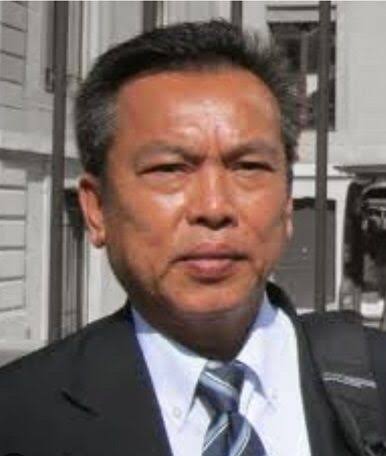
By Daniel John Jambun, Borneo’s Plight in Malaysia Foundation (BoPiMaFo)
KOTA KINABALU: Perhaps the most disturbing part of Sabah’s demographic dilemma is not merely that our demographic landscape has changed so profoundly.
It is the apparent silence, weakness and lack of urgency among many of the political leaders who claim to represent Sabah’s indigenous communities.
For decades, Sabahans have raised serious concerns about the extraordinary growth of the migrant and non-citizen population, unresolved statelessness, allegations involving irregular acquisition of identity documents and citizenship, the integrity of the electoral roll and the possible consequences of future constituency redelineation.
These are not merely immigration issues.
They are not merely administrative issues.
They concern citizenship, constitutional safeguards, electoral integrity and ultimately political representation.
The connection is simple:
Citizenship determines voting rights.
Voting rights determine electoral representation.
Electoral representation determines political power.
And political power determines who ultimately influences Sabah’s laws, institutions, resources and future.
Yet where is the urgency?
Where are the sustained debates in the Sabah State Legislative Assembly?
Where are the comprehensive policy proposals?
Where is the demand for complete demographic transparency?
Where is the systematic follow-up to the Royal Commission of Inquiry on immigrants in Sabah?
Where is the determination to ensure that Sabah’s electoral roll is beyond reasonable suspicion?
And where is the strategy to ensure that future electoral redelineation does not progressively weaken the legitimate political representation of Sabah’s indigenous peoples?
These questions cannot simply be postponed until another election.
THE NUMBERS THEMSELVES DEMAND AN ANSWER
We do not need speculation to understand the seriousness of Sabah’s demographic situation.
We only need to look at the official government statistics.
According to the Department of Statistics Malaysia’s Current Population Estimates, Sabah, 2025, Sabah had an estimated population of approximately 3.76 million people.
Of these, approximately 1.04 million were classified as non-citizens.
That means 27.7 per cent of Sabah’s entire population — more than one person in every four — was officially classified as a non-citizen.
Let that figure sink in:
1,040,200 non-citizens in a State with a population of only 3.76 million.
Now consider the indigenous population.
According to the 2020 Population and Housing Census, the Kadazan/Dusun population was approximately 698,300, while the Murut population stood at approximately 112,900.
Together, these two major indigenous communities numbered approximately 811,200 people in the 2020 Census.
The comparison should command the attention of every responsible Sabah political leader:
Sabah’s estimated non-citizen population in 2025 — approximately 1.04 million — is numerically larger than the combined 2020 Census population of the Kadazan/Dusun and Murut communities.
This comparison must, of course, be understood carefully because the figures come from different statistical years and the KDM population will also have changed since 2020.
But the broader demographic question remains impossible to ignore.
How did Sabah reach a situation in which more than a quarter of its population is classified as non-citizen?
What are the long-term consequences?
What is the Government’s demographic policy?
What is the projected position ten, twenty or thirty years from now?
And why are so few of our political leaders demanding answers?
THIS IS NOT ABOUT HATING MIGRANTS
Let us also make one thing absolutely clear.
The demographic question must never become an excuse for hatred against migrants, refugees, stateless persons or any racial or religious community.
Human beings must be treated with dignity.
Genuine Malaysian citizens, irrespective of race, religion or ancestry, have constitutional rights which must be respected.
But compassion does not require a government to abandon the integrity of citizenship.
And tolerance does not require Sabahans to remain silent about legitimate questions concerning documentation, citizenship and electoral registration.
A functioning country must know:
Who is a citizen?
Who is a permanent resident?
Who is a temporary resident?
Who is undocumented?
Who is stateless?
And who is legally entitled to vote?
Those are perfectly legitimate questions in any democracy.
WHAT IS THE PURPOSE OF HAVING KDM LEADERS IN POWER?
This brings us to perhaps the most uncomfortable question of all:
What is the purpose of having KDM leaders in positions of power if they are too weak, too meek or too politically constrained to use that power when it matters most?
What is the purpose of having KDM ministers?
What is the purpose of having KDM Assistant Ministers?
What is the purpose of having KDM Members of Parliament and Assemblymen?
What is the purpose of occupying seats in Cabinet if those seats cannot be used to demand answers about issues that may profoundly affect the future representation of the people they claim to represent?
Political office has meaning only when political power is exercised.
A ministerial title without courage is merely a title.
A Cabinet position without influence is merely an appointment.
Representation without advocacy is representation in name only.
Sabah does not need leaders merely to occupy chairs at Cabinet meetings.
We need leaders prepared to ask difficult questions.
We need leaders prepared to demand facts.
We need leaders prepared to challenge institutions where necessary.
And above all, we need leaders prepared to exercise political authority when the long-term interests of Sabah are at stake.
If leaders remain silent on matters that may determine the political future of generations, Sabahans are perfectly entitled to ask:
Are they using power on behalf of the people — or simply enjoying the privileges that come with holding power?
WHY IS THERE URGENCY FOR POSITIONS BUT NOT FOR SABAH’S FUTURE?
There is another contradiction that Sabahans should recognise.
When Cabinet positions are being negotiated, political leaders understand urgency.
When electoral seats are being divided among coalition partners, meetings can continue until midnight.
When a party position is threatened, press statements can appear within hours.
When somebody is in danger of losing a ministerial appointment, suddenly telephone calls, negotiations and emergency meetings become possible.
When political survival is involved, our politicians know exactly what urgency means.
But when Sabah’s demographic future is concerned?
Silence.
When the integrity of citizenship is questioned?
Caution.
When people raise questions about the electoral roll?
Excuses.
When future political representation may be affected?
More silence.
So the public should ask:
Why is political power worth fighting for, but the purpose for which that power supposedly exists appears negotiable?
POLITICAL POWER CAN DISAPPEAR QUIETLY
The political influence of a community does not necessarily disappear through one dramatic event.
Sometimes it disappears quietly.
One demographic shift at a time.
One generation at a time.
One voter registration at a time.
One constituency at a time.
One electoral boundary at a time.
Then, one day, a community discovers that although its people remain on the land of their ancestors, their political influence over that land has substantially diminished.
By then, speeches may be useless.
Resolutions may be useless.
Political outrage may be useless.
Because demographic and electoral structures, once institutionalised, can be extraordinarily difficult to reverse.
That is why the real question is not how many KDM politicians hold office in 2026.
The real question is:
What will the political representation of Sabah’s indigenous peoples look like in 2040, 2050 or 2060?
A responsible leader thinks beyond the next election.
ARTICLE 161A MUST MEAN SOMETHING
The Federal Constitution itself expressly recognises the natives of Sabah through Article 161A.
That recognition cannot be reduced to ceremonial language inside the Constitution.
A constitutional safeguard has value only if it produces meaningful protection.
Rights mean little when those entrusted with protecting them refuse to act.
Recognition means little if political leaders invoke indigenous identity during elections but become strangely silent once positions have been secured.
The indigenous peoples of Sabah are not merely cultural ornaments to be celebrated during harvest festivals.
Their constitutional position is part of Malaysia’s constitutional framework.
Their representation matters.
Their political voice matters.
Their future matters.
THE ELECTORAL ROLL MUST BE BEYOND SUSPICION
There should be absolutely nothing controversial about demanding an electoral roll whose integrity is beyond question.
Every genuine Malaysian citizen must have the right to vote.
That right should be protected regardless of race, religion or political affiliation.
But the opposite principle is equally important:
No person who is not lawfully entitled to Malaysian citizenship should be permitted to determine the electoral future of Sabah.
There is nothing racist about that proposition.
It is the foundation of democracy.
If credible anomalies are discovered, investigate them.
If citizenship records are questioned, verify them.
If identity documentation is disputed, establish the truth.
If everything is legitimate, then transparency will strengthen public confidence.
A government confident in the integrity of its system should have nothing to fear from independent scrutiny.
WHAT HAPPENED AFTER THE RCI?
Sabah has already gone through a Royal Commission of Inquiry into immigrants.
Evidence was heard.
Witnesses testified.
A report was produced.
Serious issues surrounding Sabah’s demographic transformation and documentation system entered the public record.
But an RCI should not become merely another historical document gathering dust on a government shelf.
Sabahans are entitled to know:
What recommendations were implemented?
Which were not?
Why were they not implemented?
What remedial measures followed?
What institutional reforms were introduced?
And what measurable results have been achieved?
The existence of an RCI cannot become an excuse for closing the issue.
It should be the beginning of accountability, not the end of it.
REDELINEATION COULD BECOME THE NEXT GREAT BATTLE
Sabah must also pay extremely close attention to future constituency redelineation.
Electoral boundaries are not harmless lines on maps.
They determine political representation.
They determine electoral weight.
They influence who governs.
And once established, they can shape politics for many years.
If Sabah’s demographic composition has changed substantially, then future redelineation could have profound political consequences.
Therefore, before any major redelineation affecting Sabah, the Election Commission should be expected to disclose and explain clearly:
the population figures used;
the number of registered voters;
the methodology applied;
the justification for creating or altering constituencies;
and the consequences for representation.
Sabah cannot afford to wake up after the boundaries have already been changed and ask:
What happened to our representation?
By then, the answer may already have been drawn permanently onto the electoral map.
KDM POLITICAL FRAGMENTATION IS PART OF THE PROBLEM
There is also an uncomfortable truth that KDM leaders themselves must confront.
The KDM political community has become deeply fragmented.
Interior against West Coast.
Urban against rural.
Party against party.
Leader against leader.
Increasingly, political competition and narrower identities divide people who nevertheless share a common historical stake in Sabah.
Political diversity is healthy.
Nobody should demand that every Kadazan, Dusun or Murut support the same party or hold identical political beliefs.
But political diversity becomes self-defeating when leaders become incapable of cooperating even on matters involving constitutional safeguards, citizenship integrity and the long-term representation of indigenous communities.
Surely some issues must transcend party colours.
A clean electoral roll should transcend party politics.
Citizenship integrity should transcend party politics.
Implementation of appropriate recommendations arising from the RCI should transcend party politics.
Fair constituency redelineation should transcend party politics.
Protection of constitutional safeguards should transcend party politics.
These issues do not belong to GRS.
They do not belong to Warisan.
They do not belong to STAR, PBS, UPKO, KDM or any other political party.
They belong to Sabah.
THREE POSSIBILITIES — AND NONE IS COMFORTING
Why, then, is there so little urgency?
There appear to be three possible explanations.
First, some leaders may genuinely not understand the seriousness of the demographic and electoral issue.
If so, we must question their competence.
Second, they may understand it but do not consider it important enough to confront.
If so, we must question their priorities.
Third, they may understand the issue perfectly well but believe that speaking too forcefully could threaten their political positions, coalition relationships or careers.
If that is the explanation, then Sabahans must ask an even more disturbing question:
Whose interests are being protected by their silence?*
Political leadership cannot mean speaking only when speaking is safe.
The real test of leadership comes when protecting the public interest carries a political price.
SABAH NEEDS DATA, NOT DENIAL
The answer to Sabah’s demographic dilemma is not hysteria.
It is not racial accusation.
It is not speculation.
The answer is evidence, transparency and law.
Sabah needs accurate demographic information.
Sabah needs clear citizenship statistics.
Sabah needs a credible accounting of stateless and undocumented populations.
Sabah needs an electoral roll capable of independent scrutiny.
Sabah needs transparent follow-up on unresolved RCI issues.
Sabah needs to understand the demographic assumptions underlying future redelineation.
And where credible evidence of wrongdoing or irregularity exists, Sabah needs investigation and lawful corrective action.
WHAT SHOULD OUR POLITICAL LEADERS DO?
The time for vague assurances has passed.
Sabah’s political leadership should support concrete measures.
There should be a comprehensive and transparent demographic audit of Sabah.
There should be rigorous verification of citizenship and electoral registration wherever credible anomalies are identified.
There should be a public accounting of which RCI recommendations and follow-up measures have been implemented and which remain outstanding.
There should be full transparency before any future constituency redelineation affecting Sabah.
There should also be serious examination of whether Sabah’s existing constitutional and institutional safeguards remain adequate to protect fair representation in light of demographic developments since Malaysia was formed.
And these matters should not be reduced to another government-versus-opposition shouting match.
Sabah should establish a serious, multi-party and institutional mechanism to examine demographic integrity, citizenship, electoral rolls and future representation.
Those who oppose such transparency should explain why.
HISTORY WILL NOT REMEMBER THEIR TITLES
One day this generation of Sabah’s political leaders will be judged.
History will not be particularly interested in how many Cabinet positions they occupied.
History will not care how many Datukships they accumulated.
History will not remember the number of government vehicles travelling in their convoys.
History will not care how many appointments they distributed.
It may not even remember how many elections they won.
History will ask something much simpler:
When Sabah’s demographic and political future was changing before their eyes, what did they do?
Did they investigate?
Did they speak?
Did they demand transparency?
Did they defend citizenship integrity?
Did they protect the electoral system?
Did they scrutinise redelineation?
Did they protect the constitutional position and legitimate representation of Sabah’s indigenous peoples?
Or did they remain silent because silence was politically convenient?
That question must be answered not twenty years from now.
Not during another election campaign.
It must be answered now.
Because ministers come and go.
Chief Ministers come and go.
Governments rise and fall.
Political parties appear and disappear.
But demographic change can reshape a society for generations.
And once meaningful political representation has been structurally weakened, restoring it may be extremely difficult.
The tragedy would therefore not be that Sabah never saw the warning signs.
The warning signs have been discussed for decades.
The greater tragedy would be that **we saw them, understood their implications, possessed leaders in positions of power — and those leaders nevertheless failed to act.
Future generations may then ask:
Where were Sabah’s leaders when all this was happening?
But for the KDM political leadership, history may pose an even harsher question:
What was the purpose of having KDM leaders in positions of power if, when that power mattered most, they were too weak, too meek or too politically constrained to use it?
That is the KDM dilemma.
And it is a question that can no longer be answered with silence.