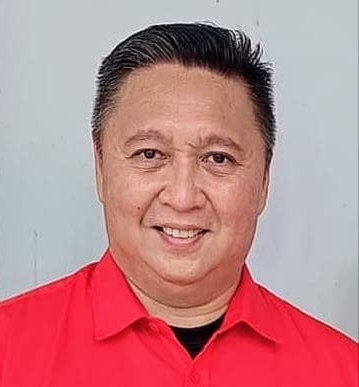
By Social Activist Mohd Zaki Harry Susanto
TAWAU- Johnny S H Liew’s article titled “Don’t Tell Sabahans Who the Architect Is — Show Us the Building” actually presents an interesting challenge.
He wants the government to show “buildings”
Okay.
We agree .
But if you want to assess a building, don’t just take pictures of the cracked walls and claim that the entire building has failed.
Also, see the basics.
Look at the level that is ready.
Look at the facilities that have already been used.
Look at the ongoing project.
And most importantly, look at who is funding it .
If the standard is “show us the building,” then the people of Tawau and Kalabakan also have the right to ask Johnny S H Liew:
Have you seen the buildings being constructed in Tawau and Kalabakan?
Because if viewed comprehensively, the picture he painted is too black-and-white, making it seem as if nothing has happened in the East Coast of Sabah throughout the administration of the Gabungan Rakyat Sabah (GRS).
The reality is very different.
TAWAU AND KALABAKAN ARE NOT ABANDONED LANDS
Just look at the infrastructure development.
The Tawau Bypass road is currently being attended to.
The new Kalabakan–Malaysia-Indonesia border (Simanggaris) road is currently undergoing the implementation process.
The project is not just a village road.
It has strategic importance because Kalabakan has the potential to become the trade and logistics gateway for Sabah with Kalimantan.
The Federal Government itself allocated RM416 million for the Kalabakan–Simanggaris road, while Southern Link Phase 1A received RM200 million
JKR Sabah has also conducted monitoring of the new Kalabakan–Indonesia border road project and the Tawau Bypass.
So, when Johnny asks, “Where is the building?”, the answer is simple:
The building is under construction.
And for Tawau and Kalabakan, that “building” is not just a concrete structure.
It is a network of roads, energy, health, housing, education, and economy that is being developed.
KALABAKAN: NOT JUST A NAME ON THE MAP
Kalabakan is no longer just a district mentioned during election season.
One example is the project to upgrade the Bukit Tajam River Bridge on Mull Hill Road, Kalabakan.
The tenders received for the project were around RM45.8 million to RM47.6 million, with an implementation period of 30 months.
This is not a slogan. This is an infrastructure project.
Furthermore, Kalabakan has the potential to become a new logistics and trade hub for Sabah due to its position connecting Sabah with Kalimantan.
That’s why the construction of a road network to the border has far greater strategic value than just improving a single road. It opens up possibilities for cross-border trade, logistics, agriculture, and investment. ENERGY:
TAWAU HAS STARTED BUILDING THE FUTURE
Johnny asked about electricity.
Okay. Let’s see what’s happening in Tawau. The Q-Solar Tawau Large-Scale Solar Project is expected to generate 15MWac of clean energy by the end of 2026.
The project, covering more than 45 acres, is developed thru the collaboration of Qhazanah Sabah Berhad, Qhazanah Energy, and QSolar Tawau.
The State Government itself stated that this project is part of efforts to strengthen the energy stability of the East Coast and expand renewable energy in Sabah.
This answers an important question in Johnny’s writing: Is the government only talking about development?
No. Tawau is being included in Sabah’s future energy agenda.
WATER IS STILL A PROBLEM — AND IT DOESN’T NEED TO BE DENIED
Here we need to be honest. The water issue in Sabah is not yet resolved.
Certain road issues have also not been resolved.
The electrical issue is also not fully resolved yet. But acknowledging the problem does not mean denying the effort to solve it.
That is the difference between constructive criticism and a narrative that wants to portray the government as if it is doing nothing at all.
In fact, the Sabah Budget and infrastructure planning also include water supply projects as well as main transmission and distribution pipes in parts of Tawau City.
So don’t use the existence of problems as evidence that there is no effort.
A state that has faced an infrastructure deficit for decades cannot eliminate all its problems in one term. What should be measured is: Is the problem being reduced?
Is the project currently being implemented
Is the capacity increased? And for Tawau and Kalabakan, the answer is yes
HEALTH: TAWAU IS MOVING UP A CLASS
Johnny mentioned health as one of the people’s issues. Let’s take a look at Tawau.
The new block of Tawau Hospital has added 154 beds and is equipped with six operating theaters, an MRI, specialist clinics, an Emergency and Trauma Department, and various modern facilities.
The value of the project is RM223.65 million and it is funded by the Federal Government. And this is where we need to be fair.
This is not just the success of GRS. It is the success of the cooperation between the State Government and the Federal Government.
But without a good working relationship between the two governments, the demands and needs of the state will not progress smoothly.
In fact, Tawau Hospital is targeted to achieve the status of Category 1 State Hospital by 2030. So if Johnny wants to “show us the building”:
This is one of the buildings that can be shown. And the building is not just beautiful from the outside. It has 154 additional beds and significant medical facilities
SMJ IS NOT JUST A SLOGAN — ASK THE RECIPIENTS
Johnny’s writing seems to position SMJ merely as a political slogan.
But ask the recipients of the Rumah Mesra SMJ.
In the DUN Apas area alone, 57 houses have been reported to have been built since the program was introduced in 2022
In Merotai, SMJ houses are handed over to groups such as the elderly, single mothers, and fire victims.
For a poor family who previously lived in a dilapidated house, a new home is not propaganda.
It is a life that changes.
Politics can debate about numbers.
But the recipients know what it means when they receive the house keys.
RM1.5 MILLION FOR TAWAU HEALTH
In 2025, more than RM1.5 million was allocated thru the SMJ program for healthcare facilities in Tawau — RM1 million to the Sri Stella Rehabilitation Hub and RM500,000 to the East Coast Respiratory Corridor at Tawau Hospital.
So when it is said that SMJ is just a slogan, we need to ask:
How about the money that actually reaches the institutions and the people?
This is why development measures should not be based solely on criticism of weaknesses.
He must see the outcome.
EDUCATION AND TECHNOLOGY ARE ALSO GIVEN ATTENTION
Development is not just roads and buildings.
Human capital is more important.
In Tawau, the program “Selangkah Ke Menara Gading & SMJ Dron 2025” involves more than 4,000 students and parents, including exposure to higher education, drones, and artificial intelligence technology.
This is human development.
If a child from Tawau is inspired to enter university, learn new technologies, and build a high-skilled career, that is also part of “building”.
It’s just that it’s not a concrete building.
It is a human capital building.
SO, HOW ABOUT “SHOW US THE BUILDING”?
We can use Johnny’s own slogan against his argument.
Muéstranos el edificio.
Okay.
But don’t point out one crack and then say the whole building has collapsed.
Show:
Jalan Tawau Bypass.
Kalabakan–Simanggaris Road.
Bukit Tajam River Bridge.
Tawau solar energy project.
New block of Tawau Hospital.
SMJ Friendly House.
SMJ Health Facility.
Education and technology program.
And the ongoing economic projects.
That is the real “building.”
ABOUT SFI, SABAH DEVELOPMENT BANK, PITAS, AND SMM
This is where Johnny’s writing also needs to be read more carefully.
He mixes various historical issues, institutions, government-linked companies, business decisions, old projects, and past controversies to build a general conclusion about the government today.
That is not necessarily a fair analysis.
If SFI has issues, investigate.
If there is a governance failure, audit.
If there is misconduct, prosecute.
If there is a responsible party, take action.
But do not use every historical issue in Sabah as evidence that the current government has failed in everything.
That is the fallacy of collective blame.
The same goes for Sabah Development Bank.
If there are losses, problematic loans, or litigation, governance issues should indeed be raised.
But court cases cannot be treated as if all allegations have become final facts.
Johnny himself admitted that some of the allegations still need to be decided by the court
Therefore, the same standard must be applied to all parties.
Don’t judge before the legal process is complete.
PITAS: TEACHING, NOT A POLITICAL WEAPON
Pitas also need to be evaluated objectively.
If the previous project failed, we need to ask what happened, who is responsible, and how the government will fix the system.
But using one problematic project to deny the entire development agenda of Sabah is unreasonable.
Every government has successful projects, slow projects, and failed projects.
A mature government is not one that claims all its projects are perfect.
A mature government is one that learns from failure and improves the system.
ABOUT TIMBER AND ORIGINAL SOURCES
Johnny asked why Sabah’s wealth does not make all the people of Sabah rich.
The question is valid.
But the question did not start in 2020.
It is a question of decades of history.
It involves governments coming and going, fiscal structures, federal policies, industries, GLCs, concessions, leakages, productivity, education, infrastructure, and various economic decisions since before GRS existed.
So don’t take problems that have accumulated over decades and place them all on the shoulders of a single kingdom.
That’s not accountability.
It was political convenience.
SABAH CANNOT COMPARE ITSELF TO SARAWAK HALF-HEARTEDLY
Johnny is right about one thing:
Sabah really needs to compare its performance with Sarawak.
But benchmarking must be done thoroughly.
Don’t just compare the final results.
Also compare:
economic structure,
population size,
geography,
state results,
petroleum structure,
previous infrastructure,
fiscal relationship,
GLC structure,
development foundation,
investment,
and the history of administration.
If you want to take Sarawak as a benchmark, take the good parts.
But do not use Sarawak as a political punching bag.
TAWAU AND KALABAKAN HAVE A BRIGHTER FUTURE
The positions of Tawau and Kalabakan are actually very strategic.
With Kalimantan developing Nusantara, the Malaysia-Indonesia border has much greater economic potential.
Kalabakan can become one of Sabah’s trade gateways.
Tawau also has a port, airport, agricultural areas, industry, trade, and regional connections.
The state government itself sees agriculture, fisheries, plantations, and tourism as the pillars of Kalabakan’s development.
So the real challenge is no longer just building roads.
The next challenge is:
how to ensure the people of Tawau and Kalabakan have a stake in that economic growth.
That is the agenda we should demand.
CRITICISM IS ALLOWED.
DEMAND RESULTS, FAIR.
BUT DO NOT DELETE THE EXISTING
RESULTS.
No one is saying that Tawau and Kalabakan are perfect.
Not yet.
There are still damaged roads.
There are still areas experiencing water problems.
There is still an electrical disturbance.
There are still low-income families.
There is still a health need.
There is still a gap in rural development.
And the government should continue to be pressured to resolve it.
But between saying “there are still many problems” and saying “the government is doing nothing,” there is a very big gap.
And Johnny’s writing is too close to that second conclusion.
SO WHO IS THE ARCHITECT?
No need to debate who deserves to be called an “architect.”
The people can judge for themselves.
If someone wants to call Hajiji the architect of SMJ, that is their right.
If someone disagrees, that is also their right.
But in the end, the most important measure is:
What is being built?
And for Tawau and Kalabakan, the answer can already be seen.
The road is being constructed.
The bridge is being upgraded.
New energy is being developed.
The hospital is being expanded.
The people’s house is being handed over.
Health facilities have been added.
Education and technology are empowered.
The trade relationship with Indonesia is receiving strategic attention.
And new projects are being planned to open the East Coast Economic Corridor of Sabah.
That is the building.
TO JOHNNY S H LIEW — WE AGREE ON ONE THING
l
.
But after the building is shown, don’t forget to also show who built it.
Show who is providing the allocation.
Show who is negotiating with Putrajaya.
Show who is leading the project.
Show who approved it.
Show who is carrying it out.
And most importantly:
show the results that the people have already enjoyed.
Don’t just show the cracks.
Don’t just show the failed projects.
Don’t just show the problems inherited for decades.
Don’t mix all the historical failures of Sabah and label them as the failure of one administration.
Because if we want to be fair, we must look at the whole structure, not just the parts that are easiest to use to attack the government.
And to the people of Tawau and Kalabakan, the more important question is not:
“Who is the best at writing critiques?”
But:
“Who really brought development to our area?”
The answer must be determined based on evidence.
Not a poster.
Not propaganda.
Not an insult.
Not a compliment.
Evidence.
Because if the principle is
Therefore, Tawau and Kalabakan can respond:
“PLEASE COME AND SEE FOR YOURSELF.”
Look at the road.
See the hospital.
Look at the people’s house.
Look at the energy project.
Look at the school.
vLook at the healthcare facilities.
Look at the border project.
Look at the investment.
See the changes.
And only after everything has been seen, will the people make a decision
Because in the end, development politics is about ensuring that the building continues to be constructed, repaired, maintained, and ultimately benefits the people.