By Remy Majangkim
KOTA KINABALU: For years, the official narrative surrounding Phase 1 of the Sabah Pan Borneo Highway project was neatly sanitized in boardrooms and federal corridors as a routine bureaucratic headache, a tale of administrative bottlenecks, land acquisition hurdles, and shifting project timelines.
But out on the dark, rutted, and treacherous corridors of Sabah’s federal roads, stretching from the daily commutes between Kota Kinabalu and Sandakan to the vital arteries connecting Tawau reality is measured in a much heavier currency: human lives, mangled wreckage, blown tires, and shattered families.
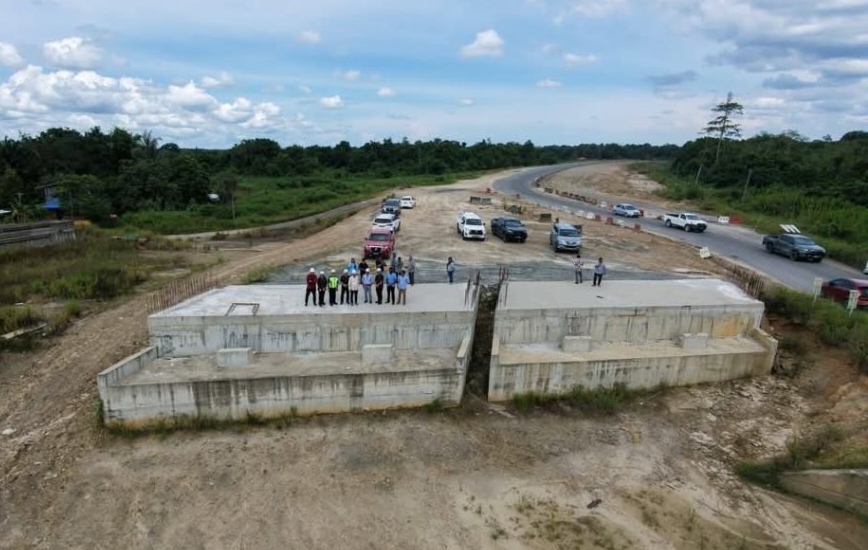
Now, as Parliament’s Public Accounts Committee (PAC) launches a full-scale investigation following a damning Auditor-General’s Report, revealing that 94.6% of the allocated budget (RM10.547 billion) has been burned through while a meager 4 out of 35 work packages (11.4%) are finished, a grim truth is surfacing. (Let that sink in first)
This is no longer just a financial scandal of ballooning variation orders and stalled “sick projects.” It is a structural crisis where corporate impunity and negligent project execution have traded public safety for prolonged profits.
The Anatomy of an Infrastructure Quagmire
The numbers laid bare by the audit paint a staggering portrait of systemic failure. Out of 31 unfinished packages, 9 are officially classified as “sick,” and 13 are heavily lagging behind schedule.
A mega-project originally slated for completion by late 2021 has seen its finish line dragged out toward 2030, nearly a decade late.
Yet, even as deadlines slipped into the next decade, the money kept flowing. Nearly RM10.5 billion has been disbursed, fueled by hundreds of millions in unauthorized variation orders and premature groundbreakings that bypassed mandatory Environmental Impact Assessment (EIA) approvals.
While administrators and contractors bickered over red tape, ordinary Sabahans were left to navigate a permanent construction zone that feels less like a development milestone and more like an obstacle course.
Driving on Borrowed Time: The Human Toll of Perpetual Delay
Ask any daily commuter, commercial lorry driver, or family traveling between districts, and they will tell you that the Pan Borneo expansion has become a gauntlet of risk.
When package owners abandon work sites or allow projects to stagnate for years, the basic duty of care vanishes.
Motorists are routinely forced onto unlit, unpaved detours, plunging suspension systems into sudden, unmarked trenches or swerving to avoid deep craters carved out by monsoon rains and heavy machinery.
Fatalities on the Asphalt: Every month, lives are lost along these dangerous corridors. Fatigue, poor visibility, flying gravel from unprotected road shoulders, and sudden lane drops claim victims who were simply trying to get to work or visit loved ones.
Property Destruction as a Cost of Living: Beyond the tragic loss of life, thousands of working-class families bear the financial brunt of damaged vehicles, shattered windscreens, blown tires, bent axles, and broken suspensions with zero recourse or compensation from the corporate entities pocketing government funds.
Strip Away the Corporate Veil: Name the Contractors and Owners
For too long, infrastructure scandals in Malaysia have hidden behind opaque corporate shells where entities underperform, drag out timelines, and walk away unscathed while public funds bleed dry and the rakyat bear the cost on dangerous roads.
If the PAC probe is to mean anything, it cannot stop at summoning Ministry officials or Public Works Department (JKR) engineers.
It must pierce the corporate curtain and name the main contractors, project consultants, and beneficial owners responsible. The PAC must ensure that these hearings are not reduced to polite, closed-door exchanges, but serve as public reckonings.
End Corporate Anonymity: When 9 out of 31 remaining packages become “sick projects” and billions are disbursed with almost nothing to show for it on the ground, the public deserves to know who specifically is holding these contracts. Naming the corporate directors places responsibility directly where it belongs.
Preventing “Rebranding” Impunity: A public blacklist is toothless if non-performing players can simply rebrand, set up subsidiary shells, or bid on future state and federal tenders under a different name. Exposing their identities ensures real accountability.
Criminal Liability for Negligence: When a package owner or main contractor fails to maintain basic safety standards, leaves massive unpaved drops unprotected, or drags their feet to squeeze more payouts from Putrajaya, that negligence directly contributes to every accident and fatality. Enforcement bodies the MACC and PDRM, must investigate them accordingly.
Conclusion: No More Excuses
The Sabah Pan Borneo Highway was promised as the economic backbone that would propel East Malaysia into a new era of connectivity and prosperity. Instead, for nearly a decade, it has acted as an unending punishment for the rakyat.
As the PAC digs deeper into the ledger of failures, the human factor must remain front and center. Billions can be re-audited and contracts can be cancelled, but lives lost on unfinished asphalt can never be recovered. It is time to strip the negligent of their packages, drag their names into the light, and ensure that human safety not contractor greed, drives the road ahead.
Author of 8th Engineering: The end of Economic Corruption