Issued by:Borneo’s Plight in Malaysia Foundation (BoPiMaFo)
A Decade of Disillusionment and Disrepute
The decision announced on 19 October 2026 by Parliament’s Public Accounts Committee (PAC) to launch a formal investigation into the management, governance, and financial execution of Phase 1 of the Sabah Pan Borneo Highway project is both necessary and long overdue.
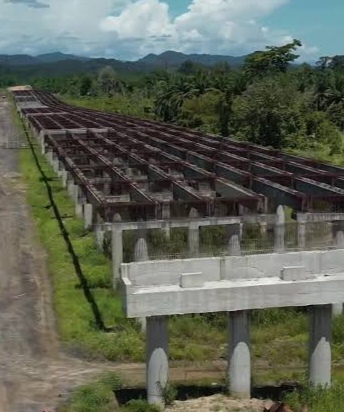
The damning disclosures in the Auditor-General’s Report 2/2026 confirm what the people of Sabah have suffered for a decade: 94.6% (RM10.547 billion) of the RM11.153 billion allocated funds have been spent, yet only four out of 35 work packages have been completed.
To have spent virtually the entire budget while completing barely 11% of the work packages is not merely an operational failure—it is a textbook case of systemic governance breakdown, administrative incompetence, and financial squandering.
The Sarawak Comparison: No Excuses Left
Federal and state authorities can no longer hide behind geographical terrain, climate conditions, or the 2019 cancellation of the Project Delivery Partner (PDP) model.
Neighboring Sarawak launched its Pan Borneo Highway project at the exact same time, under the same federal framework, and navigated identical macro-economic shocks.
Yet, Sarawak successfully completed Phase 1 of its highway, while Sabah’s project lies in ruins—plagued by incomplete alignments, unpaved detours, dangerous road conditions, and an extended completion target now pushed back to 2030.
This stark contrast proves that Sabah’s delays are self-inflicted by institutional failure, political instability, red tape, and compromised oversight.
The Four Core Pillars of Failure Flagged by BoPiMaFo
BoPiMaFo highlights four primary structural breakdowns that caused this megaproject to collapse:
A. Severe Financial Irregularities & Variation Orders
The A-G’s findings reveal that variation orders worth RM513.99 million were approved beyond authorised limits. Financial controls were repeatedly bypassed, allowing funds to burn rapidly without delivering proportional physical progress on the ground.
B. Contractual Legal Deadlocks & Payment Bottlenecks
Top-level spending numbers mask a crisis down the contracting chain. Disclosures from local builders—such as the ongoing material litigation involving major local contractors like Azam Jaya Berhad over Package 6—show that local firms have been forced into protracted court battles simply to collect proceeds for work already completed. When payment verification and legal disputes paralyse main contractors, capital freezes, machinery stops, and local sub-contractors and suppliers are ruined.
C. Front-End Administrative Incompetence
The audit exposes complete paralysis between federal and state authorities prior to launching construction:
RM144 million in land compensation remained unpaid, leaving 99 structures undemolished and blocking site access.
19 work packages commenced before Environmental Impact Assessment (EIA) reports were approved, violating statutory procedures and triggering costly work stoppages.
D. Tender Vetting and “Sick Packages”
The project was crippled by the appointment of under-capacitated contractors lacking the financial liquidity and technical machinery required for complex slope stabilization and earthworks. Rather than blacklisting failing entities, packages were allowed to languish as “sick projects” while costs surged from RM17.91 billion to RM18.394 billion.
4. Development Projects Are Not a Substitute for MA63 Entitlements
BoPiMaFo reiterates to Putrajaya and the Sabah State Government that federal development allocations are a standard constitutional obligation to tax-paying citizens—they are NOT substitutes for Sabah’s constitutional rights under the Malaysia Agreement 1963 (MA63).
Under Articles 112C and 112D of the Federal Constitution, Sabah is entitled to its 40% net revenue return. For decades, federal leaders have pointed to mega-allocations like the Pan Borneo Highway as proof of federal generosity.
Today, the Auditor-General’s report proves the reality:
high-sounding federal budget allocations are frequently swallowed by federal-state red tape, unauthorized variation orders, and administrative leakages long before they translate into actual infrastructure for Sabahans.
5 . BoPiMaFo’s Demands to the Public Accounts Committee (PAC)
To ensure this PAC inquiry does not become another hollow exercise, BoPiMaFo demands the following concrete actions:
Immediate MACC & Police Referrals:
If the PAC uncovers evidence of graft, bid-rigging, abuse of power, or unauthorized variation approvals, immediate criminal referrals must be made to the Malaysian Anti-Corruption Commission (MACC) and the Royal Malaysia Police (PDRM).
Systematic Blacklisting & Capital Recovery:
Contractors and consultants responsible for “sick packages” or abandoned works must be permanently blacklisted from all federal and state tenders, with legal proceedings initiated to recover unearned advance payments.
Overhaul the Contractor Payment System:
Putrajaya and JKR Sabah must establish a transparent, fast-tracked payment verification system so legitimate sub-contractors working on the ground are paid promptly, preventing legal deadlocks from halting construction.
Centralized Federal-State Task Force:
Sabah must establish an empowered, single-window execution authority—mirroring Sarawak’s model—to streamline land acquisition, utility relocation, and EIA approvals under one roof.
Quarterly Public Audits on the 2030 Target:
With the completion date extended to 2030 and costs escalating to RM18.394 billion, the government must publish quarterly progress reports accessible to the public. Sabahans will not tolerate another deadline shift.
Conclusion
The Sabah Pan Borneo Highway is a vital economic artery meant to connect our communities, spur regional trade, and reduce the massive infrastructure divide between East and West Malaysia.
The scandal exposed by Auditor-General’s Report 2/2026 is an insult to the dignity and safety of all Sabahans. BoPiMaFo will closely monitor the PAC proceedings and calls upon all Sabahan MPs—across party lines—to stand united in demanding total accountability, full fiscal transparency, and the immediate completion of this long-overdue highway.
DANIEL JOHN JAMBUN, Pesident Borneo’s Plight in Malaysia Foundation (BoPiMaFo)