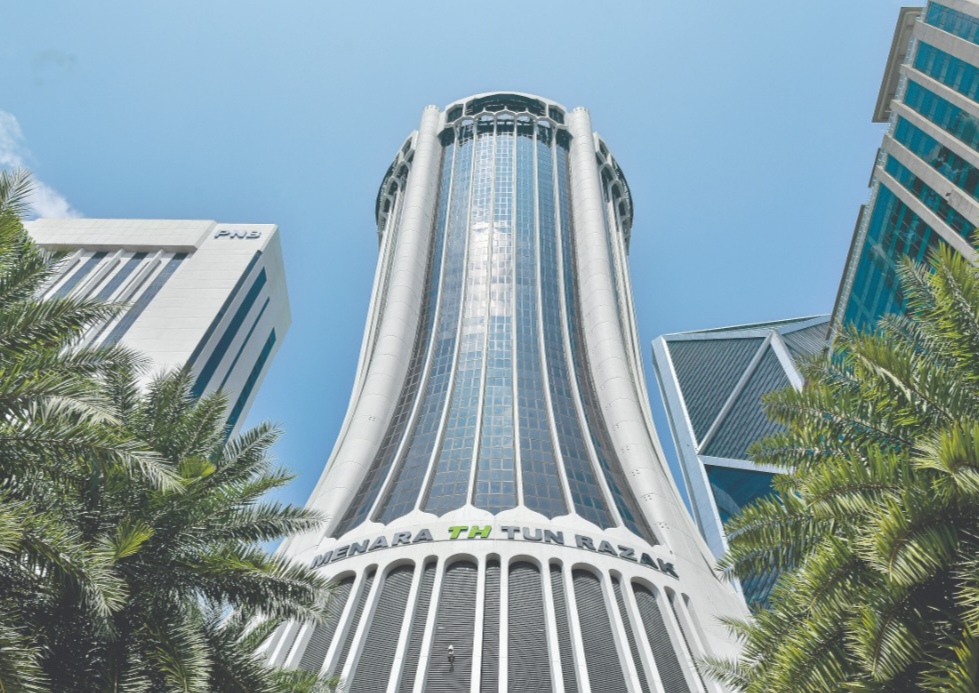
KOTA KINABALU: The Sabah Sarawak Rights Australia New Zealand (SSRANZ) advocacy group expresses its profound concern over the recently declassified findings of the Lembaga Tabung Haji Royal Commission of Inquiry (RCI).
The report uncovers a catastrophic web of mismanagement, concealed deficits, and corrupt investment practices.
With the federal government admitting that the multi-year rescue operation of this Malayan religious institution has cost taxpayers nearly RM13 billion, SSRANZ stands firmly with the recent position of the Parti Bumi Kenyalang (PBK).
In view of this appalling waste of public funds and resources, SSRANZ must openly question why the Gabungan Parti Sarawak (GPS) government continues to keep Sarawak bound to an asymmetric federal framework where Bornean revenues are continually expropriated to subsidise Malaya’s structural corruption.
The Tabung Haji disaster is not an isolated event; it comes directly in the wake of the highly publicised and destructive Federal Land Development Authority (FELDA) scandals.
These serial asset collapses have exacted an immense toll across the Borneo territories. In Sarawak, the corruption culminated in the fraudulent, highly inflated acquisition of the Merdeka Palace Hotel&Suites in Kuching by Felda Investment Corporation (FIC).
Simultaneously in Sabah, systemic vulnerabilities have been exposed through land transaction frauds and backroom account setups that directly compromised state boundaries.
These continuous corporate catastrophes have driven FELDA into nearly RM10 billion of debt, forcing yet another massive central government bailout.
SSRANZ demands a definitive explanation: Is it due to deliberate mismanagement that directly benefited corrupt people in control of those failed federal projects?
If these multi-billion-dollar collapses were merely accidental financial downturns, why is the federal government now desperately seeking out the culprits and charging them with corruption?
The criminal prosecutions and continuous anti-corruption dragnet surrounding these entities prove that these are not standard business risks—they are systematic acts of plunder executed by well-connected elites.
For over six decades, Sarawak’s immense natural and petroleum wealth has been systematically siphoned by federal rulers to artificially prop up a collapsing central administration and bail out a continuous stream of failed Malayan projects.
Funnelling the hard-earned resources of the Bornean people into the corrupt, mismanaged, and unaccountable financial black holes of Kuala Lumpur and Putrajaya is akin to throwing pearls before swine.
While Malayan political elites squander billions on failed ventures, unsustainable bailouts, and institutional scandals, the people of Sarawak are left with underfunded hospitals, broken rural schools, and severely neglected public infrastructure.
The newly released RCI findings present a damning indictment of federal institutional decay, confirming that the fund suffered a staggering RM10 billion in total accumulated losses due to creative accounting, fake asset valuations, and high-risk investments.
The Finance Minister own admission that seven out of fourteen major investments ended in absolute failure—including a single Saudi Arabian venture that wiped out RM1.86 billion—highlights an unmitigated disaster. In 2017 alone, Tabung Haji falsely declared a RM3.4 billion profit to distribute dividends while actually operating at a net loss of RM1.4 billion.
Rather than allowing the corrupt actors and the entity to face full financial accountability, the federal government deployed a massive, taxpayer-funded bailout package exceeding RM10 billion to absorb the institution’s toxic assets.
This staggering federal burden, as highlighted by multi-agency probes and parliamentary warnings, is an obligation that will heavily weigh down future generations.
SSRANZ amplifies the sharp, critical stance taken by the Parti Bumi Kenyalang (PBK). The party has rightfully exposed the ongoing injustice of the Sarawakian people being forced to subsidise Malaya’s financial black holes.
While public infrastructure across Sarawak remains severely starved of federal capital, the state’s extracted wealth is funnelled directly into the central treasury to stabilise collapsing federal portfolios.
Why does the GPS government continuously congratulate itself on minor, superficial domestic concessions while remaining completely silent as the federal government drains Sarawak’s sovereign oil, gas, and tax revenues to fund non-Bornean institutional rescues? This is a recurring pattern of exploitation, mirroring the multi-billion-dollar 1MDB state funds plundered under previous federal regimes.
This systemic exploitation underpins why the GPS government’s strategy of endless, closed-door negotiations to”fix”the long-collapsed Malaysia Agreement 1963 (MA63) is a dangerous political distraction.