By Remy Majangkim
KOTA KINABALU: While public debate across Sabah remains fiercely locked onto the 40% net revenue entitlement under Article 112C, another mandatory constitutional revenue stream lies quietly tucked away in the Federal Constitution,systematically ignored by Putrajaya and largely forgotten in Kota Kinabalu.
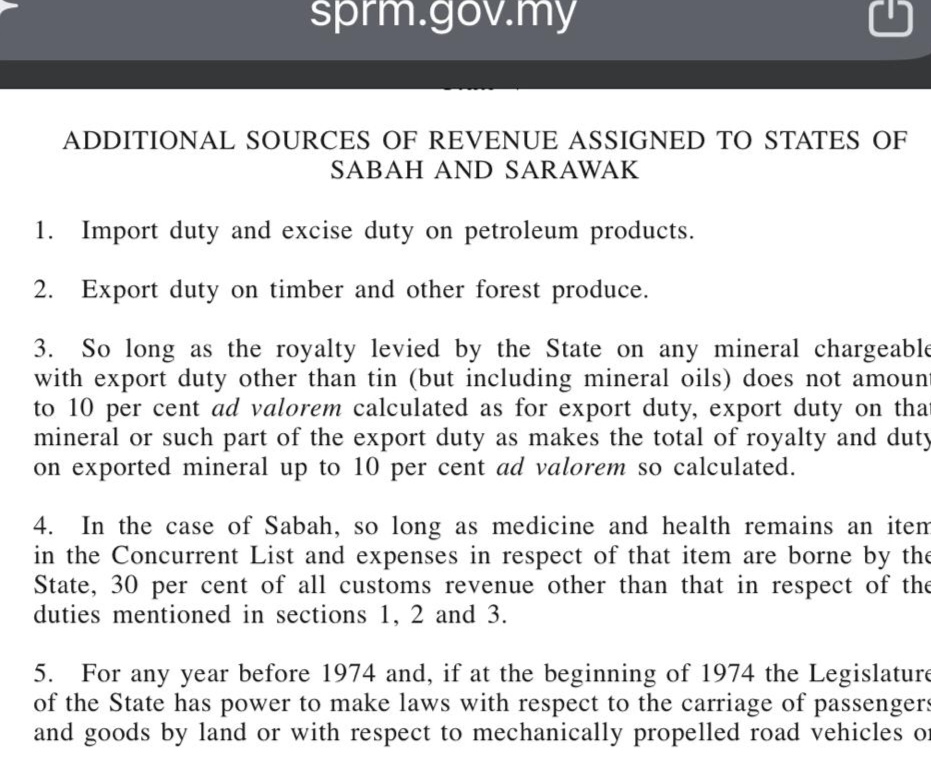
Under Part V, Section 4 of the Tenth Schedule, the architects of the Malaysia Agreement 1963 (MA63) explicitly guaranteed Sabah a 30% entitlement on customs and import duties.
This was never intended as a generic federal grant or discretionary handout. The signatories designed this specific revenue mechanism to directly fund and offset state burdens in key areas where administrative expenses most notably public health, medicine, and regional infrastructure—fall heavily on local realities.
When Putrajaya centralized healthcare administration, it gladly assumed executive authority while quietly severing the financial engine meant to fund it.
The consequences of this constitutional decoupling are visible across Sabah today: overcrowded general hospitals, underfunded rural clinics, and severe shortages of specialized medical equipment.
To challenge this decade-long administrative erasure, a new procedural battle line is taking shape in the Sabah State Legislative Assembly (DUN).
A private motion is being submitted to the Speaker calling for a formal debate on restoring the 30% Customs Entitlement to directly inject long-overdue funds into Sabah’s healthcare system.
Crucially, this motion demands full, unredacted disclosure from Royal Customs Sabah (JKDM Sabah) for the entire historical ledger every ringgit of customs and import duties collected from 1963 up to 2026.
Applying the mandatory 30% constitutional formula retroactively across six decades of collections will finally reveal the true, staggering quantum of revenue owed to Sabah’s public health sector.
If the DUN leadership chooses to stonewall or reject this motion, it will only reinforce the case currently before the High Court that assembly procedures are being used to suppress statutory MA63 rights.
If allowed, it forces every state representative onto the public record: Will they stand up for Sabah’s dedicated constitutional healthcare funds, or continue defending federal retention?
Putrajaya’s convenient claim that this 30% entitlement is “no longer applicable” is an administrative bluff, not settled law.
A scheduled constitutional provision cannot be erased by treasury memos or interim review handshakes. It is time to treat MA63 not as a list of abstract grievances, but as an active, binding financial system designed to safeguard the lives and health of all Sabahans.