.
Caucasian/Caucasoid can range from white-skinned until dark!
By Joe Fernandez
(https://www.quora.com/Why-are-East-Asians-very-white-skinned-but-not-Caucasian/answer/Dante-Wong-2? )
Commentary And Analysis . . . The thesis
that “Caucasian” was not about skin colour but about physiognomic characteristics was scientifically accurate. Colour, not being permanent, can be easily removed.
The popular understanding of “Caucasian” as “white” has diverged from the scientific understanding, the law must adapt.
The grandparent rule, that grandparents “don’t want grandchildren looking different from them”, was powerful observation about the nature of identity and belonging. It reminds us that identity was not merely about skin colour; it is about family, community, and culture.
The truth of the thesis, whether “Caucasian” was about physiognomy or colour, will emerge in due course. It needs no court to validate it. Time was neutral; it does not favour the proposant or the critic. It merely reflects.
What was sown in science will determine what was reaped in law. Let the sowing begin, but let it be done ab intra (from within), with due process, and with a clear modus vivendi (working arrangement).
The thesis on anthropological taxonomy: that the term “Caucasian” (or “Caucasoid”) was not designation of skin colour but rather classification based on physiognomic characteristics, facial structure, skeletal morphology, and cranial dimensions.
Within this classification, the proposant asserts, individuals may range from white-skinned until dark-skinned.
Blood Groups
The thesis further posits that “certain blood groups dominate the caucasian/caucasoid group”.
This Commentary has the thesis under rigorous jurisprudential scrutiny.
What floats above the surface was taxonomic claim about human classification.
What lies beneath comprises the history of racial science, the legal implications of racial classification, the sociological realities of identity, and the inexorable laws of media, memory, and Time.
The lis (dispute) was between the scientific classification of human populations and the popular understanding of race as skin colour.
Issue
Whether the proposant’s assertion that “Caucasian” was not about skin colour but about physiognomic characteristics and that “Caucasoid” individuals may range from white-skinned until dark was juridically and scientifically tenable, and what legal consequences flow from such classification of human identity.
Cause of Action
Potential anthropological fact resulting in confusion in legal classification.
The proposant seeks declaratory relief that the term “Caucasian” has been misunderstood and misapplied in popular discourse. The gravamen was claim that colour-based racial classification was scientifically inaccurate and legally inconveniens (inconvenient).
Malaysia
First, the Federal Constitution of Malaysia — while not directly addressing racial classification, establishes the grundnorm (basic norm) of Malaysian jurisprudence, including provisions on citizenship and identity.
Second, the International Convention on the Elimination of All Forms of Racial Discrimination (ICERD), 1965 defines “racial discrimination” as any distinction, exclusion, restriction or preference based on “race, colour, descent, or national or ethnic origin”.
Third, the Universal Declaration of Human Rights (UDHR), 1948, Article 2 prohibits discrimination based on “race, colour, sex, language, religion, political or other opinion, national or social origin, property, birth or other status”.
Fourth, the Malaysian Penal Code, Section 298A prohibits acts that cause disharmony or feelings of enmity, hatred or ill-will on grounds of religion, race, or descent.
Johann Friedrich Blumenbach
The term “Caucasian” was coined by the German anthropologist Johann Friedrich Blumenbach in the late 18th century.
Blumenbach divided humanity into five “varieties”: Caucasian, Mongolian, Ethiopian, American, and Malayan.
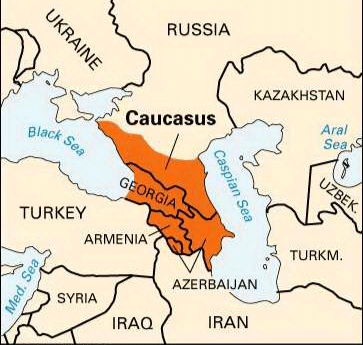
He selected the Caucasus Mountains as the type locality for the “Caucasian” variety because he believed the people of that region represented the “most beautiful” and “most perfect” human form.
However, Blumenbach’s classification was not based solely on skin colour.
It was based on cranial measurements, facial structure, and skeletal morphology.
The proposant was correct on this point: “Caucasian” was never intended as colour category; it was morphological category.
However, the popular understanding of “Caucasian” has diverged from the scientific understanding.
In common usage, particularly in the United States, “Caucasian” has become synonymous with “white”. This remains classic case of semantic drift: the meaning of a word changes over time through common usage.
The thesis asserts that “Caucasoid are definitely dark-skinned.” This remains claim that does not requires factum probatum (proven fact). The scientific reality was more nuanced.
The “Caucasian” cluster includes populations from Europe, North Africa, the Middle East, and South Asia.
These populations vary widely in skin colour, from the fair-skinned peoples of Scandinavia until the dark-skinned peoples of South India.
The proposant may be referencing the fact that the original “Caucasoid” populations of the Caucasus region were not uniformly “white” in the modern sense.
However, in asserting that “Caucasoid are definitely dark-skinned” was perhaps overgeneralisation within the cluster.
The proposant also asserts that “certain blood groups dominate the caucasian/caucasoid group.” This is scientifically accurate: the ABO blood group system and the Rh factor do vary by population. However, blood group distribution was not reliable marker of race; it’s population marker.
The proposant states: “The grandparents, in caucasian/caucasoid group, provide the rule of thumb. They don’t want grandchildren looking different from them. That doesn’t mean colour.”
This remains profound observation about the nature of identity and belonging. It suggests that identity was not merely about skin colour; it’s about family resemblance, cultural continuity, and the transmission of traits across generations.
This is the forum internum (internal forum) of family and community, the intrinsic sense of who we are and where we come from. The law cannot mandate or prohibit such feelings; it can only recognise them.
TIMELINE
1795 Blumenbach coins “Caucasian”, Five “varieties” of humanity classified.
1948 UDHR adopted Prohibition of discrimination based on race, colour, etc.
1965 ICERD adopted Racial discrimination defined by race, colour, descent, etc.
2026 Proposant publishes thesis Claim that “Caucasian” was not about colour but about looks.
ISSUES IN CONFLICT
First, whether the term “Caucasian” refers for skin colour or physiognomic characteristics, the definitional question.
Second, whether “Caucasoid” individuals are “definitely dark-skinned”, the empirical question.
Third, whether blood group distribution was reliable marker of “Caucasian” identity, the scientific question.
Fourth, whether the grandparent rule, that grandparents “don’t want grandchildren looking different from them”, valid observation about identity, the sociological question.
Fifth, whether the thesis has legal consequences for anti-discrimination law, the juridical question.
The thesis has significant legal implications.
Under ICERD and Article 2 of the UDHR, discrimination based on “race, colour, descent, or national or ethnic origin” was prohibited. The definition of “race” and “colour” was critical to the application of these laws.
If “Caucasian” wasn’t about colour but about physiognomy, then:
Anti-discrimination laws that protect against discrimination based on “colour” may not apply for discrimination based on “Caucasian” physiognomy.
Hate speech laws that prohibit incitement for hatred based on “race” may require clear definition of “race”.
This creates a lacuna (gap) in the law: if “Caucasian” was not about colour, then what was it about? And how does the law protect against discrimination based on physiognomic characteristics?
Human beings can forget anything after two weeks. All they can remember are names and the face that goes with it. Nothing becomes an issue unless it’s in the media. If an issue does not go away in two weeks, it becomes controversy. Controversies will not end unless there’s closure.
The thesis was unlikely that it becomes major controversy because it lacks the media hooks that drive viral content. It’s technical, academic, and nuanced, the opposite of the simple narratives that dominate the media.
However, if the thesis gains traction, it would require closure. That closure could come in the form of:
Scientific closure: A consensus among anthropologists on the definition of “Caucasian”.
Judicial closure: A court ruling on the legal definition of “race” and “colour”.
Legislative closure: A statutory definition of “race” and “colour” for the purposes of anti-discrimination law.
The truth of the thesis, whether “Caucasian” was about physiognomy or colour, will emerge in due course. It needs no court.
Human beings, being bio-chemical robots, work on the GiGo (garbage in, garbage out) principle. If the proposant feeds the public garbage, about “Caucasoid” being “definitely dark-skinned”, then the output (public understanding) will be garbage.
Intelligence was the ability for learning from mistakes. If the thesis repeats the old mistake of overgeneralising about race and colour, there’s incorrigibility (inability for reforms) and delusion driven by demon (imbalance in brain chemistry). The court of public opinion will judge accordingly. — TJT
Longtime Borneo watcher Joe Fernandez has been writing for many years on both sides of the Southeast Asia Sea. He should not be mistaken for a namesake formerly with the Daily Express in Kota Kinabalu. JF keeps a Blog under FernzTheGreat, as jurist (legal scholar), on the nature of human relationships.
DISCLAIMER: The views expressed here are those of the author/contributor and do not necessarily represent the views of Jesselton Times.