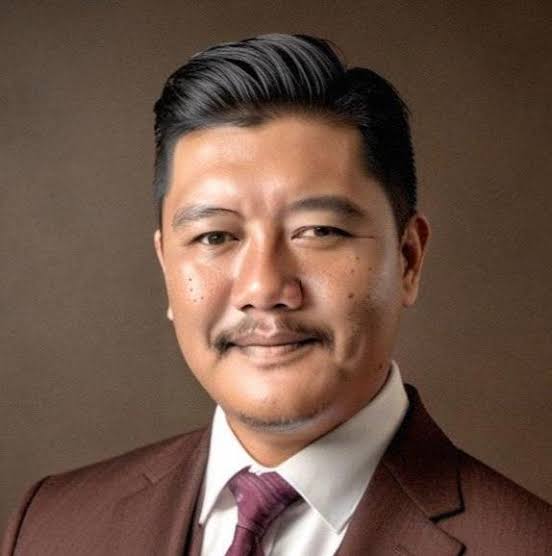
By Remy Majangkim (Majangkim Office)
SANDAKAN: The geopolitical landscape of Sabah has always been a shifting mosaic of alliances, but the official application by the United Progress Kinabalu Organisation (UPKO) to join Gabungan Rakyat Sabah (GRS) marks a definitive turning point.
To truly understand this migration, one must look past the polished press releases and peer into the cold, calculated realism of regional survival.
In the theater of Sabahan politics, UPKO’s latest maneuver evokes the haunting pragmatism of House Frey from Game of Thrones.
Much like the Lords of the Crossing who controlled the strategic bridge between north and south, UPKO finds itself trying to command the vital passage to the Kadazan, Dusun, Murut, and Rungus (KDMR) heartland. But as history shows, when a political house builds its foundation entirely on shifting alliances rather than ideological bedrock, the bridge it guards becomes an incredibly treacherous place to stand.
The Keningau Intercept and the Politics of Panic
The official narrative surrounding UPKO’s leap toward GRS is wrapped in the noble language of regional unity.
However, the timeline tells a far more reactive, survival-driven story.
The true catalyst did not emerge from a boardroom in Kota Kinabalu, but from the dynamic ground of Keningau during the Kaamatan festival.
The highly publicized merisik (courting) between Datuk Seri Jeffrey Kitingan (STAR) and Datuk Seri Shafie Apdal (Warisan) sent shockwaves through the interior.
It signaled the potential birth of an alternative localist axis—one entirely capable of consolidating the KDMR and coastal opposition votes alike.
For UPKO’s leadership, this Keningau intercept presented an existential threat. If STAR and Warisan locked down the interior, UPKO risked being completely outflanked and isolated.
The subsequent Supreme Council meeting was not a leisurely strategic review; it was a panicked retreat. UPKO did not simply choose GRS out of pure alignment; it fled toward it, seeking the immediate sanctuary of the ruling coalition to avoid being crushed between a rising local alliance and the looming federal shadow.
The Academic Defense: Shedding the “Malaya” Baggage
To fully understand why this move is being executed now, one must look at the structural trap UPKO is attempting to escape. Political analysts writing for Free Malaysia Today offer a more clinical, structural defense of the party’s migration.
Dr. Bilcher Bala of Universiti Malaysia Sabah (UMS) points out that UPKO’s prolonged alignment with Pakatan Harapan (PH) had severely damaged its regional branding. Being tied to a Peninsular-led bloc created a persistent grassroots perception that UPKO’s struggles were ultimately confined within a Malaya-based national framework.
By cutting the cord with PH and knocking on GRS’s door, UPKO is attempting a deliberate rebranding exercise—re-anchoring itself as a purely localized Sabahan entity riding the contemporary wave of regionalist sentiment.
Furthermore, as UMS analyst Dr. Lee Kuok Tiung notes, the move is a brutal necessity for political survival. In Sabah’s highly fragmented landscape, attempting to go solo is an open invitation to total marginalization.
Joining GRS secures UPKO’s immediate place at the governing table, providing a protective shield against external rivals.
Yet, this creates a profound paradox. While UPKO tries to wash off the “Malaya-centric” stain of its PH past, it does so by running into a coalition that is itself deeply intertwined with federal patronage.
The House of Frey is merely trading one master of the coin for another.
The Illusion of the Shield Wall
The overarching justification for unifying these local factions is the creation of a “Borneo Fortress”—a synchronized regional bloc modeled after Sarawak’s GPS, designed to act as a shield wall against the encroachment of Peninsular Islamist politics and national hegemony.
But a fortress is only as strong as the integrity of its defenders. The fundamental contradiction of UPKO’s regionalist rhetoric lies in the glaring gap between public posture and legislative action.
While its leaders thunder on the fields of Sabah about the Malaysia Agreement 1963 (MA63), their presence in the federal parliament has often been defined by compliance.
Accepting diluted, temporary interim financial allocations while remaining silent during crucial policy votes exposes the transactional nature of the bloc. When the shield wall is held by actors who prioritize short-term political preservation over constitutional enforcement, the fortress becomes a mirage.
Crowding the Heartland: The Looming Internal Crisis
If UPKO believes that entering the GRS fold guarantees a peaceful sanctuary, it has miscalculated the internal mathematics of the coalition. The absorption of UPKO does not stabilize GRS; it destabilizes it from within.
The analytical reality highlighted by political observers is that UPKO’s electoral strength is entirely concentrated in the KDMR heartland. By entering GRS, they are stepping directly into the traditional territory of existing component parties like PBS and STAR.
This creates an immediate, volatile scramble for seat allocations in future elections. Chief Minister Datuk Seri Hajiji Noor now finds himself acting as the uneasy captain of an overcrowded ship, tasked with balancing the insatiable appetite of competing local houses who all claim exclusive guardianship over the exact same demographic. By trying to lock out external threats, GRS has invited a fierce turf war inside its own castle walls.
The True Kingmakers
Ultimately, political elites can rearrange the chairs at the high table as often as they please, signing pacts and shifting allegiances in the name of pragmatism. But history reminds us that House Frey’s control of the bridge was undone not by rival armies, but by the quiet accumulation of grievances from those they supposedly served.
As Dr. Bilcher Bala rightly concludes, UPKO’s true credibility cannot be manufactured simply by changing its coalition banner.
It will be judged strictly on whether it can translate high-minded rhetoric into concrete policies regarding Sabah’s constitutional 40% net revenue-sharing entitlement and absolute state autonomy.
The local branding exercise will mean nothing if the grassroots view the move as a mere scramble for survival and cabinet positions.
The politicians of Sabah may hold the keys to the state assembly today, but the gates of the fortress are ultimately guarded by the voters. And the voters are growing tired of watching the same play acted out by different houses.
The winter of political accountability is coming, and the bridge may not hold.
All rights reserved ©️ 2026 Majangkim Office | The Borneo Fortress Series.