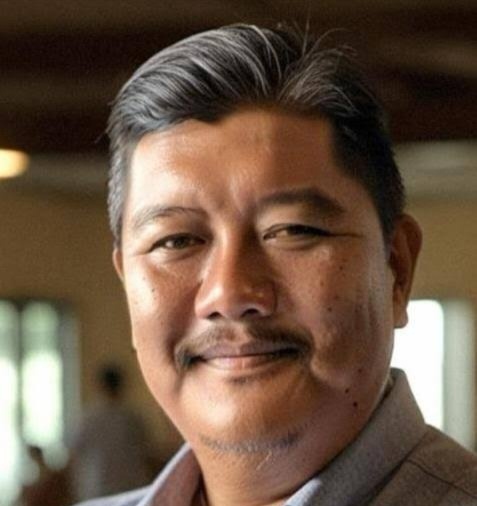
By Remy Majangkim
KOTA KINABALU: A few months ago, the Yang di-Pertuan Agong, Sultan Ibrahim, spoke out strongly against the corruption that plagues our country.
His Majesty has always taken a firm stance on this issue, and his commitment was clear when he appointed Datuk Seri Abdul Halim Aman, a former judge with an extensive judicial background, as the new head of the anti-corruption agency.
Many have welcomed this appointment, hoping it will help restore public and investor confidence and remove those who have betrayed the nation.
In his recent royal address opening Parliament, the King reaffirmed that no one would be exempt from scrutiny, regardless of rank, status or office. He reminded the nation that “no plan or policy will ever be effective if corruption remains widespread”.
Stressing that anti-corruption measures cannot be merely “cosmetic or rhetorical”, His Majesty offered a clear directive for reform, calling on the MACC to act swiftly, firmly, and thoroughly. Most critically, he called on the public to be courageous, urging ordinary people to serve as the “eyes of the nation” and to report any and all acts of corruption.
This is a powerful call to action for the whole country. But it is sobering to see how far the problem has spread. Recently, over coffee, I spoke with a friend who used to be a contractor eyeing government contracts.
He told me things are getting out of hand. Cartels have infiltrated government procurement, offering services to help bidders win—for a price, of course. While it may be lucrative and straightforward, it is unlawful. Worse, he couldn’t sleep at night.
Always peering over his shoulder, the stress became too much to bear. So he sold his machinery, wound up his company, and bought a small piece of land for self-sustaining agriculture and husbandry. Occasionally, he does small house renovations on the side. He said his life—and his family’s—has been much better since.
We also discussed the recent heist involving an NGO and hundreds of millions in zakat funds. The alleged practices have now taken the shape of a Ponzi scheme, as details slowly surface.
By law, every able Muslim is meant to contribute to zakat funds, and in fact, some non-Muslims see these initiatives as well-intentioned. But the lack of enforcement and audit is alarmingly glaring.
After calling out to pay for our drinks, we both agreed: corruption in Malaysia has become endemic. It has penetrated our armed forces, zakat funds, and various cartels operating across sectors. It is timely for the King to brand them as traitors.
Now, the king has called on us to be the eyes. The question is: will we open them?