By Remy Majangkim
KOTA KINABALU: I once visited my grandfather. He had just come back from a bountiful harvest – done not alone, but with the whole village. His neck was red from the sun. His hands were cracked. He had worked from sunrise to sunset for weeks.
But he was smiling.
“Young man,” he said. “Go and grab drinks from our local brewery.”
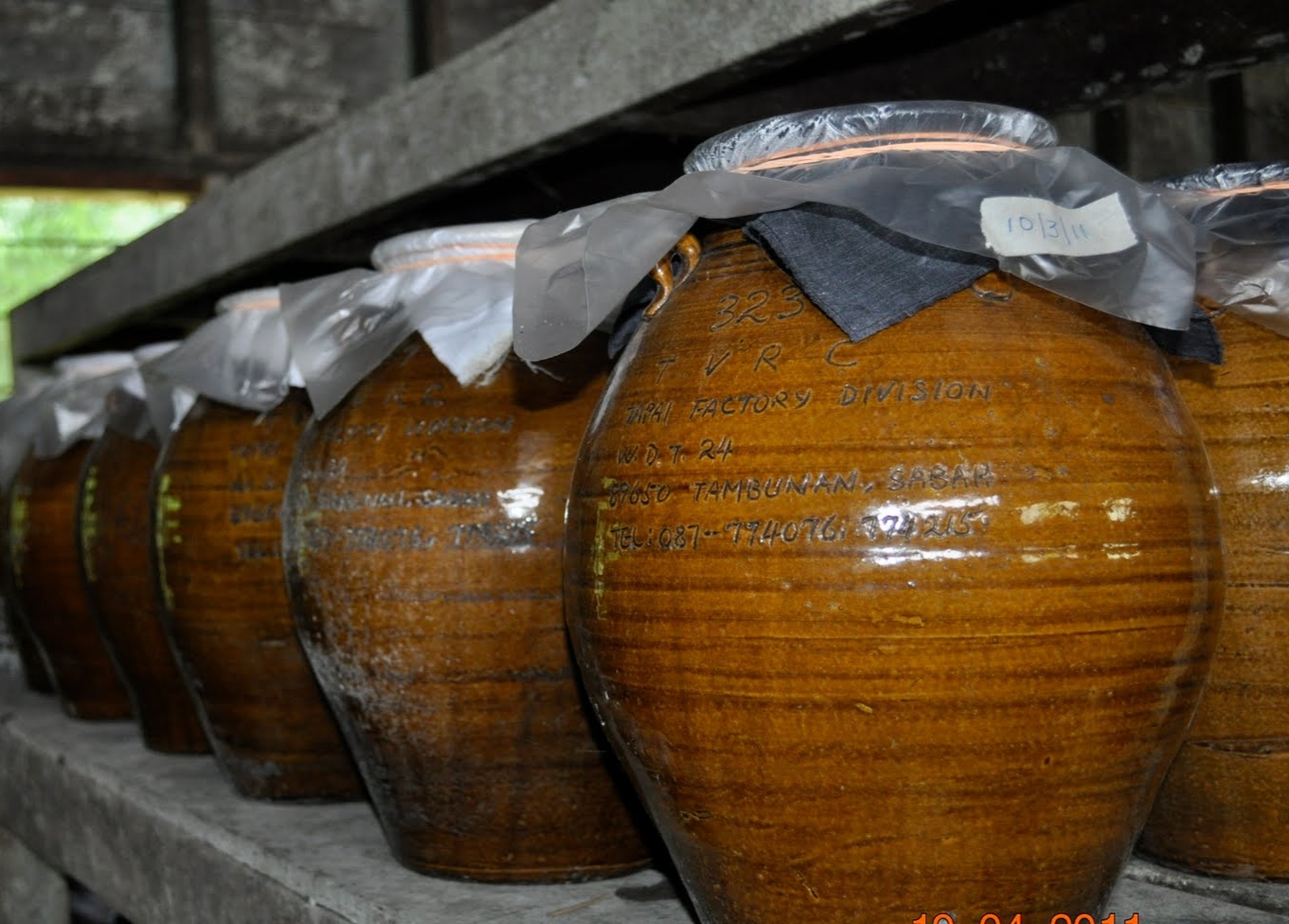
He asked for bahar — a potent fermented drink with a bad aftertaste. An acquired taste. Back then, it was only RM5 for a gallon.
That was the reward. That was the rationale.
Because Kaamatan is not a stage. Not a speech. Not a corporate sponsor. It is a paddy field. Rice — the source of food for all people. And the work: backbreaking, beautiful. Done by the whole village. Every field harvested together. The workload was shared.
And when the last stalk was cut? They celebrated. They gathered. They drank what they had — what they made. Together. Because they earned it.
My grandfather never served imported beer inside his home after harvest. He served what the land gave him. That was not poverty. That was identity.
The smog
Over the years, that identity was smogged over. Kaamatan became a crowded bazaar. Traditional houses began to look like food courts. Commercial alcohol crept in — not because anyone hated tradition, but because no one said “no”.
And so the festival lost something. Not purity — but clarity. A visitor could no longer tell the difference between a traditional house and a pub.
Now the committee has made a good call. From May 30 to 31, 2026, inside the traditional houses at Hongkod Koisaan, only traditional drinks will be served. Alcohol is welcome elsewhere — just not inside those walls.
This is not a ban. This is a return to basics. A clearing of the smog.
Because a heritage house is not any space. It is a vessel of memory. When you enter, you should smell rice, not rum. You should hear stories, not the clink of commercial glass. You should drink what the ancestors drank — not because it is better, but because it is ours.
What the committee should also look at
If we are restoring identity, let us go further.
In the past, an advertiser — someone paid good money to represent Kaamatan — showed wheat instead of rice. Wheat. A crop that has never fed a single Kadazandusun harvest. That is not a small mistake. That is a cultural amputation.
And the pronunciation. How many times have we heard ‘Keamatan’ on banners, in commercials, from the very mouths of officials? The word is ‘Kaamatan’. The open vowel matters. A slip repeated a thousand times becomes a lie.
The committee has done well on traditional drinks. Now let them fix these deeper wounds.
The bazaar ground: a war zone
Once, our family had the opportunity to trade at the bazaar ground. It was chaotic but rewarding. The spirit of Kaamatan was alive in every stall: homemade food, local crafts, and the sweat of small traders.
Today, that bazaar ground has become a warzone. Rental fees are enormous. The highest bidder wins. Small local traders become obsolete. Pushed out by those with money to spend – not always natives, not always carrying the heart of Kaamatan.
And what fills the void?
Loud music blaring until the early morning. Embarrassing antics by patrons who have mistaken the festival for a nightclub.
The committee wants to clean the traditional houses. Good. But the bazaar must be restored too. Not to the highest bidder.
To the people.
The real poison remains.
But let us not mistake these for the only battles.
The real poison that still smogs Kaamatan is politics. Year after year, the festival becomes a platform for fiery speeches. Microphones are grabbed. Chests are puffed. Promises are made — empty, habitual, grinning lies. No one believes anymore.
Kaamatan was never meant for that. It is not a parliament. It is not a campaign trail. It is a celebration — unique to Sabah, unique to this region, unique to us natives. The Kadazandusun, the Murut, the Rungus, the Lotud — dozens of voices making one tapestry. We gather to remember that we are one people.
Unity among natives is not forged by speeches. It is forged by shared sweat. Shared harvest. Shared traditional drink.
Shared silence.
What my grandfather would say today
If he were alive, and someone told him that Kaamatan would now serve only traditional drinks inside the heritage houses, I think he would nod.
“Good,” he would say. “That is how we did it.”
But if he saw the bazaar – the enormous rentals, the loud music until dawn, his own family priced out of trading – his face would darken.
“Did you finish the harvest together?” he would ask.
Yes.
“Did you share the work?”
Yes.
“Did anyone go hungry?”
No.
“Then why is the bazaar not for the people?”
He would point to that dusty gallon of Bahar and laugh.
3
“You carried your own paddy. You sweated your own sweat. Drink what the land gave you. Trade what your hands made. Together.”
The rationale we are rebuilding
A festival that returns to its preface becomes powerful again. A traditional house that serves traditional drinks becomes a home. A bazaar that welcomes small traders becomes a true harvest market.
A celebration that clears the smog of commerce, noise, and politics becomes sacred — not because it is strict, but because it is true.
Kaamatan is about unity. All are welcome. But with that welcome comes responsibility — because tourists and locals are watching. You are not just celebrating. You are holding the torch of your family. Hold it high. Hold it right.