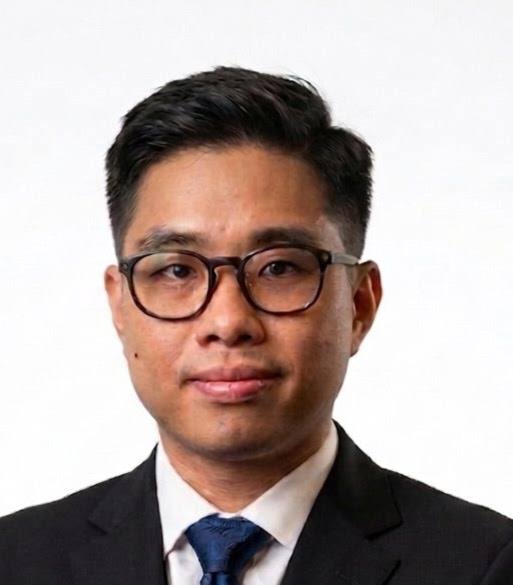
Brendon Beliku is a corporate immigration and employment compliance professional based in Kota Kinabalu. He writes independently on Sabah’s economic governance, labour policy, regulatory affairs and Momogun empowerment.
KOTA KINABALU: Datuk Ladislaus Maluda, president of the Kadazandusun Chamber of Commerce and Industry (KCCI), said something worth taking seriously two weeks ago.
There needs to be a shift in mindset among Bumiputera entrepreneurs to move beyond dependency on government linked projects and embrace a more resilient business culture, he said, contrasting Kadazandusun households with a Chinese business tradition built across generations, and noting that many local entrepreneurs remain focused on construction work, government projects and steady jobs in the public or private sector.
He traced part of the pattern to upbringing, recalling that his own parents urged him toward stable employment rather than entrepreneurial risk, and it took him years to act against that advice before he later helped found the chamber in 1996.
Maluda spoke as a Kadazandusun leader addressing a Kadazandusun chamber, and there is nothing wrong with that scope. But the pattern he named, comfort in dependency, hesitation toward ownership, a cultural pull toward the safest available track, is not confined to one community within Sabah’s indigenous population.
Kadazandusun sits inside the broader Momogun classification this publication has covered before, the effort to unite Dusun, Murut and Paitan groups under a single demographic and policy category.
If the diagnosis is right for one, and it is, then the call belongs to all of them, and the case for extending it is stronger than a single chamber speech can make on its own.
-What Maluda Got Right-
The instinct to reach for entrepreneurship training and inspiring examples is the correct instinct, not a consolation prize.
Maluda pointed to KCCI’s six month training programmes covering financial management, workforce skills and networking, built in partnership with agencies such as SME Corp, Mara and Bank Rakyat, with the explicit goal of upgrading micro businesses into SMEs capable of reaching RM1 million or more in revenue.
That is a concrete, measurable target, not an abstract appeal to ambition. He also named two Kadazandusun entrepreneurs, Anne Antah and Mary Jim, whose success stories give the message a face rather than leaving it as theory.
The cultural observation underneath the numbers matters just as much. Parents steering children toward government stability over entrepreneurial risk is not irrational, it reflects decades of lived experience about where security has reliably come from.
But naming that pattern honestly, the way Maluda did about his own upbringing, is the first step toward changing it deliberately rather than letting it repeat by default across another generation.
-Why the Message Shouldn’t Stop at One Chamber-
Momogun communities beyond Kadazandusun, Murut households in the interior, Paitan communities along the river systems, and related groups share the same structural position Maluda described.
Government linked employment and government linked contracts have functioned as the reliable, culturally endorsed path across these communities generally, not merely within Kadazandusun circles specifically.
A resilience message that circulates only within one chamber reaches one community’s networks, one chamber’s training calendar, one chamber’s success stories.
The same message, carried across the wider Momogun identity that Sabah’s own consolidation efforts have been building toward, reaches a population large enough to shift how an entire generation of indigenous Sabahans thinks about ownership rather than employment alone.
There is also a practical argument for scale. Chambers of commerce, however well run, compete for the same limited pool of agency attention, SME Corp grants, Mara financing, Bank Rakyat lending windows.
A coordinated push across Momogun business bodies, rather than each community’s chamber pursuing training and advocacy separately, carries more weight in exactly those conversations.
Maluda’s own reference point, Sarawak’s cross community unity during cultural celebrations even amid different political affiliations, is instructive here.
If Sarawak’s indigenous communities can set aside party lines to present a unified front at Gawai, Momogun business bodies in Sabah can set aside chamber boundaries to present a unified front on entrepreneurship.
-What a Shared Momogun Business Culture Could Look Like-
None of this requires dissolving KCCI or any other existing chamber into a single body. It requires the opposite, treating Maluda’s message as a shared platform that Murut, Paitan and other Momogun business associations adopt and adapt for their own communities, coordinated closely enough that training programmes, mentorship networks and success stories reinforce each other rather than operating in isolation.
A young Momogun entrepreneur in Keningau should be able to draw on the same resilience training, the same agency partnerships and the same visible success stories as a young Kadazandusun entrepreneur in Penampang, regardless of which specific community chamber happens to serve their district.
Maluda ended his remarks with a warning worth repeating past his own audience. There has been a lot of focus on the Bumiputera community in terms of business, so encouraging young people to capitalise on that focus now, or risk falling behind, was how he framed the chamber’s role.
That warning applies with equal force to every Momogun community watching this moment from the sidelines rather than from inside KCCI’s own membership.
The comfort zone he is asking people to leave is bigger than one chamber, and so is the opportunity waiting on the other side of it.
[Disclaimer]: The views, opinions and analyses expressed in this article are solely those of the author and do not necessarily reflect the views, policies or positions of the Jesselton Times, its editors, management or affiliated entities. This article is published for analytical and public discussion purposes and should not be construed as institutional commentary or endorsement.