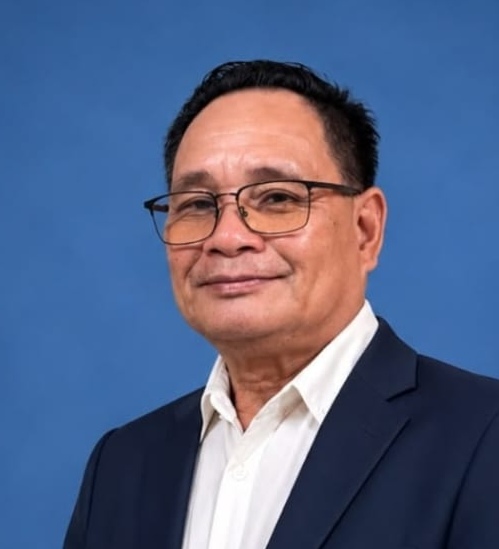
By: Dr. Jikat Binol Darimbang
KOTA KINABALU: The 2026 triennial elections of the Parti Bersatu Sabah (PBS) represent an important development in the internal dynamics of one of Sabah’s longstanding political parties.
The exceptionally strong response from party members, particularly among veteran members and the younger generation, demonstrates that leadership elections are no longer merely an organisational exercise. They have increasingly become an important platform for determining the party’s direction, identity and future.
This development should be viewed from a broader perspective. In modern politics, internal party elections serve as an important mechanism for ensuring leadership legitimacy, renewing organisational structures and providing members with the opportunity to determine who they believe is capable of representing their aspirations.
For PBS, this development is particularly significant because the party has a long history in Sabah politics and continues to face the challenge of adapting to generational change, evolving public expectations and an increasingly competitive political landscape.
The 2026 election process also comes at a time when PBS has placed greater emphasis on strengthening its grassroots organisation and providing more opportunities for younger leaders to participate in the party. Such efforts reflect the growing recognition that leadership renewal is essential for maintaining the relevance and sustainability of a political organisation.
Elections as an Instrument of Internal Democracy
From a political science perspective, a political party is not merely an organisation established to contest elections.
It is also an institution responsible for political socialisation, leadership recruitment and development, as well as the articulation of members’ interests.
Therefore, internal elections serve at least three major functions.
First, they provide democratic legitimacy to the leadership.
Second, they create opportunities for leadership renewal and regeneration.
Third, they provide a mechanism for measuring grassroots confidence in the direction and leadership of the party.
In the context of the 2026 PBS elections, these three functions can be observed through the increasing enthusiasm of members to participate actively in the electoral process.
Contests at the divisional level demonstrate that leadership positions are becoming increasingly important to party members.
More importantly, the willingness of members to contest positions reflects a healthy interest in organisational development and political participation.
The Generational Encounter: Veterans and Youth
One of the most interesting aspects of the 2026 PBS elections is the participation of two generations with different experiences and perspectives: veteran members and younger members.
Veteran members possess historical experience, organisational knowledge, political networks and a deep understanding of PBS’s struggles and development over the years.
They represent an important source of institutional memory and political capital.
The younger generation, meanwhile, brings a different perspective. They are more exposed to digital technology, social media, new forms of communication, emerging economic opportunities and changing expectations among younger voters.
This interaction between the two generations should not be viewed simply as a competition between the “old” and the “new”.
Rather, it should be understood as a process of knowledge transfer, leadership regeneration and organisational renewal.
A successful political party is one that can combine the experience and institutional memory of its veterans with the energy, creativity and courage of its younger generation.
In this context, efforts to empower young leaders represent an important step towards ensuring that PBS remains relevant in an increasingly changing political environment.
Why Has Member Participation Increased?
Several factors may explain the growing interest in the PBS triennial elections.
1. Greater Grassroots Political Awareness
Party members today are increasingly aware that leadership at the divisional level has a direct impact on their organisational activities and political representation.
Divisional leaders are not merely symbolic office-holders. They play an important role in mobilising members, addressing grassroots concerns, organising community activities and serving as a bridge between party members and the central leadership.
2. More Competitive Leadership Contests
When more members are willing to offer themselves for leadership positions, the electoral process becomes more competitive.
Healthy competition can improve the quality of leadership because candidates are required to present their vision, experience, capabilities and programmes to party delegates.
However, such competition must always be guided by organisational ethics so that political rivalry does not develop into long-term internal division.
3. The Need for Organisational Renewal
Political parties that wish to remain relevant must periodically renew and reform themselves.
Triennial elections provide an opportunity for members to evaluate the performance of existing leaders and determine whether continuity or change is necessary.
For PBS, this process is particularly important as the party seeks to strengthen its organisation, restructure its grassroots network and prepare itself for future political challenges.
4. Rising Aspirations Among Young People
Young people are no longer merely observers of politics.
They want to participate in decision-making, contribute ideas and have genuine opportunities to lead.
The greater participation of young leaders in party structures could provide PBS with an important opportunity to develop a new generation of leaders capable of carrying the organisation into the future.
Elections Are Not Simply About Finding Winners
From an academic perspective, the most important issue in an internal election is not simply who wins and who loses.
More importantly, it is what happens after the results are announced.
If an election produces long-term divisions, negative campaigning and personal hostility, the organisation may lose much of the benefit that democratic competition is supposed to provide.
Conversely, if an election produces stronger leadership, constructive debate and greater unity after the results, the electoral process can actually strengthen the organisation.
This is an important principle for PBS.
Competition should be allowed to take place, but once the election is concluded, all members should return to a larger and more important objective: strengthening the party and serving the people.
In this sense, the real test of internal democracy begins not on election day, but after election day.
Veterans as Guardians of Legacy, Youth as Carriers of the Future
Within PBS, the relationship between veteran members and younger leaders should be built on the principle of mutual complementarity.
Veterans should not be viewed simply as a generation that needs to make way for younger leaders. They are the living institutional memory of the party.
Likewise, younger members should not be viewed merely as inexperienced. They represent the generation that will eventually inherit and continue the organisation.
The ideal model is therefore intergenerational leadership.
Veterans provide experience.
The middle generation provides continuity.
Young leaders provide energy, innovation and a future-oriented perspective.
The combination of these three groups can create a stronger, more balanced and sustainable organisational structure.
Challenges After the Elections
Despite the positive response to the 2026 elections, several challenges deserve attention.
The first is the risk of factional politics.
If electoral competition creates permanent divisions between “our team” and “their team”, organisational unity may be weakened.
The second is the risk of personalised politics, whereby support becomes centred on individuals rather than policies, principles and the broader objectives of the party.
The third is the challenge of ensuring that elected leaders are genuinely capable of fulfilling the expectations placed upon them by grassroots members.
The fourth is ensuring that young members are not merely mobilised as campaign workers but are given meaningful opportunities to participate in decision-making.
The fifth is the challenge of reconnecting the party with society, particularly younger generations who are increasingly critical of traditional political structures and political communication.
Towards a More Mature Political Culture
The 2026 PBS elections have the potential to become an important platform for developing a more mature internal political culture.
Competition should be viewed as a contest of ideas rather than a personal conflict.
Differences of opinion should be regarded as a normal component of democracy.
Those who win should recognise that victory carries the responsibility to embrace and unite all members, while those who do not succeed should continue to be given opportunities to contribute to the party.
In other words, the success of an election should not be measured solely by the final voting results, but by the organisation’s ability to remain united after the results have been announced.
This principle is particularly important for a political party operating within Sabah’s complex and diverse political environment.
Conclusion
The 2026 PBS triennial elections represent an important development in the internal political dynamics of a Sabah-based political party.
The strong participation of both veteran members and younger members demonstrates that there remains a significant level of interest in internal democracy and organisational leadership.
More importantly, this phenomenon suggests that PBS is entering a phase of organisational regeneration and political adaptation.
The veterans bring history and experience.
The younger generation brings energy and new ideas.
The middle generation serves as a bridge between the two.
If these three groups can work together constructively, the 2026 elections will not merely produce a new leadership team for the next three years. They could potentially establish the foundation for the political and organisational renewal of PBS for an entire generation.
Ultimately, internal democracy becomes meaningful when an election does more than determine who wins.
It must also answer three larger questions:
Where does the party want to go?
Who is capable of leading it there?
And how can the party’s struggle and aspirations remain relevant to the next generation of Sabahans?
An election may produce winners, but unity after the election determines the true strength of a political party.