SABAHANS DESERVE TO KNOW WHAT HAPPENED TO THE WORKERS, PUBLIC MONEY, LAND AND FOREST RESOURCES
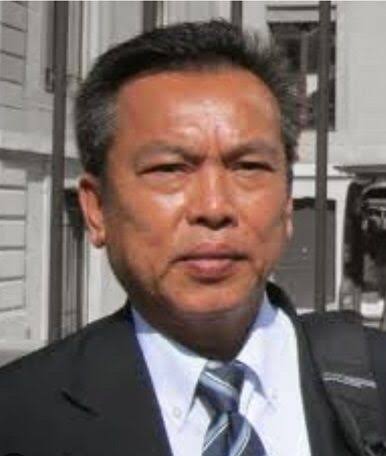
By DANIEL JOHN JAMBUN, President Borneo’s Plight in Malaysia Foundation (BoPiMaFo)
KOTA KINABALU: Borneo’s Plight in Malaysia Foundation calls for the immediate establishment of an independent Royal Commission of Inquiry into the collapse, financing, management and subsequent handling of Sabah Forest Industries Sdn Bhd, commonly known as SFI.
The SFI controversy cannot continue to be treated as merely a dispute between a failed company, its creditors and the Sabah Government.
SFI was established by the Sabah Government in 1982 as a major industrial undertaking intended to promote economic development. It possessed valuable industrial facilities, plantation land, forest resources and timber concessions, while providing employment and supporting the wider economy of Sipitang.
Yet this once-strategic Sabah enterprise ceased operations, entered receivership and was eventually ordered to be wound up.
Workers were left waiting for unpaid salaries, compensation and other employment entitlements. Creditors remained unpaid. Publicly owned financial institutions became exposed. Valuable lands and forest resources became the subjects of acquisition, cancellation, reallocation and litigation.
This is not an ordinary corporate failure.
It is a matter of profound public interest involving Sabah’s natural resources, public finances, government decision-making and the livelihoods of Sabahans.
QUESTIONS HAVE REMAINED UNANSWERED FOR TOO LONG
As early as October 2022, serious questions were publicly raised about unpaid salaries, the future employment of SFI workers, their continued occupation of company housing and the State Government’s plans for SFI’s land and forest resources.
Questions were also raised about an area described publicly as approximately 200,000 hectares or 500,000 acres, and whether logging concessions within the area had been awarded to other companies. These questions require documentary answers rather than political assurances.
Former workers subsequently continued to raise claims concerning unpaid salaries and an alleged RM130 million compensation arrangement.
The State Government denied owing the workers RM130 million. At the same time, the State Finance Minister disclosed that SFI had borrowed more than RM100 million from the wholly State-owned Sabah Development Bank.
The public is therefore entitled to ask:
What was the precise nature of the alleged RM130 million?
Was it compensation for land acquisition, a proposed workers’ settlement, part of a restructuring arrangement or something else?
Was any amount legally or contractually earmarked for the workers?
Who was responsible for ensuring that outstanding salaries, Employees Provident Fund contributions, retrenchment benefits and other lawful entitlements were paid?
These matters cannot be resolved through contradictory public statements.
They require documents, accounts, agreements and sworn evidence.
THE SABAH DEVELOPMENT BANK LOAN MUST BE INVESTIGATED
The Court of Appeal was reported in September 2025 to have struck out SFI’s appeal against its winding-up order.
It was further reported that SFI owed Sabah Development Bank approximately RM120 million, including interest, arising from an original RM93 million unsecured loan granted in 2019.
According to the report, the loan was granted when SFI was already in receivership, had ceased operations in 2016 and was allegedly carrying debts of approximately RM1.5 billion.
These facts, if supported by the relevant records, raise serious governance questions:
Why was such a substantial unsecured loan approved?
What due diligence and risk assessment were conducted?
Who recommended and approved the loan?
What security, recovery plan or restructuring conditions were imposed?
Were the directors of Sabah Development Bank and the responsible State authorities fully informed of SFI’s financial condition?
How much of the loan has been recovered?
What losses may ultimately be borne by Sabah Development Bank and, indirectly, the people of Sabah?
An internal explanation from the same institutions involved would not be sufficient.
A genuinely independent inquiry is necessary.
THE WORKERS MUST NOT BECOME THE FORGOTTEN VICTIMS
Throughout the SFI controversy, successive political leaders, companies, receivers, creditors and lawyers have argued over ownership, land, concessions, debts and legal rights.
Meanwhile, former workers and their families have endured uncertainty over salaries, compensation, housing, electricity, water and employment.
These workers helped sustain SFI during its operating years. They should not be treated as an inconvenient liability after the company’s assets and resources have become the subject of competing commercial and governmental claims.
The first priority must be an independently verified register showing:
– every former employee;
– unpaid salaries and allowances;
– unpaid EPF and other statutory contributions;
– retrenchment or termination benefits;
– court awards or settlements;
– payments already received; and
– the exact remaining amount owed to each worker.
BoPiMaFo calls for all lawful workers’ entitlements to be verified and settled without further political delay.
WHAT HAPPENED TO SFI’S LAND AND FOREST RESOURCES?
The inquiry must establish the complete status and history of every land title, forest-management agreement, timber licence, plantation area and industrial property connected with SFI.
The public must be told:
Which lands were owned, leased or controlled by SFI?
Which areas formed part of its timber or plantation concessions?
Which lands were subsequently acquired by the State?
How was compensation determined?
What happened to any compensation payable?
Which timber licences were cancelled, varied or replaced?
Were any rights subsequently allocated to other companies?
Who owned or controlled those companies?
What quantities of timber were harvested?
How much royalty, premium or other revenue was collected?
Did Sabah receive fair value from every transaction?
The inquiry must follow the assets, the timber and the money.
It must determine whether public resources were preserved for Sabah or whether particular parties benefited from SFI’s collapse while workers, creditors and taxpayers carried the losses.
MAJOR LITIGATION MAKES AN INQUIRY MORE—NOT LESS—NECESSARY
In March 2025, SFI and its receiver filed proceedings reportedly claiming RM1.41 billion and alleging misfeasance in public office connected with the cancellation of SFI’s timber concession.
The Sabah Government strongly denied the allegations and described them as baseless. It stated that the dispute would be determined by the court.
BoPiMaFo does not prejudge those proceedings.
The courts must determine the parties’ legal rights and liabilities based upon the evidence and applicable law.
However, a court case between particular litigants does not necessarily examine the entire history of SFI, including decades of political decisions, privatisation, ownership changes, financing, regulatory supervision, workers’ treatment, land dealings and the allocation of natural resources.
A Royal Commission of Inquiry would serve a wider public purpose.
It can establish the complete institutional history and recommend reforms to prevent another strategic Sabah enterprise from collapsing in the same manner.
THE RCI MUST INVESTIGATE EVERY ADMINISTRATION
The SFI inquiry must not be used as a political weapon by one administration against another.
SFI’s history extends across several State Governments, political coalitions, directors, owners and senior officials.
No administration should be protected.
No political party should be selectively blamed.
The inquiry must examine decisions made under every relevant government, including:
1. SFI’s establishment and original business model;
2. its management and financial performance while State-owned;
3. its privatisation and subsequent ownership transfers;
4. the terms upon which land, timber and industrial assets were transferred or retained;
5. its decline, cessation of operations and entry into receivership;
6. all proposed rescue, acquisition and restructuring arrangements;
7. loans, guarantees or financial assistance involving Sabah Development Bank or other public institutions;
8. the treatment of workers and their outstanding entitlements;
9. the cancellation, replacement or reallocation of timber concessions;
10. the acquisition and subsequent use of SFI lands; and
11. the identity of every company or individual that obtained material commercial benefits arising from SFI’s decline, restructuring or liquidation.
The purpose must be to establish the truth—not to manufacture a politically convenient version of it.
TERMS OF REFERENCE FOR THE RCI
BoPiMaFo proposes that the RCI be empowered to:
1. Conduct a complete forensic audit
The audit should cover SFI, relevant subsidiaries or related entities, Sabah Development Bank financing, government assistance, asset disposals, land compensation, timber revenue and workers’ liabilities.
2. Compel the production of documents
This should include Cabinet papers, departmental records, board minutes, loan documents, valuation reports, land records, timber licences, concession agreements, receivership documents, acquisition papers and correspondence between the relevant parties.
3. Trace the ownership and beneficial interests of companies
The inquiry should identify the ultimate beneficial owners of companies that received SFI assets, concessions, logging rights, contracts or other commercial advantages.
4. Examine the conduct of decision-makers
The inquiry should determine whether there was negligence, abuse of authority, conflict of interest, breach of fiduciary duty, regulatory failure or improper political interference.
5. Determine the full amount owed to workers
It should recommend an immediate and enforceable mechanism for payment.
6. Quantify losses to Sabah
This must include losses suffered by public financial institutions, foregone timber revenue, asset-value deterioration and other liabilities borne by the State.
7. Recommend civil, disciplinary or criminal referrals
Where the evidence reasonably indicates possible wrongdoing, the relevant evidence should be referred to the appropriate enforcement or prosecuting authorities.
8. Recommend reforms
The RCI should propose stronger safeguards governing State-owned enterprises, public-bank lending, privatisation, land acquisition, timber concessions and protection of workers during corporate restructuring.
THE RCI MUST BE GENUINELY INDEPENDENT
The commissioners should consist of persons of unquestionable integrity who have had no material involvement in SFI or the decisions under investigation.
They should include:
– a retired senior judge;
– an independent forensic accountant;
– an expert in corporate insolvency;
– an expert in forestry and natural-resource governance;
– a representative with experience in workers’ rights; and
– a respected Sabah civil-society representative.
Public hearings should be held wherever legally appropriate.
The Commission should be properly funded, authorised to engage forensic specialists and required to publish its final report within a fixed period.
Its report must not be classified or hidden from the people.
SABAH CANNOT CONTINUE LOSING STRATEGIC ASSETS WITHOUT ACCOUNTABILITY
SFI was created using Sabah’s resources and entrusted with valuable land, forests and industrial assets.
Its collapse affected workers, families, creditors, public institutions and the economy of Sipitang.
Yet years later, Sabahans still do not have a complete and authoritative explanation of:
– how SFI failed;
– who made the decisive decisions;
– how much public money was exposed;
– what happened to the workers;
– what became of the land and timber rights;
– who subsequently benefited; and
– what losses were ultimately imposed upon Sabah.
It is unacceptable for a strategic enterprise connected with hundreds of thousands of hectares of Sabah’s land and forest resources to disappear into insolvency, litigation and political accusation without a full public accounting.
BoPiMaFo therefore calls upon the Sabah State Legislative Assembly to pass a resolution supporting the establishment of an independent Royal Commission of Inquiry into Sabah Forest Industries.
We further call upon the Sabah Government to preserve and disclose all relevant records and to declare publicly that it will cooperate fully with such an inquiry.
Those who have acted lawfully should have nothing to fear from transparency.
Those responsible for negligence, abuse or improper enrichment—regardless of their political position, business influence or connection—must be identified and held accountable according to law.
The former workers deserve justice.
The people of Sipitang deserve answers.
Sabahans deserve to know what happened to their money, land, forests and strategic industrial assets.
The SFI files must be opened.
The money must be traced.
The beneficiaries must be identified.
The workers must be paid.
An independent Royal Commission of Inquiry must be established.