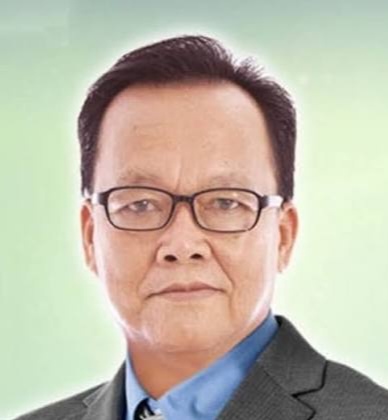
By Lesaya Sorudim
Politics is About Strategy—But Also About Trust
KOTA KINABALU: The decision by UPKO to join the Gabungan Rakyat Sabah (GRS) coalition has once again placed the party under public scrutiny.
While party leaders will undoubtedly argue that the move is a pragmatic political strategy aimed at strengthening the party’s future, many supporters—particularly within the Kadazandusun-Murut (KDM) community—are asking a different question:
Has UPKO once again shifted its political “goal posts” for the sake of political convenience?
For many long-time supporters, this latest move appears to be another chapter in a series of strategic political realignments that have become increasingly difficult to follow.
A History of Changing Political Alliances
Since the 2020 Sabah State Election, UPKO’s political direction has undergone several significant changes.
Following the election, the party gradually distanced itself from Warisan, its former political ally. It then aligned itself with Pakatan Harapan (PH), a move widely seen as allowing UPKO to benefit from PH’s national machinery and, importantly, the electoral support of DAP voters then.
The strategy appeared to work.
UPKO President Datuk Ewon Benedick retained the Penampang parliamentary seat, while former president Datuk Wilfred Madius Tangau successfully defended Tuaran under the PH banner.
Without PH’s united support, particularly from DAP supporters, these victories would arguably have been far more difficult.
Leaving PH Before the State Election
Yet, just before the November 2025 Sabah State Election, UPKO made another unexpected decision—it left PH and contested independently.
Officially, the move projected an image of independence.
However, many political observers believed another consideration was equally important: contesting alone allowed several UPKO leaders to become candidates in seats that PH’s internal seat negotiations might otherwise have allocated to other component parties.
Ironically, this decision came while UPKO’s president remained a Federal Cabinet Minister under the PH-led Federal Government.
To many supporters, the move raised obvious questions regarding political consistency.
Now Joining GRS
UPKO has now joined GRS. For party leaders, the reasoning is understandable. Sabah politics increasingly revolves around coalition-building, and no single party can realistically hope to govern alone.
Yet among many grassroots supporters in Tuaran, particularly in Kiulu and Tamparuli, the reaction has been mixed. Some openly describe feeling disappointed—even betrayed.
The Sentiment in Tamparuli and Kiulu
The strongest criticism comes from voters who argue that both Tamparuli and Kiulu had already expressed their political preference during the state election.
From their perspective, GRS had already been rejected by the majority of voters in those constituencies.
Many Tamparuli voters chose UPKO precisely because they viewed it as an alternative to GRS.
Now, they see UPKO joining the very coalition they had voted against. To these voters, the issue is less about coalition politics and more about whether their electoral mandate has been respected.
Their sentiment can be summarised simply:
“We voted against GRS, but now our elected representatives have joined GRS.”
Whether this perception is politically fair or not, it reflects a genuine concern among sections of the electorate.
A Strategic Move for Tuaran?
From another perspective, however, the decision makes political sense. The Tuaran parliamentary constituency has always been electorally diverse.
While UPKO enjoys significant support in Tamparuli and parts of Kiulu, it has traditionally faced stronger competition in areas such as Sulaman and Dalit.
By joining GRS, UPKO potentially gains access to the coalition’s wider political machinery and support base in these areas.
If Datuk Wilfred Madius Tangau is again nominated to defend Tuaran, this broader coalition support could significantly improve his chances of retaining the seat.
Politics, after all, is often about building the numbers needed to win elections.Viewed from this angle, joining GRS is less an ideological shift than an electoral calculation.
Will Madius Be the Candidate?
Another question now emerging is whether Madius himself will again be UPKO’s candidate for Tuaran.
While he remains one of the party’s most recognisable leaders, Sabah politics is rarely predictable.
Political observers are beginning to ask whether the forces that once replaced him as UPKO president with Datuk Ewon Benedick may once again influence the party’s future direction.
If so, could the latest political realignment also signal broader leadership considerations within the party? For now, only UPKO’s leadership knows the answer.
The Penampang Challenge
The situation in Penampang presents another interesting political equation.
Datuk Ewon Benedick won the parliamentary seat in 2022 under the PH banner, benefiting from strong support across PH’s component parties, particularly DAP supporters.
However, political conditions today are not identical to those in 2022. The November 2025 Sabah State Election suggested changing voter sentiment in parts of the state, with PH—particularly DAP—facing setbacks in several constituencies.
If those trends continue into the next general election, UPKO may find it considerably more challenging to retain Penampang solely by relying on its previous electoral formula.
Whether joining GRS strengthens or weakens its position remains to be seen.
A Question of Political Identity
Beyond electoral mathematics lies a larger question.
Since changing its name from the United Pasokmomogun Kadazandusun Organisation to the United Progressive Kinabalu Organisation, UPKO has repeatedly emphasised its commitment to representing the interests of the KDM community while remaining inclusive.
Its latest decision raises an important question: Can the party continue to maintain that identity while adapting to Sabah’s ever-changing political landscape? Or will repeated shifts in political alignment gradually erode the confidence of its traditional support base?
Conclusion: Strategy Must Be Accompanied by Credibility
There is no doubt that joining GRS may strengthen UPKO’s electoral prospects in several constituencies, particularly Tuaran. From a strategic standpoint, the decision is understandable.
However, political success is measured not only by coalition arithmetic but also by public trust.
For many grassroots supporters, this latest realignment is not merely another coalition arrangement—it is another change in political direction.
Ultimately, Sabah voters will decide whether they see UPKO’s decision as a wise and necessary strategy, or as yet another example of moving the political goal posts whenever circumstances change.
That judgment will come at the ballot box.