By Daniel John Jambun, President Borneo’s Plight in Malaysia Foundation (BoPiMaFo)
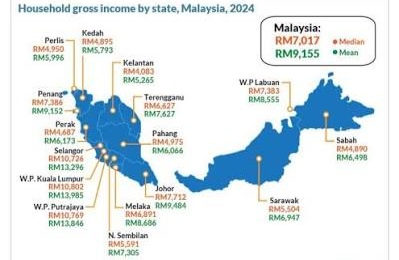
Borneo’s Plight in Malaysia Foundation (BoPiMaFo) takes note of the recent remarks by World Bank economist Deisigan Shammugam, who cautioned that although Malaysia may achieve high-income nation status, many citizens may not experience the same benefits due to significant disparities in income and development between states.
His observation that incomes in Kuala Lumpur are approximately eight times higher than those in Kelantan should serve as a wake-up call to policymakers.
For Sabahans, however, this is not a new revelation.
It merely confirms a longstanding reality: national economic growth does not automatically translate into equitable prosperity.
NATIONAL AVERAGES CAN HIDE REGIONAL INEQUALITY
Malaysia’s economic performance is often measured through national indicators such as Gross Domestic Product (GDP) and Gross National Income (GNI).
While these figures are important, they can mask deep inequalities between regions.
A country may achieve high-income status on paper while many of its citizens continue to struggle with low wages, inadequate infrastructure, poor access to healthcare and education, and limited economic opportunities.
Economic success should be judged not merely by averages, but by whether prosperity is shared fairly across all states and communities.
SABAH’S PARADOX MUST BE ADDRESSED
Sabah is blessed with abundant natural resources, including oil and gas, plantations, forestry, fisheries and tourism assets that contribute significantly to the national economy.
Yet despite this immense wealth, many Sabahans continue to face poverty, underdevelopment, inadequate infrastructure, youth migration in search of better opportunities, and a cost of living that increasingly outpaces household incomes.
This raises a fundamental question:
How can a resource-rich state remain economically disadvantaged while contributing so much to the nation’s prosperity?
PRODUCING WEALTH IS NOT THE SAME AS SHARING WEALTH
The experience of Sabah demonstrates that generating wealth and benefiting from that wealth are not necessarily the same.
A truly inclusive economic model requires that states which contribute substantially to national revenues also receive a fair opportunity to build their own economies, strengthen local industries, create quality employment and improve public services.
Without equitable distribution, high-income status risks becoming a statistical milestone rather than a meaningful improvement in the daily lives of ordinary Malaysians.
SABAHANS DESERVE FAIR OPPORTUNITIES
BoPiMaFo believes that reducing regional inequality is not simply an economic objective but a matter of justice, constitutional responsibility and national cohesion.
Sabahans do not seek special treatment.
They seek fair treatment.
Every Malaysian, regardless of where they live, should have access to quality education, healthcare, infrastructure, employment opportunities and a reasonable standard of living.
CONCLUSION
The World Bank’s observations should encourage a broader national conversation about balanced development and inclusive growth.
Malaysia’s progress will ultimately be measured not by whether it crosses a statistical income threshold, but by whether prosperity reaches every corner of the Federation.
A truly successful Malaysia is one where Sabahans, Sarawakians and citizens throughout the country share meaningfully in the nation’s achievements and where no region is left behind.