By Remy Majangkim (Majangkim Office)
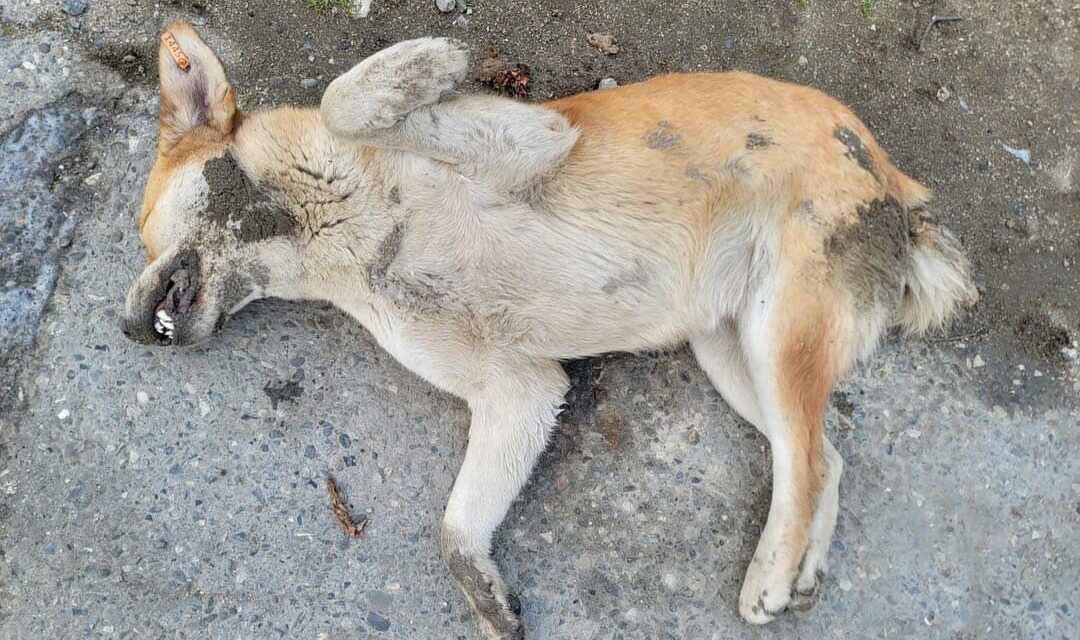
KOTA KINABALU: The video that went viral on May 15, 2026, from Puteri Wangsa, Johor Bahru, is not easily forgotten. A contractor’s vehicle deliberately runs over a sleeping dog. The animal dies. When confronted, the operator reportedly claims he was simply doing his job – “pest control.”
The Johor Bahru City Council (MBJB) has since issued a show‑cause letter to the contractor and filed a police report. That is welcome. But a deeper question now hangs over the entire pest control industry and every local authority in Malaysia:
Does the Pesticides Act 1974 (Act 149) give anyone a licence to kill dogs?
After a close reading of the Act itself – not hearsay, not social media outrage – the answer is an unequivocal no.
What the law actually says
The Pesticides Act 1974 is the primary legislation governing the registration, licensing, manufacture, sale, storage and use of chemical pesticides in Malaysia. It is a technical law, written to control substances that kill rats, termites, weeds, mosquitoes and agricultural threats.
Crucially, the Act provides a binding definition of “animals”. Section 2 (page 8 of Act 149) states:
“animals” means
(a) animals that are useful to man as a source of food or other essential products or as beasts of burden;
(b) animals that are commonly kept as domestic animals or as pets;
(c) animals that are protected under any written law for the time being in force relating to the protection of wild life;
(d) animals that are beneficial to agricultural production; or
(e) animals that are valued for reasons of amenity.
A dog falls squarely under paragraph (b) – “animals that are commonly kept as domestic animals or as pets.” The Act itself recognises dogs as protected domestic animals. They are not listed, referenced or implied to be pests anywhere in the statute.
The ‘pest’ definition does not override protection
The same section defines “pest” (page 9) as including:
“any other plant or animal that adversely affects or attacks animals, plants, fruits or property”.
At first glance, a stray dog causing a nuisance might theoretically fall under that broad wording. But Malaysian courts interpret statutes as a whole. The Act deliberately created a separate, affirmative definition of “animals” that includes domestic pets. Nowhere in the Pesticides Act 1974 does it state that a dog – even a stray – loses its legal status as an “animal commonly kept as a domestic pet” simply because it is unattended or causes a nuisance. The Act provides no mechanism to reclassify a domestic animal as a pest.
Therefore, any pest control operator who harms a dog is acting outside the scope of the Act entirely.
Chemical pesticides, not vehicles
Even if one were to argue (wrongly) that a dog could be treated as a pest, the entire regulatory scheme of the Pesticides Act 1974 is about chemical pesticides – their registration, licensing, manufacture, sale, storage and use. The Act does not grant any person, company or local council a licence to kill dogs using a vehicle, physical force, or any method not involving a registered pesticide.
Even if a dog were a pest (it is not), the method used – running it over – is not authorised by any section of this Act.
The Pesticides Board has never classified dogs as target pests
Under Section 8(3A) of the Act, the Pesticides Board may issue guidelines regarding the classification of pesticides. To date, the Board has never issued any guideline classifying dogs as target pests. The Malaysia Pest Management Association (MPMA) and the Sabah Integrated Pest Management Association (SIPMA) should formally request a declaratory ruling from the Board to confirm that domestic animals are excluded from pest control operations.
The Animal Welfare Act 2015 is absolute
Even if one were to ignore all of the above, the Animal Welfare Act 2015 (Act 772) provides an overriding prohibition. Section 29 makes it a criminal offence to:
“(a) cruelly beats, kicks, overloads, tortures or terrifies any animals”.
Penalties include a fine of up to RM100,000, imprisonment of up to three years, or both. No pest control licence, no local council contract, and no misreading of the Pesticides Act can override this. Running over a dog with a vehicle is cruelty – not pest control.
What this means for pest control operators
Every licensed pest control operator in Malaysia holds a licence issued under the Pesticides Act 1974 to manage pests – rats, cockroaches, termites, mosquitoes, and agricultural threats. Dogs are not on that list.
If you or your employees kill or harm a dog under the guise of “pest control”, you are:
Violating the Pesticides Act 1974 (by acting outside its scope),
Violating the Animal Welfare Act 2015 (by committing cruelty), and
Liable for criminal prosecution and civil damages.
MBJB has already acted. Others will follow.
A call to action
To MPMA and SIPMA: If you already have a code of conduct prohibiting cruelty to domestic animals, publicise it now. If not, adopt it immediately. Discipline or expel any member who claims otherwise. Your industry’s reputation depends on it.
To all local councils: Review your stray control contracts immediately. Ensure that no clause authorises killing by vehicle, poisoning, or any other inhumane method. Humane trapping and sheltering are the only legal options.
To the public: If you see a pest control vehicle or contractor harming a dog, record it, report it to the police, and file a complaint with the Department of Veterinary Services (www.dvs.gov.my). The law is on your side.
Conclusion
The Pesticides Act 1974 does not classify dogs as pests. No licence – issued by the Pesticides Board, a local council, or any other authority – gives anyone the right to kill a dog. The incident in Johor Bahru was not pest control. It was animal cruelty, and it must be prosecuted as such.
When any pest control operator claims they have a “licence to kill” dogs, ask them one question: Show me the page in Act 149 where it says “dog”.
They cannot. Because it does not exist.
Disclaimer: This article is for informational and advocacy purposes and does not constitute formal legal advice. Readers are encouraged to consult a qualified lawyer for specific legal proceedings.