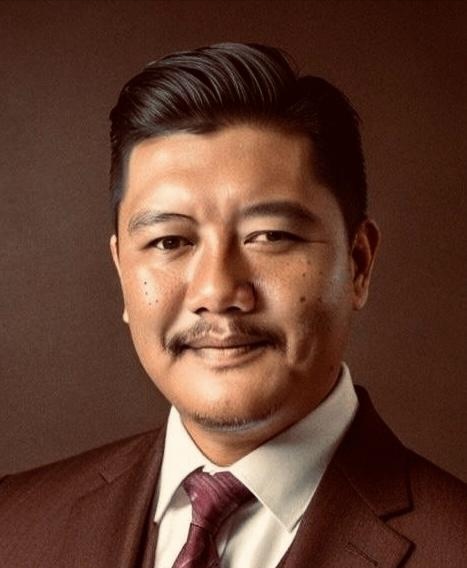
By Remy Majangkim (Majangkim Office)
KOTA KINABALU: A quiet phone call. A handshake at Kaamatan. A demand for explanation. A bitter backlash. And across the South China Sea, a kamikaze party launch that mirrors a rebellion from a decade ago.
Malaysia’s political landscape is being redrawn by men in their seventies who know that the only thing worse than a rival is a divided house.
The Kaamatan Handshake That Shook the KSU
When Shafie Apdal and Jeffrey Kitingan sat together at the Kaamatan Festival in Keningau, it was a deliberate act of statesmanship. Both men are in their seventies. Both have been rivals, allies, and everything in between.
Shafie’s message is simple: extend the hand. He has done so many times. This time, it landed.
But the Ketua Setiausaha (KSU) of Sabah demanded an explanation of the union. The backlash was immediate. Civil servants are not supposed to intervene in political realignments. The KSU’s demand was seen as overreach, an attempt to intimidate native leaders.
If the KSU does not retreat, he risks a constitutional crisis over civil service neutrality. Sabahans do not appreciate being told whom they can sit with. Mature leadership is welcome. Bureaucratic interference is not.
The Parallel: Rafizi and Shafie – Same Move, Different Decades
Rafizi Ramli and Nik Nazmi’s departure from PKR to take over Parti Bersama Malaysia (Bersama) has been called a “kamikaze mission.” But the pattern is familiar.
In 2016, two men left their parties on their own accord. Shafie Apdal was a senior UMNO minister who saw his party rotting. Darell Leiking was a PKR leader disillusioned with his own party’s direction. They shared the same diagnosis: the old parties had failed Sabah.
Together, they built Warisan – a Sabah‑based, multi‑ethnic, reformist party focused on Sabah’s constitutional rights, native land, and an uncompromising call to end corruption.
Now, Rafizi and Nik Nazmi are doing something similar. They left PKR and launched Bersama, promising reform as a clean alternative.
Both moves are legitimate. But Shafie and Darell’s rebellion was rooted in a place: Sabah’s grievances, its constitution, its native rights. Rafizi’s rebellion is rooted in ideology without geography. It is Peninsula‑centric reform, not Borneo‑centric.
The Pledge Problem: Bersama’s 12 Points – No MA63, No 40%, No NCR
Bersama has unveiled its 12‑Point Agenda: universal social safety net, capping foreign workers at 5%, free preschool, SME support, healthcare, institutional reform, green energy, affordable housing. Political observers have panned these as “populist slogans lacking implementation.”
For Sabah and Sarawak, there is no mention of MA63, no mention of the 40% revenue entitlement, no mention of native customary rights (NCR). The manifesto is Peninsula‑centric and urban‑based.
Warisan was built on those very issues. Shafie and Darell anchored the party in Sabah’s constitutional grievance. Warisan’s appeal to Chinese voters in 2025 succeeded because Shafie linked corruption to the theft of Sabah’s resources.
Rafizi may win urban seats in the Peninsula with Bersama. But a manifesto that ignores MA63, 40%, and NCR will not travel across the South China Sea. If Rafizi wants to be a national leader, he must speak to Sabah’s constitutional claims. Otherwise, Bersama will be just another Peninsula party that discovers Borneo only during election season.
The PAS Succession: Samsuri, Cut from the Same Cloth
Meanwhile, PAS is preparing its own succession. Terengganu Menteri Besar Ahmad Samsuri Mokhtar is positioned as the new face of PAS – a technocrat, former secretary to Hadi Awang, cut from the same ideological cloth but with a more polished image.
Samsuri represents a shift from fiery rhetoric to administrative competence. But the substance remains. PAS has not softened on secularism, non‑Muslim rights, or federalism. Samsuri is not a moderate; he is a well‑groomed version of the old guard.
For Sabah, this matters. A PAS‑led government would be hostile to the 40% revenue claim and to native customary rights. The Borneo Bloc – Warisan, STAR, GPS – would find little common ground with a Samsuri‑led PN.
The Wildcard: Siti Kasim – The Lioness of Malaysia, Kryptonite to PAS
And then there is Siti Kasim: human rights lawyer, Orang Asli defender, unflinching critic of religious authority. Threatened, vilified, dismissed – she remains unbowed. She is the Lioness of Malaysia.
In 2022, she ran as an independent in Batu, Kuala Lumpur – a 10‑cornered fight – and received 653 votes. It was never about winning. It was about planting a flag.
Her work with the Orang Asli gives her credibility that no Peninsula politician can claim in Borneo. She has fought for native land rights when others stayed silent.
That fight adapts to Borneo, where Native Customary Rights (NCR) are recognised in law but not protected on the ground. Native communities still face bulldozers and plantations, often with the complicity of silent elected representatives. Siti Kasim knows how to translate customary claims into constitutional arguments. Unaligned with any local dynasty, she could speak truth to power without fear. Her Orang Asli experience gives credibility; Borneo’s NCR frameworks give the legal hook.
She is kryptonite to PAS. A Malay‑Muslim woman, unapologetically secular, fiercely independent, championing non‑Muslim and native rights – she is a walking contradiction to everything PAS stands for. She cannot be dismissed as “anti‑Malay” because she is Malay. She cannot be painted as “anti‑Islam” because her advocacy is rooted in justice. The Lioness does not ask permission to roar.
If she runs in Sabah or Sarawak – as a genuine independent, perhaps sponsored by a local civil society network – she could be a wildcard. Not a winner in every seat, but a disruptor where margins are thin. Imagine her in Kota Kinabalu or Lubok Antu: she could pull votes from PAS‑aligned candidates, split the reformist vote, or force a debate on native rights that major parties would rather avoid.
The Borneo Bloc should take note. Siti Kasim is not a threat. She is a potential ally. A moral voice. If the old men of Borneo are serious about mature leadership, they should extend a hand to her as well – not a party membership, but a quiet understanding. The fight for Sabah’s rights is also the fight for indigenous rights everywhere. The Lioness fights for all who have no voice.
The Convergence: Mature Leadership and the Borneo Bloc
The Borneo Bloc is about unity among native leaders. But true maturity also means recognising that some battles are fought best by those who owe nothing to any coalition.
Shafie and Kitingan have seen UMNO rise and fall, PH rise and splinter, PN rise and stall. Their willingness to sit together at Kaamatan, to ignore the KSU’s demand, to face the backlash – that is mature leadership. The clock is ticking. The next generation deserves a united Borneo voice.
The parallel with Rafizi’s defection is instructive. Shafie and Darell built Warisan on Sabah’s constitutional rights. Rafizi built Bersama on Peninsula urban reform. One was place‑based. The other, so far, is not.
If Rafizi wants to be more than a footnote, he must learn that reform without the periphery is just a new flag on an old ship. And if the Borneo Bloc wants to be more than a parliamentary bloc, it must embrace not only native leaders but also native champions – even those from across the sea.
Conclusion: The Old Men, The New Maps, and the Wildcard
The phone call from Shafie to Kitingan was about the future. Two men in their seventies, extending hands, building a bloc that could hold the key to Putrajaya.
Rafizi is replaying a script written ten years ago, but his Bersama agenda – 12 points with no MA63, 40%, or NCR – has not added the verses that matter to Sabah. Samsuri is replaying Hadi’s script with a softer voice – but the lyrics remain the same.
And Siti Kasim – the Lioness – stands outside all of them. No party machinery, no war chest, no longhouse network. But she has a reputation untarnished by compromise, and a voice that cannot be silenced.
The map of GE16 is being drawn in Keningau, Kuching, and Kota Kinabalu – not in Petaling Jaya or Terengganu.
The old men of Borneo are showing the young men of the Peninsula what mature leadership looks like. The question is whether the Peninsula will learn to read the map – and whether the wildcard will be dealt into the game.