

KOTA KINABALU: Sabah’s digital transformation must support the broader objectives of the Sabah Maju Jaya (SMJ) development agenda to strengthen the economy, develop the people and improve infrastructure and public well-being, said Chief Minister Datuk Seri Panglima Haji Hajiji Haji Noor.
“Digitalisation should not stand apart from development. It should help us deliver development more effectively,” he said at the opening of the Sabah Digital Summit 2026 at the Sabah International Convention Centre (SICC) here on Wednesday.
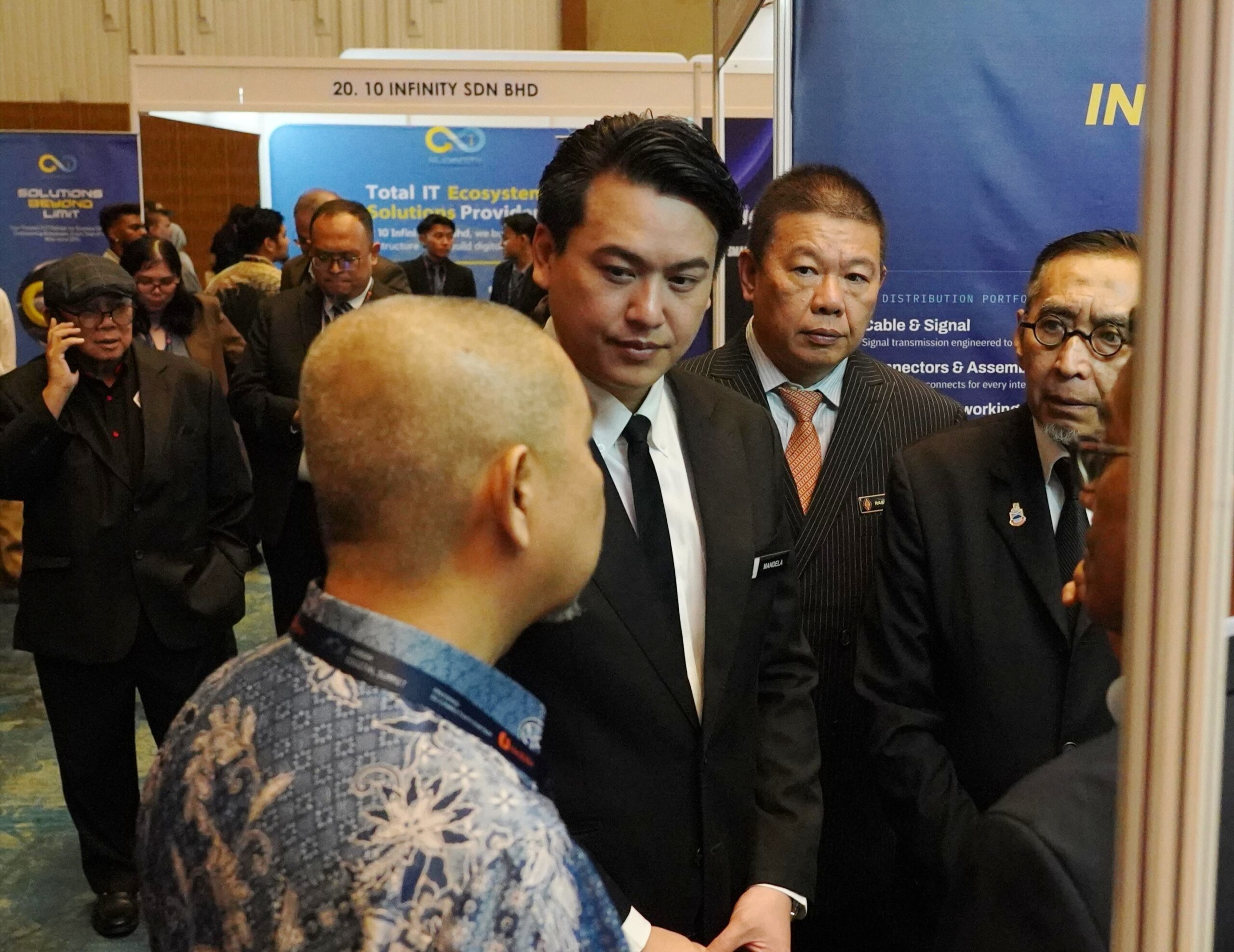
Assistant Minister to the Chief Minister Datuk Ceasar Mandela Malakun delivered his speech.
The Chief Minister said the Summit’s theme, “Building Sabah’s Digital Future – Unlocking Borneo Next: Advancing Innovation, Connectivity and AI-Driven Growth”, reflects an important responsibility
.“We must ensure that technological progress translates into greater opportunity, stronger public services and better livelihoods for our people. Sabah has long been recognised for its natural wealth, its forests, marine resources, agricultural land and extraordinary biodiversity.
“These remain central to our identity and economy. Our digital ambition is not to replace these strengths, but to enhance their value, improve their management and safeguard them for future generations,” he said.
Sabah has an opportunity to strengthen its role as a bridge for regional trade, services and knowledge exchange due to its proximity to neighbouring BIMP-EAGA markets.
“However, geography alone will not secure that role. We must support it with reliable infrastructure, capable institutions, skilled people and an environment that encourages responsible investment. Our ambition must be matched by the practical work required to deliver it,” he said.
The Chief Minister said the priorities are closely connected, namely reliable connectivity and digital infrastructure; artificial intelligence (AI) and emerging technologies; cloud computing; efficient digital government; cybersecurity, entrepreneurship and innovation; talent development; rural inclusion; environmental sustainability; and cross-border digital trade.
He said these priorities must translate into improvements that people can experience,adding that AI offers significant possibilities, but it must be approached with purpose and care.
“Its value lies not simply in adopting new tools, but in solving real problems, whether through better service delivery, improved productivity, more informed planning or stronger disaster preparedness.
“This Summit should therefore be a platform for practical collaboration. Let us identify problems worth solving, partners ready to contribute and projects that can be implemented, evaluated and, where successful, expanded,” he said.
The Chief Minister said Sabah’s digital future will ultimately be judged by how widely its benefits are shared.“Digital progress that benefits only those who are already well connected will deepen existing inequalities.
That cannot be the outcome we accept.“Meaningful digital inclusion requires more than network coverage. It requires reliable electricity, affordable services, suitable devices, practical skills and the confidence to use technology safely.
“It also requires services and learning opportunities that respond to the languages, circumstances and needs of our communities,” he said.
“Our young people must also be equipped to participate as creators, professionals and entrepreneurs and not merely as consumers of technology.
“This calls for stronger links between schools, technical and vocational institutions, universities, training providers and industry, including institutions such as Universiti Malaysia Sabah.
“We must create pathways that connect learning to employment through industry exposure, internships, apprenticeships and relevant professional training.
“Equally, we must support workers and small business owners who need to acquire new skills as technology changes the way we work,” he said.
To provide investors with clarity and confidence, Hajiji said the State government would continue improving investment facilitation, engaging with industry, and addressing implementation obstacles.
“In return, we seek more than capital or the introduction of technology. We seek partnerships that develop Sabahan talent, strengthen local enterprises, transfer knowledge and build capabilities that remain here over the long term,” he said.

