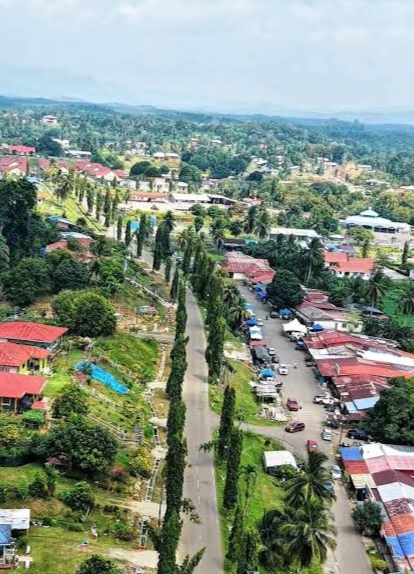
Pic – Felda Sahabat Lahad Datu
By Daniel John Jambun, President, Borneo’s Plight in Malaysia Foundation (BoPiMaFo)
KOTA KINABALU: Borneo’s Plight in Malaysia Foundation (BoPiMaFo) calls on the Sabah State Government, state assemblypersons, and the civil society of Sabah to confront a grave historical and economic injustice: the alienation of over 250,000 acres of Sabah’s fertile state land to the Federal Land Development Authority (FELDA) under the guise of rural poverty eradication, without fulfilling the foundational promise of individual land ownership for local families.
The Poverty Paradox: Promised Relief, Exacerbated Hardship
The original justification for handing over Sabah’s valuable land reserves to a federal agency was to eradicate rural poverty. Decades later, the reality is the exact opposite. While federal entities extracted massive wealth from Sabah’s agricultural soil, Sabah remains one of the poorest states in Malaysia, suffering from high poverty rates and widespread rural landlessness.
Taking native land away from local communities did not solve poverty—it entrenched it by stripping Sabahans of their primary economic asset: land.
The Disproportionate Math: Massive Land Concession vs. Minimal Local Settlement
Under initial land agreements signed between the Sabah State Government and FELDA starting in 1979, a staggering quarter-million acres—primarily across the FELDA Sahabat complex in Lahad Datu and parts of Kinabatangan—were handed over to federal control.
However, out of over 112,000 settler families resettled under FELDA nationwide, only an estimated 1,500 to 1,700 Sabahan families were ever settled on these schemes. FELDA utilized less than 10% of this vast land footprint for native smallholder settlement.
The remaining 90%+ was transformed into corporate commercial palm oil plantations managed under federal holding entities like FGV Holdings Berhad. Instead of receiving autonomous 10-to-15-acre land titles, local Sabahans were largely relegated to scheme laborers while billions in crop revenues flowed out of the state.
Undermining Land Autonomy and the 40% Federal Revenue Entitlement Under MA63
Under the Federal Constitution (List II – State List) and the structural protections of the Malaysia Agreement 1963 (MA63), land and natural resources remain strictly under state jurisdiction.
While federal agencies extracted immense wealth from Sabah’s soil through CPO sales, windfall profit levies, and export duties, these revenues were funneled directly into Putrajaya’s treasury.
This occurred while Putrajaya simultaneously defaulted on Sabah’s constitutional 40% net revenue entitlement under Article 112C and 112D of the Federal Constitution. Sabah lost both its land autonomy and its rightful financial return.
The “Sarawak Contrast”: Proof of Policy Failure
Sarawak strictly guarded its constitutional land autonomy under MA63 by establishing state-managed entities like SALCRA (Sarawak Land Consolidation and Rehabilitation Authority).
SALCRA developed native land for oil palm without ceding land titles to federal control or alienating state sovereignty to Putrajaya. Sarawak proved that rural agricultural development did not require surrendering state land. Sabah was led into an unnecessary, high-cost federal land concession.
Dislocation of Native Customary Rights (NCR) and Demographic Shifts
The rapid, large-scale land alienation in East Sabah during the late 1970s and 1980s routinely overlapped with traditional Native Customary Rights (NCR) land boundaries without proper verification (Pintas) or informed consent from indigenous villages. Ancestral owners were effectively turned into squatters on their own soil.
Furthermore, while thousands of young Sabahans face landlessness today, these federal corporate plantations relied heavily on foreign migrant labor, altering local demographics and displacing local rural youth from agricultural land ownership.
Financial Mismanagement and the FGV Debacle
When Felda Global Ventures (FGV) was listed on Bursa Malaysia in 2012, local settlers and workers were encouraged to take on financial debt to purchase shares. The subsequent crash in share value left Sabahan participants burdened with debt, forced to pay for federal corporate mismanagement while federal entities retained control over Sabah’s soil.
BoPiMaFo’s 5-POINT ACTION MATRIX
Reclaim State Land & Transfer Management to Sawit Kinabalu: The Sabah State Government must initiate legal and executive mechanisms to take back all federal land concessions under FELDA/FGV in Sabah. Commercial plantation operations should be immediately handed over to Sabah’s state-owned plantation arm, Sawit Kinabalu, ensuring revenues remain 100% within the state.
Comprehensive State Land & Revenue Audit: Institute an immediate state audit of all 250,000+ acres granted to FELDA and FGV, reviewing lease terms, quit rent concessions, and historical revenue returns to the Sabah State Treasury.
Sub-division of Unsettled Corporate Land: All excess land alienated to FELDA that was never allocated to individual Sabahan settlers must be returned to state jurisdiction and sub-divided into native land titles for local Sabahan families and descendants of original settlers.
NCR Settlement and Land Restoration: Institute a formal tribunal to review native customary land claims within federal scheme perimeters, granting immediate land titles to affected indigenous villagers.
Complete Realignment with MA63 Land Sovereignty: Cease any further federal agency land allocations in Sabah, ensuring all future agricultural development operates strictly under state-managed frameworks prioritizing native land rights.
“Surrendering a quarter-million acres of Sabah land under the pretext of eradicating poverty—only to deepen local poverty while operating commercial corporate plantations for federal gain—is structural exploitation. Sabah’s land belongs to Sabahans.
The state must take back this land and place it under Sawit Kinabalu to ensure our resources benefit our own citizens.”