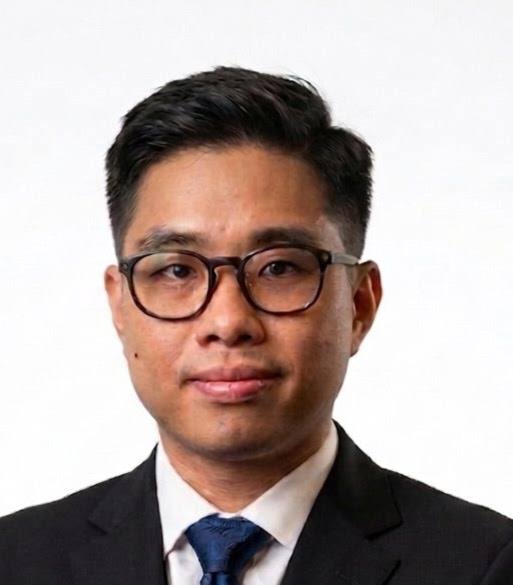
Brendon Beliku is a corporate immigration and employment compliance professional based in Kota Kinabalu. He writes independently on Sabah’s economic governance, labour policy, regulatory affairs and Momogun empowerment.
KOTA KINABALU: Throughout 2026, many voices in Sabah have called for a logistics masterplan, and the reason is clear.
Without one shared plan for ports, roads, airports and rail, each agency tends to build its own project in its own way.
Datuk Dr Ramli Amir, a former president of the Chartered Institute of Logistics and Transport Malaysia (CILTM), told Bernama on 30 June that the masterplan should not be treated as just another study.
In his view, it should become the official reference for every major logistics and transport decision in Sabah.
Days later, he added that the process should also decide who will carry the plan out, whether that is a stronger transport unit inside the state ministry or a new body with real powers to coordinate and enforce.
This second point deserves more attention. A masterplan explains what to build and in what order, but it does not explain who can make agencies follow it.
-The Structure Is Here, but the Plan Is Not-
The Sabah Logistics Council was set up in June 2024 to bring transport and supply chain policy into one platform.
By December 2025, the council was moving under the Ministry of Industry, Entrepreneurship and Transport (MINDET), which is led by Datuk Ewon Benedick as Deputy Chief Minister III. Ts. Daniel Doughty, chairman of the CILTM Sabah Section, welcomed these steps, but he also said that having no masterplan is a strategic risk.
Public reports reviewed for this article show calls for a masterplan until mid 2026, but no published masterplan. In other words, Sabah has a council and a ministry, yet on the public record it still has no plan. Even when it arrives, a second problem will remain.
A plan that is adopted but cannot be enforced is easy to ignore, because agencies can follow it when it suits them and set it aside when it does not.
-What Strict Enforcement Could Look Like-
These ideas are a proposal for public discussion, not an official standard.
The first idea is to test sustainability across the whole life of a project, not only on approval day.
This involves four jobs: providing, executing, monitoring and establishing. Put simply, someone must fund the project, build it, watch it after it opens, and keep the system running. A project may pass on approval day, but if nobody is watching it three years later, it has been approved without being sustained.
The second idea is to avoid simple averages, because an average lets one strong score hide a weak one.
For example, a project may score very high on economic benefit and very low on environmental impact, and still pass.
A minimum score solves this problem. For each key criterion, a project would need to reach a high minimum, such as 9 out of 10, before it can go ahead.
The exact number can be set through public consultation, but the principle is that a strong average cannot excuse a failure on something essential.
The consequence should fall on the project owner, such as the contractor, the developer or the agency that proposed the project, and it could take the form of a delay, a resubmission or disqualification.
-The Enforcer Must Outlast the Election-
Strict rules raise a harder question: who will apply them when applying them becomes costly? Sabah’s own history offers a warning, although from a different policy area.
The Sabah Temporary Pass was announced in September 2019 and cancelled on 22 January 2020, shortly after the Kimanis by election.
A live decision was reversed in about four months once it became politically costly. The lesson is about structure, not about any one person.
A rule enforced by a body that depends on political goodwill can be dropped by the same goodwill.
This points to several design features. The body should be created by law, its members should serve fixed terms that do not end when the government changes, and it should have its own protected budget.
It should also publish the score and the reasons for every approval, rejection or waiver.
Such a body would hold much power and could become a target for capture, so open reporting is its best protection.
One fair objection is that a body protected from elections is less accountable to voters. The answer is to protect only the enforcement. Elected leaders would still choose which projects to propose and what the standards are, while the enforcing body would only apply the rules and explain its reasons.
Datuk Ramli’s call for a dedicated body with enforcement powers already points in this direction.
The next step is to describe what makes such a body last. Sabah has spent much effort on what the plan should be called, but the better question is who has the power to enforce it, and whether that power will still exist the first time enforcing it costs someone an election.
[Disclaimer]: The views, opinions and analyses expressed in this article are solely those of the author and do not necessarily reflect the views, policies or positions of the Jesselton Times, its editors, management or affiliated entities. This article is published for analytical and public discussion purposes and should not be construed as institutional commentary or endorsement.