By Remy Majangkim
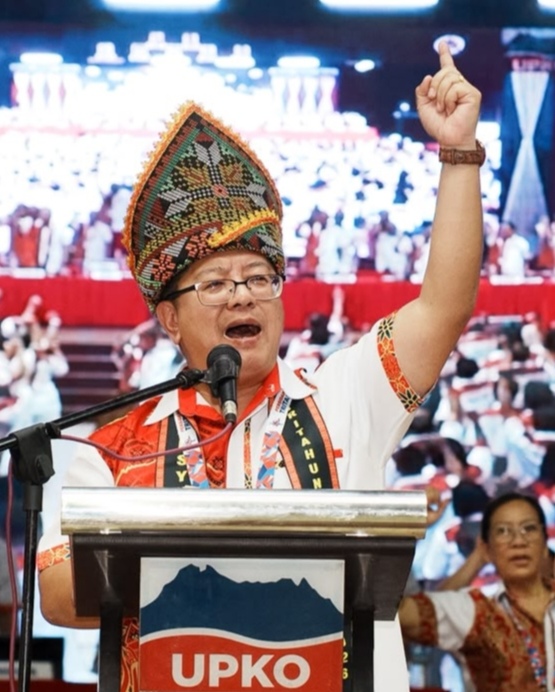
KOTA KINABALU: When UPKO President Datuk Ewon Benedick walked away from Putrajaya’s Cabinet table, Peninsular commentators were quick to frame his resignation as procedural impatience.
DAP Secretary-General Anthony Loke characterized the move as theatrical criticizing Ewon for skipping a critical Cabinet meeting where the Attorney-General briefed ministers on federal plans to appeal specific grounds of the High Court’s ruling on Sabah’s 40% net revenue entitlement.
In federal administrative logic, Ewon’s absence was framed as dodging a tough conversation. But viewed through the lens of the Borneo Fortress, Ewon’s move was a deliberate tactical retreat, an intentional maneuver to avoid a coordinated, institutional dress-down engineered to trap him in federal consensus.
The Sacred Duty of the Oath
Lost in the noise of executive procedures is a fundamental legal truth: every Member of Parliament and Cabinet Minister takes a solemn oath of office to “preserve, protect, and defend the Constitution.” This is not a ceremonial formality or a secondary guideline subject to party discipline; it is an absolute constitutional duty.
When the Federal Government moves to appeal judicial grounds regarding historical non-compliance with Article 112C and 112D, it places executive convenience above constitutional fidelity. For any Sabahan representative, endorsing actions that delay or contest Sabah’s 40% entitlement directly conflicts with that sworn oath. Protecting the federal administrative apparatus from historic liability cannot override a parliamentarian’s primary duty to uphold the Constitution.
The Cabinet Trap: Asymmetric Power inside Putrajaya
When a single regional leader sits at a federal Cabinet table backed by senior Peninsular ministers and federal legal machinery, the environment is structured around “collective responsibility.” Putrajaya’s legal strategy was to appeal findings that implied historical “misuse of power” since 1974, a maneuver designed to shield past and present federal bureaucracies from systemic liability.
Had Ewon sat through that meeting, he faced two non-viable options:
Concede to Federal Legal Framing: Acquiesce to the Attorney-General’s arguments and tacitly endorse appealing parts of a landmark ruling favoring Sabah.
Get Outmaneuvered in Executive Session: Offer vocal opposition only to be outvoted, bound by Cabinet solidarity, and forced to defend Putrajaya’s partial appeal publicly.
By bypassing the room entirely, Ewon refused to play on Putrajaya’s home court. He avoided a violent legal and political dress-down meant to neutralize his position before he could speak to his constituents.
The Good Governance Illusion
Federal arguments defend the appeal as a necessary legal shield to prevent admissions of historical wrongdoing. Yet, this framing ignores the elephant in the room: for over 50 years, the constitutional mandate of Article 112C and 112D has been left unfulfilled.
Obscuring a half-century failure of constitutional duty behind debates over procedural etiquette or administrative liability is a breakdown of good governance. Constitutional entitlements are not discretionary federal grants subject to executive convenience; they are the bedrock covenants of the 1963 federation.
Breaking the Federal Handcuffs
The core thesis of the Borneo Fortress relies on regional autonomy and strategic leverage. A fortress cannot hold if its key commanders are bound by the procedural handcuffs of Putrajaya’s executive branch.
By resigning, Ewon traded a seat at an uneven federal table for total freedom on the Sabahan battlefield. His exit shifts the political burden back onto West Malaysian coalitions, forcing them to justify to the East Malaysian electorate why protecting federal administrative liability takes priority over honoring the Malaysia Agreement 1963 and upholding their oath to defend the Constitution.
For Sabah, the lesson is clear: true political leverage isn’t measured by holding a seat in a Peninsular-dominated Cabinet; it is measured by the ability to draw a line, step out of the trap, and stand firmly on constitutional right.