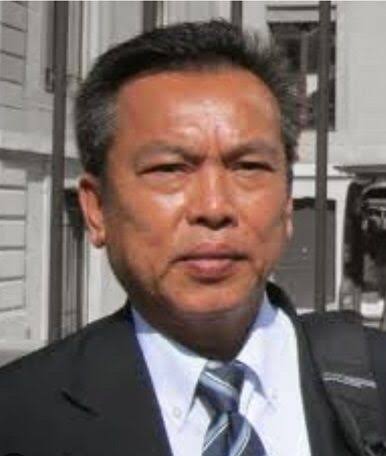
By DANIEL JOHN JAMBUN, President Borneo’s Plight in Malaysia Foundation (BoPiMaFo)
KOTA KINABALU: Borneo’s Plight in Malaysia Foundation welcomes the announcement that Sabah, through its State-owned entity, is set to acquire a 40 per cent interest in a Petronas floating liquefied natural gas project.
Any genuine participation by Sabah in the ownership, management and profits of the petroleum industry operating from Sabah’s natural resources is preferable to Sabah remaining merely a spectator while enormous quantities of oil and gas are extracted from its territory.
However, the announcement must be understood accurately.
Sabah is not receiving 40 per cent of the oil and gas produced from Sabah.
Sabah is not receiving 40 per cent of Petronas’s petroleum revenue derived from Sabah.
Sabah is not acquiring 40 per cent ownership of all LNG projects, pipelines, processing facilities or petroleum reserves situated in or originating from Sabah.
The proposed transaction concerns a 40 per cent commercial interest in one floating LNG project.
That distinction is fundamental.
A LARGE PERCENTAGE DOES NOT AUTOMATICALLY MEAN A LARGE RETURN
The figure of 40 per cent sounds impressive. But the true value of the transaction cannot be assessed from the percentage alone.
The Sabah Government must disclose:
1. the total acquisition price;
2. whether the acquisition will be financed through State funds, commercial borrowings or government-backed guarantees;
3. the present valuation and remaining commercial life of the floating LNG facility;
4. its historical revenue, operating costs, profits and dividend payments;
5. the guaranteed duration and volume of its gas supply;
6. Sabah’s exposure to maintenance, refurbishment and decommissioning costs;
7. whether Sabah will have meaningful representation in management and decision-making;
8. who will control the marketing and sale of the LNG produced; and
9. the estimated annual net return to Sabah after financing, operating and other costs.
A 40 per cent ownership interest may entitle Sabah to 40 per cent of the profits, but it may also expose Sabah to 40 per cent of the relevant costs, liabilities and commercial risks.
The public should therefore be shown the business case, not merely the headline percentage.
COMPARE THIS WITH SARAWAK’S PETROLEUM REVENUE SYSTEM
The development is positive, but it is not yet comparable with Sarawak’s much wider petroleum revenue structure.
Sarawak does not depend solely upon minority participation in individual projects.
It has established recurring revenue streams through petroleum State Sales Tax, cash payments connected with oil and gas rights, dividends, investments and greater State participation through its own petroleum institutions.
Sarawak’s official 2026 Budget projects total State revenue of approximately RM13.1 billion. This includes an estimated RM3.5 billion from State Sales Tax on crude oil, LNG and other petroleum products, as well as RM2.6 billion in cash compensation in lieu of oil and gas rights.
In other words, Sarawak expects approximately RM6.1 billion in 2026 from those two petroleum-related revenue categories alone, before taking into account dividends and other investment income.
The Sarawak Government has also stated that its 5 per cent petroleum sales tax generates approximately RM4 billion annually and helped increase Sarawak’s total annual revenue from about RM6 billion to approximately RM14 billion.
By November 2024, Sarawak reported that it had cumulatively collected RM18.6 billion from its State Sales Tax on petroleum products.
Sabah’s proposed 40 per cent stake in one floating LNG project must therefore be placed in its proper perspective.
It may become a valuable investment, but it is not yet equivalent to Sarawak’s comprehensive system of recurring taxation, petroleum payments, State participation, regulatory authority and control over the wider gas value chain.
SABAH MUST MOVE FROM PROJECT-BY-PROJECT PARTICIPATION TO A COMPREHENSIVE PETROLEUM POLICY
Sabah should not remain dependent on negotiating minority stakes in selected projects decided by Petronas.
Sabah needs a comprehensive petroleum policy that addresses the entire value chain:
– ownership and management of petroleum resources;
– upstream exploration and production;
– gas supply and aggregation;
– pipelines and processing facilities;
– LNG production and marketing;
– downstream industries;
– petrochemicals, fertilisers and energy-intensive manufacturing;
– taxation and State revenue;
– employment and technical training for Sabahans; and
– transparent reinvestment of petroleum income for future generations.
The ultimate test is not how many impressive announcements are made.
The ultimate test is how much recurring net revenue Sabah actually receives, how much authority Sabah exercises and how much lasting economic value is created for Sabahans.
COMMERCIAL PARTICIPATION CANNOT REPLACE CONSTITUTIONAL ENTITLEMENT
BoPiMaFo further cautions that the project must never be presented as satisfying, replacing or offsetting Sabah’s constitutional entitlement to 40 per cent of the net revenue derived by the Federation from Sabah under Articles 112C and 112D and Part IV of the Tenth Schedule to the Federal Constitution.
These are entirely different matters.
The floating LNG stake is a commercial investment.
Sabah may have to pay substantial consideration for it, assume financing obligations and bear commercial risks.
The 40 per cent constitutional entitlement, on the other hand, is money owed to Sabah under the supreme law of the Federation.
Sabah must not be required to purchase an investment and then be told that its constitutional financial rights have thereby been fulfilled.
Nor should the similarity between the two figures—40 per cent commercial ownership and 40 per cent constitutional entitlement—be allowed to confuse the public.
One is an investment that Sabah may purchase.
The other is a constitutional entitlement that the Federal Government is legally obliged to honour.
DISCLOSE THE AGREEMENT TO THE SABAH STATE LEGISLATIVE ASSEMBLY
The proposed acquisition should be tabled in the Sabah State Legislative Assembly together with sufficient financial and commercial information for proper scrutiny.
Where public funds, State-owned companies, borrowings or government guarantees are involved, the representatives of the people must be allowed to examine:
– the acquisition agreement;
– the independent valuation;
– the financing structure;
– the projected return on investment;
– the gas-supply agreement;
– the risk assessment;
– the governance arrangements; and
– the legal and financial liabilities undertaken by Sabah.
Commercial confidentiality should not become a blanket excuse for withholding information involving Sabah’s natural resources and public financial exposure.
The Legislative Assembly may examine sensitive documents through an appropriate bipartisan committee where necessary.
WELCOME THE STEP — BUT DO NOT DECLARE VICTORY TOO EARLY
BoPiMaFo welcomes every legitimate step that increases Sabah’s participation in the petroleum industry.
But Sabahans must distinguish between participation and control, gross revenue and net profit, an announced percentage and an actual financial return.
This acquisition may be an important beginning.
It must not be portrayed as the completion of Sabah’s petroleum struggle.
Sabah’s objective must be larger:
a transparent, comprehensive and legally secure framework under which Sabah receives a fair and recurring share of the wealth produced from its own territory, exercises meaningful authority over its natural resources and builds a petroleum economy that benefits present and future generations of Sabahans.