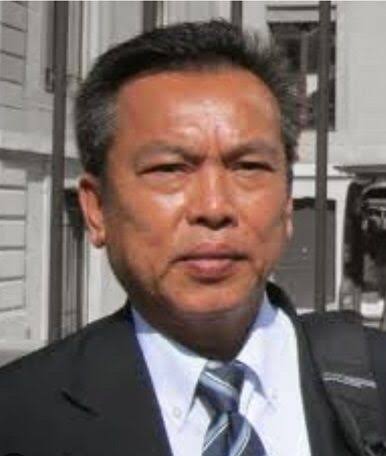
By Daniel John Jambun, President Borneo’s Plight in Malaysia Foundation (BoPiMaFo)
KOTA KINABALU: Borneo’s Plight in Malaysia Foundation refers to the statement by Sabah Finance Minister Datuk Seri Masidi Manjun that Sabah has received “zero audit queries” for more than 20 years and that the State Government’s accounts have never been questioned by the National Audit Department.
The statement was made while explaining an additional RM856 million under the Contributions to Statutory Funds component of the Supplementary Supply Bill 2026.
Masidi explained that the sum represented an accounting adjustment involving RM700 million for the Development Fund, RM66 million for the State Government Trust Fund and RM90 million for the Road and Bridge Operations and Maintenance Trust Fund, and that it did not involve any cash outflow.
BoPiMaFo accepts that an established accounting-adjustment system may comply with financial regulations.
However, the absence of an audit query over a particular accounting procedure must not be presented as proof that Sabah’s entire financial administration has been free from wastage, leakage, poor planning, failed investments, excessive expenditure or mismanagement.
There is a fundamental difference between:
properly recording public expenditure; and
determining whether the expenditure was necessary, economical, transparent and beneficial to the people.
A transaction may be entered into the correct account and approved through the proper administrative channel, yet still represent poor value for money.
WHAT EXACTLY DOES “ZERO AUDIT QUERIES” MEAN?
The State Government and the National Audit Department should clarify the precise meaning and scope of this claim.
Does “zero audit queries” mean:
That no query was raised concerning the accounting-adjustment system?
That Sabah’s consolidated financial statements received unqualified audit opinions?
That no ministry or department received any audit observation?
That no State statutory body or government-linked company was questioned?
That no procurement exercise, contract, project or expenditure was criticised?
That no weaknesses were found through performance or value-for-money audits?
Or that no forensic investigation ever identified losses, misconduct or failures of management?
These are entirely different propositions.
A clean or unqualified opinion on financial statements does not automatically establish that every contract was competitively awarded, every price was reasonable, every project was successfully completed or every investment was prudently managed.
Indeed, Masidi himself reportedly acknowledged that requests for additional allocations may arise from weaknesses in initial planning, delays in implementation, changes in project scope, inflation and policy changes.
He also identified weaknesses in early planning and design, Variation Orders, contractors’ cash-flow constraints, unstable ground conditions and other factors contributing to project delays.
These acknowledgements demonstrate why technical accounting compliance cannot be equated with perfect financial management.
THE NEARLY RM70 MILLION TRANSPORT AND LOGISTICS ALLOCATION
The need for greater scrutiny is illustrated by Parti Warisan’s demand for a full explanation concerning a reported allocation of nearly RM70 million for transport and logistics services for the Yang di-Pertua Negeri and the Chief Minister, including an additional RM4.5 million for flight charters.
According to the calculation presented by Warisan communication director Christopher Masudal, the expenditure would amount to almost RM190,000 a day over a full year.
This is a substantial amount of public money.
The Government should disclose:
Which companies provided the transport and logistics services?
How much was allocated separately for the Yang di-Pertua Negeri and the Chief Minister?
How many aircraft and helicopter journeys were undertaken during 2025 and 2026?
What were the official purposes, destinations and costs of those journeys?
Were the flights operated by Sabah Air Aviation or private charter operators?
Where private operators were engaged, why were State-owned aviation resources not used?
Were the relevant contracts awarded through open tender, restricted tender or direct negotiation?
Who approved the arrangements?
Was any comparative cost or value-for-money assessment undertaken?
Why was an additional RM4.5 million required for flight charters?
Was the additional allocation caused by unforeseen official requirements, increased usage, poor initial budgeting or reliance on third-party operators?
An expenditure may have been lawfully authorised and correctly recorded, but that does not by itself establish that the expenditure was reasonable or represented the best use of public money.
The Government should therefore publish the relevant contracts, procurement methods, service providers, payment schedules, flight records and audit findings, subject only to genuinely necessary security restrictions.
SABAH FOREST INDUSTRIES: WAS THERE A FORENSIC AUDIT?
Sabah Forest Industries was once one of Sabah’s most important industrial assets.
Its operations in Sipitang supported workers, families, contractors and surrounding communities. Its eventual financial collapse and winding-up therefore involved far more than the failure of an ordinary private company.
A strategic industrial enterprise does not become insolvent overnight.
The Government should disclose whether any comprehensive financial, management or forensic audit was conducted into SFI’s collapse.
The people are entitled to know:
When did the Government first become aware that SFI was facing serious financial difficulties?
What were the company’s total liabilities?
What warning signs were identified?
What steps were taken to protect its assets and operations?
Were any questionable transactions, related-party dealings, asset disposals or management failures identified?
What happened to SFI’s land, industrial facilities, licences and other valuable assets?
What was the ultimate financial and economic loss suffered by Sabah?
Were any directors, officers, advisers or government representatives held accountable?
Were any recovery proceedings commenced?
If an audit was conducted, the findings should be published.
If no forensic audit was conducted, the Government should explain why the collapse of such an important industrial asset did not trigger a full investigation.
WHAT HAPPENED TO THE RM130 MILLION SFI WORKERS’ FUND?
The Government must also explain the reported RM130 million special fund said to have been established for former SFI workers and their families.
In December 2022, Daily Express reported that the Sabah Legislative Assembly had been informed that the State Government allocated RM130 million through a special fund for affected workers and families.
However, former workers interviewed by the newspaper reportedly remained uncertain about the status of the compensation.
This raises a straightforward question:
WAS THE RM130 MILLION FUND AUDITED?
The Government should disclose:
Who authorised the RM130 million?
Under which budgetary provision was it approved?
Was RM130 million actually transferred into a dedicated account?
On what date was the money transferred?
Which ministry, department, statutory body, trustee or company administered it?
Was the figure a cash allocation or merely an estimated value covering different liabilities and forms of assistance?
How many workers and family members qualified as beneficiaries?
How many received payments?
How much was paid directly to former workers as compensation?
How much was used for unpaid salaries, Employees Provident Fund contributions, utilities, legal expenses, operational liabilities or other purposes?
What amount remains, if any?
Who audited the fund?
What period did the audit cover?
Were the findings tabled in the Sabah Legislative Assembly?
References to wages, EPF contributions, electricity bills or other liabilities do not by themselves provide a complete reconciliation of the reported RM130 million.
The Government should publish an audited statement showing:
the opening allocation;
every category of payment;
the number of beneficiaries;
administrative or legal deductions; and
the closing balance.
Until that reconciliation is disclosed, the public cannot determine whether the entire RM130 million was used for its announced purpose.
How can Sabah proclaim “zero audit queries” when former workers and the public are still seeking a clear account of a RM130 million fund supposedly established following the loss of their livelihoods?
THE PITAS PRAWN FARM: WHO AUDITED THE FAILURE?
The failed Pitas prawn-farming project presents another major test of the “zero audit queries” claim.
The project was promoted as a transformative rural-development and aquaculture initiative.
Published reporting described it as a RM1.23 billion mega project launched in 2014. Operations reportedly began in 2016, after more than 900 hectares of mangrove forests had been cleared, before the farm eventually closed during the Covid-19 pandemic.
The project’s failure affected not only public finances but also workers, local communities, traditional livelihoods and the surrounding environment.
It has been publicly claimed that Yayasan Sabah and associated State interests suffered losses amounting to hundreds of millions of ringgit.
BoPiMaFo does not assert that figure as an established audited loss.
That is precisely why the Government must publish the audited figures.
The people are entitled to know:
How much was invested by Yayasan Sabah and other State entities?
How much was contributed by the private joint-venture partner?
How much was borrowed, guaranteed or underwritten by public institutions?
What was the actual total cost of the project?
How much was eventually written off?
What assets remain?
Who currently owns or controls the land, ponds, equipment and infrastructure?
What income was earned during the period of operation?
What were the accumulated operational losses?
Who approved the investment?
What feasibility studies and financial projections were relied upon?
Was proper due diligence conducted concerning commercial viability, water quality, disease risk, environmental consequences and market conditions?
Were construction, supply and operational contracts awarded through open tender?
Were there cost overruns, related-party transactions or payments for incomplete or defective work?
Why was the project permitted to deteriorate until it ceased operating?
Was any civil, disciplinary or recovery action taken against those responsible?
Most importantly:
WAS A FULL FINANCIAL, PERFORMANCE AND FORENSIC AUDIT CONDUCTED?
If such audits exist, they should be tabled in the Sabah Legislative Assembly and released to the public.
If no forensic audit was undertaken, the Government should explain why a project involving such a large reported investment and extensive environmental consequences was not independently investigated.
Every ringgit lost by Yayasan Sabah represents money that could otherwise have funded scholarships, schools, student hostels, rural development and assistance for Sabah’s children.
The people deserve more than proposals to revive the project.
They deserve to know why it failed, how much was lost, who was responsible and whether any public money can be recovered.
AUDITING THE BOOKS IS NOT ENOUGH
A conventional financial audit generally examines whether financial statements fairly record transactions and comply with applicable accounting requirements.
But meaningful public accountability must go further.
A genuine performance or forensic examination should determine:
Whether the expenditure was necessary;
Whether the investment was commercially justified;
Whether contracts were awarded competitively;
Whether prices were reasonable;
Whether conflicts of interest existed;
Whether warning signs were ignored;
Whether public assets were properly protected;
Whether money reached its intended beneficiaries;
Whether losses could have been prevented;
Whether misconduct or negligence occurred; and
Whether recovery or enforcement action should be taken.
There is a profound difference between confirming that money was entered into the books and investigating why public wealth disappeared.
A properly recorded payment can still be wasteful.
A properly authorised contract can still provide poor value for money.
A technically correct accounting entry cannot revive a bankrupt industry, compensate unpaid workers, restore damaged mangroves or recover hundreds of millions of ringgit from a failed investment.
SABAHANS EXPERIENCE A DIFFERENT REALITY
Sabahans continue to experience damaged roads, prolonged water shortages, electricity interruptions, delayed infrastructure, incomplete projects, overcrowded public facilities and recurring demands for supplementary allocations.
Against this reality, a sweeping claim of “zero audit queries” will naturally invite public scepticism.
The essential questions are not limited to whether expenditure was correctly entered into government accounts.
The essential questions are:
Was the expenditure necessary?
Was it properly prioritised?
Was it transparently approved?
Was it competitively procured?
Did Sabah obtain value for every ringgit spent?
Were public assets protected?
Were projects completed on time and according to specification?
Were failed investments independently investigated?
Were those responsible for negligence, excessive expenditure or losses held accountable?
Did the expenditure improve the lives of Sabahans?
BOPIMAFO’S CALL FOR FULL DISCLOSURE
BoPiMaFo calls upon the Sabah Government to table or publish:
1. The written confirmation from the National Audit Department supporting the assertion that Sabah received “zero audit queries” for more than 20 years;
2. A precise explanation of the scope of that assertion;
3. The procurement records, contracts, service providers and expenditure breakdown for the nearly RM70 million transport and logistics allocation;
4. The complete records relating to the additional RM4.5 million for flight charters;
5. All audit, financial and investigation reports concerning the collapse and winding-up of Sabah Forest Industries;
6. A complete audited reconciliation of the reported RM130 million SFI workers’ fund;
7. All financial, performance and forensic audits concerning the Pitas prawn-farming project;
8. Yayasan Sabah’s verified total investment and loss in that project;
9. Details of assets recovered, retained, transferred or written off; and
10. Details of any disciplinary, civil, criminal or recovery action arising from these matters.
The National Audit Department should also clarify whether its examinations included performance auditing, procurement compliance, value-for-money assessment, contract pricing, direct negotiations, government-linked companies and the management of special-purpose funds.
CONCLUSION
“Zero audit queries” must not become a slogan used to shield public expenditure from scrutiny.
It does not necessarily mean:
zero wastage;
zero leakage;
zero failed investments;
zero excessive expenditure;
zero poor planning;
zero mismanagement; or
zero accountability failures.
The collapse of Sabah Forest Industries, the unanswered questions surrounding the reported RM130 million workers’ fund, the failure of the Pitas prawn farm and the nearly RM70 million transport and logistics allocation all demonstrate why Sabah requires deeper scrutiny—not reassuring headlines.
The people do not merely want to know whether public money was entered into the correct account.
They want to know:
WHERE DID THE MONEY GO?
WHAT DID SABAH RECEIVE IN RETURN?
WHO WAS RESPONSIBLE WHEN PROJECTS FAILED?
AND WAS ANYONE EVER HELD ACCOUNTABLE?
Until the Government produces the relevant audits, contracts, reconciliations and investigation reports, the declaration of “zero audit queries” will raise far more questions than it answers.
Zero audit queries do not mean zero problems.
Sabahans deserve complete disclosure, independent scrutiny and measurable accountability for every ringgit of public money.