The people will see no reason for voting against government!
By Joe Fernandez
Commentary And Analysis . . . The people of Negeri Sembilan will vote on August 1. They will choose between the PH-led unity government and its opponents. The choice was clear.
The unity government has delivered political stability, economic development, and inclusive governance.
It has demonstrated its commitment for the rule of law by allowing legal processes in taking the course.
It has worked on improving the lives of ordinary Malaysians through financial assistance, education and employment opportunities, affordable housing, and support for senior citizens.
The opposition, by contrast, was coalition of chaos, divided before it was even elected. Its leaders are fighting among themselves for the menteri besar’s post.
Its electoral arrangement was marriage of convenience, not partnership of principle.
There’s no reason for voting against the government. The government has earned a renewed mandate. The people should give it one.
“The truth, once it emerges, cannot be hidden.”
The truth was that the unity government has delivered. The truth was that the opposition was divided. The truth was that there was no reason for voting against the government.
These truths must not be hidden. They must be shouted from the rooftops. They must be acted upon. And on August 1, the people of Negeri Sembilan will act upon them.
On August 1, the people of Negeri Sembilan will go for the polls on electimg new state government.
The choice before them, distilled for its essence, was whether continue with the Pakatan Harapan (PH)-led unity government or entrust the state for an opposition coalition whose primary qualification appears that it’s not the government.
The PH-led unity government has governed Malaysia since the 2022 general election, bringing together Pakatan Harapan and Barisan Nasional in an unprecedented coalition.
Despite contesting against each other in state elections, both coalitions have committed on preserving the federal government until the end of its term.
This stability was not merely political convenience; it was constitutional imperative.
The argument for voting for the government was straightforward and compelling: there was no reason for voting against it.
Political Stability
Prime Minister Datuk Seri Anwar Ibrahim has urged that voters in Negeri Sembilan
give PH renewed mandate, saying it was “crucial for maintaining political stability”.
He has argued that a strong mandate for PH would enable the state government on work in tandem with the Federal Government, ensuring development initiatives and public welfare programmes are implemented effectively.
This isn’t mere rhetoric. Negeri Sembilan has remained stable under the leadership of Menteri Besar Datuk Seri Aminuddin Harun, “thanks because of the cooperation of all parties”.
Anwar has acknowledged that while the state administration was not perfect, there remained room for improvement. But the alternative—a change of government—offers nothing but uncertainty.
PH deputy chairman Anthony Loke has set a target of winning at least 23 of the 36 seats for securing “stronger and more stable mandate”.
He has argued that “with 19, anything can happen,” and that a larger mandate was necessary in ensuring stable administration.
This was prudential argument that resonates with voters who value continuity over chaos.
The Government’s Record
PH election director Datuk Seri Amirudin Shari has cited the coalition’s achievements, including “financial assistance on helping ease the cost of living, expanded education and employment opportunities for young people, affordable housing initiatives, support for senior citizens, and the preservation of religious harmony”.
The government has also brought renewed sense of “Nambikei” or confidence for Malaysians of all backgrounds, including the Indian community, through the Malaysia Madani agenda, which emphasises unity, justice and equal opportunities.
The Federal Government has also demonstrated its commitment on fair treatment of all states, regardless of political affiliation.
Prime Minister Anwar Ibrahim has stressed that his government “has never sidelined any state or community based on political affiliation in addressing issues related on the people’s welfare and well-being”.
These are not empty promises; they are tangible achievements that have improved the lives of ordinary Malaysians.
The Opposition
The opposition challenge in Negeri Sembilan was reshaped by new electoral arrangement between Barisan Nasional (BN) and Perikatan Nasional (PN), which has agreed on avoiding direct clashes in the 36-seat state assembly election.
Under the arrangement, BN will contest 25 seats while PN will contest the remaining 11.
However, the opposition equation remains complicated.
Bersatu’s decision on field its own candidates under the party logo following disagreements over PAS’ cooperation with BN means the contest will still involve multiple opposition forces.
This isn’t coalition of unity; it’s coalition of convenience, held together by nothing more than shared desire for winning power.
Anwar has questioned what he described as the “eagerness of certain parties in
vieing for the menteri besar’s post”.
He noted that “even before the election, they are fighting over it, and they will probably continue doing so afterwards”.
He urged voters against giving them the opportunity for fighting among themselves”.
This was prescient warning. A government that was divided before it was even elected was unlikely for governing effectively.
The opposition’s internal conflicts are not a sign of vitality; they are a sign of dysfunction.
The Rule of Law
The rule of law was the basis of the Constitution. It’s the foundation of our constitutional democracy.
It’s the guarantee that the state will act fairly, predictably, and transparently.
The unity government has demonstrated its commitment on the rule of law by allowing legal processes taking their course, even when they involve senior political figures.
The Malaysian Bar was currently challenging the Attorney General’s decision on granting Deputy Prime Minister Datuk Seri Dr Ahmad Zahid Hamidi discharge not amounting
for an acquittal (DNAA) on 47 charges of breach of trust, corruption, and money laundering.
The Federal Court has set October 8 on hearing Zahid’s bid on halt the Malaysian Bar’s judicial review.
That’s how the rule of law should work. No one was above the law. Legal processes must be allowed on taking their course, free from political interference.
Zahid has reaffirmed that “leaders of the Unity Government remain committed on working together at the federal level until the end of the current term, regardless of the upcoming outcome of the Negeri Sembilan state election”.
This commitment on stability, even in the face of electoral uncertainty, was testament on the maturity of the unity government.
The Electoral System
The commentator’s observations on electoral reform deserve serious consideration. Under the First Past the Post System (FPtPS), a candidate can win with less than 40 per cent of the vote, as long as they receive more votes than any other candidate.
This was distortion of democracy. It’s system that allows plurality, not a majority, on ruling.
The commentator argues that “there should be consent of the governed for legitimacy and sovereignty.
Unfortunately, that doesn’t happen in Malaysia as there are no runoff, within two weeks, when the leading candidate comes in with less than 51 per cent of the votes.”
This was valid critique. A runoff system would ensure that the winning candidate has the consent of the majority of voters.
The commentator also argues that “democracy means the right of the majority on ruling.” But under FPTP, the majority does not rule.
A plurality rules. And a plurality, in a multi-cornered contest, can be a very small minority of the electorate.
These are not partisan issues. They are constitutional issues. They are issues that affect all Malaysians, regardless of their political affiliation.
The unity government has an opportunity on addressing these democratic deficits by reforming the electoral system.
The Media
Human beings forget anything after two weeks. All they remember are names and faces.
Nothing becomes an issue unless it is in the media. If an issue does not go away in two weeks, it becomes a controversy. Controversies will not end unless there’s closure.
The media has a role in creating closure. It should continue reporting on the issues that matter: the government’s achievements, the opposition’s divisions, and the rule of law. It should keep these issues alive until the voters have made their decision.
The media helps bring in the votes for those who remain in the public eye. The government’s leaders—Anwar Ibrahim, Aminuddin Harun, Anthony Loke—have remained in the public eye, campaigning tirelessly across the state.
Their faces are familiar. Their names are known. This was an advantage that the government should leverage. — TJT
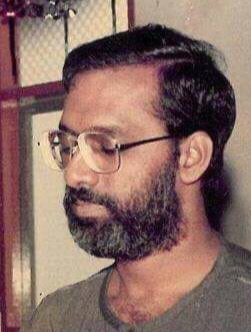
Longtime Borneo watcher Joe Fernandez has been writing for many years on both sides of the Southeast Asia Sea.
He should not be mistaken for a namesake formerly with the Daily Express in Kota Kinabalu. JF keeps a Blog under FernzTheGreat, as jurist (legal scholar), on the nature of human relationships.
DISCLAIMER: The views expressed here are those of the author/contributor and do not necessarily represent the views of Jesselton Times.