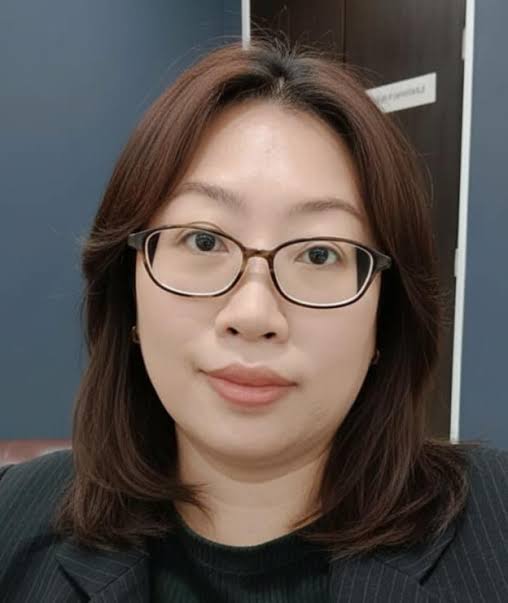
By Angie S Chin (Lead, The Vote Wisely Project, Sabah)
KOTA KINABALU: Look, I am not siding anyone or ANY party. I have been processing Sungai Manila’s ADUN Datuk Hazem Mubarak Tun Musa statement in the last couple of days. I was quiet at first because I want to be clear with how I interpret his statement.
Here goes.
So, he says “We should emulate Sarawak, but let development be carried out in OUR OWN WAY…”
At first glance, it sounds patriotic. It sounds confident. It sounds as though Sabah has THIS UNIQUE formula waiting to be unleashed.
But perhaps the most important response is not applause.
It is a question.
“WHAT EXACTLY IS OUR OWN WAY?” may I ask?
Not as a slogan. Not as a political soundbite. As a concrete development model.
Because if “OUR OWN WAY” has been guiding Sabah for many years, then surely the people deserve to see the results, no?. And if this is a new direction, then Sabahans deserve to understand what is genuinely “different” about it.
Development should never be judged by speeches. It should be judged by outcomes.
For decades, Sabahans have heard promises of transformation.
Yet many of the issues dominating today’s debates remain remarkably familiar—roads that require constant repair, unreliable water supply, drainage problems, inconsistent electricity, digital connectivity gaps, underdeveloped rural economies, and bureaucratic delays that slow projects meant to benefit ordinary people.
These are not new challenges.
They are recurring chapters in Sabah’s political conversation. Over and over again – for years.
That is why the statement raises an important question. what exactly is “OUR ON WAY”?
If Sabah has indeed been pursuing its own development path, why are we still discussing many of the same basic issues today?
Contrast this with Sarawak.
Whether one agrees with every policy or not, it is difficult to deny that Sarawak has projected a much clearer long-term vision. It has invested aggressively in infrastructure, renewable energy, digital transformation, education, investment promotion, and economic diversification.
More importantly, it has built confidence—among investors, businesses, and increasingly, among its own people—that it knows where it wants to go.
The lesson is not that Sabah should become Sarawak.
The lesson is that successful governments are willing to learn from successful ideas.
Progress has never belonged to one state.
Good ideas have no postcode nor a pit-stop.
Too often, public discussions become trapped in the false choice between “copying others” and “doing things our own way.”
No successful nation or state ever develops in isolation.
Singapore learned from global ports.
South Korea learned from industrial economies.
Japan adopted and refined technologies from the West.
Even Silicon Valley constantly borrows, improves, and innovates upon ideas developed elsewhere.
Learning is not imitation. Learning is leadership.
If Sarawak has found approaches that work, Sabah should not hesitate to study them. If other countries have solved rural connectivity, water management, agricultural productivity, or digital government more effectively, Sabah should study those too.
THERE IS NO SUCH THING AS “OUR OWN WAY”.
The people of Sabah are not interested in who deserves the credit. They are only interested in whether LIFE WILL EVENTUALLY BECOMES BETTER.
Because ultimately, development is not measured by the size of budget allocations announced in legislative assemblies.
It is measured by whether families receive clean water every day.
Whether young people can find meaningful employment without leaving Sabah.
Whether entrepreneurs can grow businesses without unnecessary barriers.
Whether rural communities enjoy the same digital opportunities as urban centres.
Whether investors choose Sabah because they believe in its future.
Budgets create possibilities. Execution creates progress.
Perhaps that is the real conversation Sabah needs today.
Not whether we should have “OUR OWN WAY.
But whether that way is producing the outcomes the people deserve.
Every development philosophy should be able to answer simple questions.
What are the measurable goals? How will success be evaluated?
What milestones should the public expect after five years? Ten years?
How will leaders know when policies are failing—and what will they change?
These are not opposition questions. These are governance questions.
The greatest danger in politics is not disagreement.
It is becoming comfortable with slogans that cannot be measured.
“Our own way” should never become a shield against accountability.
Instead, it should invite even greater scrutiny.
If Sabah truly has a unique model for development, then explain it.
Publish the roadmap. Share the targets. Measure the outcomes.
Let the people judge.
Because Sabahans do not expect perfection. They expect progress.
They do not expect every problem to disappear overnight.
They expect to see evidence that each year moves the state meaningfully forward.
The future of Sabah will not be determined by whether we borrow ideas from Sarawak, Singapore, or anywhere else.
It will be determined by whether we have the courage to adopt what works, abandon what does not, and place results above rhetoric.
Perhaps the more important question for him is this: “WHAT EXACTLY IS ‘OUR OWN WAY’? If our own way has not delivered the future Sabahans have long hoped for, do we have the courage to rethink the road we are on?”