

By Remy Majangkim
KOTA KINABALU: The heat in Kota Kinabalu was stifling the kind that makes you constantly look up at the Crocker Range and wonder how a land so rich in lush rainforests, towering mountains, and heavy tropical rainfall could be facing a daily struggle for basic clean water.
Recently, I visited my grand uncle, a sharp man in his nineties who spent decades working for the Public Works Department (JKR) as a caretaker for borehole water pumps.
Naturally, our conversation turned to the recurring water disruptions plaguing the state. I asked him directly: Do we truly have an acute water shortage in Sabah?
He took a slow sip of his black coffee, set the cup down, and motioned for me to drink.
“This will be a long explanation,” he sighed.
“We Don’t Live in a Desert”
His opening statement was immediate and unconditional: Sabah does not have a real water shortage.
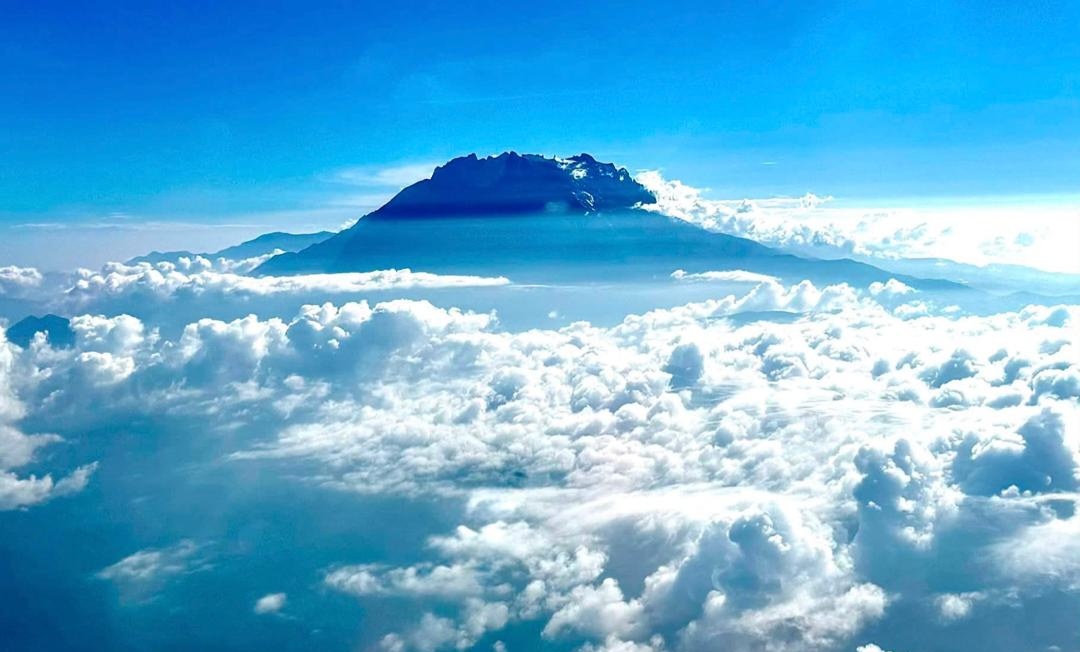
Look at Mount Kinabalu and the Crocker Range—they serve as the majestic natural water towers of our state. Sabah receives abundant rainfall throughout the year.
“We don’t live in a desert,” my grand uncle emphasized. “An acute water shortage should not happen, and logically, it will not happen naturally. The water is there.”
So why are taps running dry from Tanjung Aru to Tuaran, leaving residential areas, commercial hubs, and luxury resorts constantly scrambling for supply? The problem isn’t hydrology—it is greed.
More Profitable Than Cargo: The Water Tanker Machine
“Do you know,” he asked, looking me straight in the eye, “that it is now more profitable to transport water than standard commercial cargo like fertilizer?”
I was shocked. The rate to haul a single 35,000-liter water tanker is around RM1,000.
When piped water distribution fails or is allowed to fail, a lucrative secondary ecosystem steps in to fill the vacuum. Consider the daily consumption demand across major commercial and residential developments in Kota Kinabalu alone:
Imago Shopping Mall / Commercial Area: Requires roughly 10 tanker trips daily.
Nexus Resort Karambunai: Requires up to 10 tanker trips daily.
Standard PPR (Public Housing Units): Can require around 4 tanker trips daily just to meet basic household needs.
When scaled across the entire state, millions of ringgit are spent driving water on wheels rather than delivering it efficiently underground. Who foots the bill for these emergency deliveries? The State Government.
What was intended as a temporary emergency measure has metastasized into a permanent, highly lucrative business model for a select few.
Privatization vs. Basic Rights
“After my retirement, the management of water plants shifted toward privatization,” my grand uncle recalled.
While privatization is often promoted as a fix for operational inefficiency, a private company’s primary objective is profit, not philanthropy.
Water is a fundamental human right required for washing, bathing, cooking, and religious obligations. Yet, the essential infrastructure responsible for delivering this basic need has ended up intertwined with commercial interests that profit directly off system failures.
The state utility, Jabatan Air Negeri Sabah (JANS), remains legally responsible for water distribution to homes and offices across Sabah.
Yet, despite widespread public outcry, long-term repairs to aging distribution networks take a back seat to the immediate, high-cost band-aid of tanker operations.
An Ecosystem Full of “Crocodiles”
This artificial reliance on water tankers has created a messy, volatile ecosystem that hurts almost everyone, including smaller local contractors.
Transport operators hauling water often face severe bureaucratic hurdles. Many report waiting anywhere from five months to over a year for unpaid invoices to be settled.
The funds may sit allocated in state accounts, but payments remain stuck, forcing small contractors into massive debt just to stay operational.
When these contractors came to my grand uncle asking for advice on how to navigate the delays and unpaid bills, he gave them a simple, sobering assessment of the state’s water management apparatus:
“This water is full of crocodiles.”
Passing the Torch
As our conversation drew to a close, my grand uncle gestured toward me, his voice softening with the gravity of a life well lived.
“It’s your fight now, young man,” he said quietly. “I am going home soon. When that time comes, please come and pay your last respects.”
Then, with a sudden flash of his characteristic sharp wit and anger, he added, “And don’t you dare write ‘RIP’ in our family WhatsApp group! I will no longer be alive to read it. Come and pray for my soul in person, just as I continue to look out for you and for a better future for all Sabahans.”
We both broke out into wholehearted laughter, a brief, warm reprieve against the weight of his words.
The Real Cost to Sabahans
Until core infrastructure issues such as non-revenue water (NRW) loss, leaking pipes, poor treatment plant maintenance, and systemic oversight failures are addressed, everyday Sabahans will continue to pay the price. We pay for it twice: once through dry taps and disrupted daily lives, and again through state funds diverted away from lasting development to feed a tanker supply pipeline that was never meant to be permanent.
The old generation built the foundations and guarded the pumps. Now, as my grand uncle reminded me, the responsibility falls squarely on us to demand accountability, drain the murky waters, and secure the future Sabah deserves.

