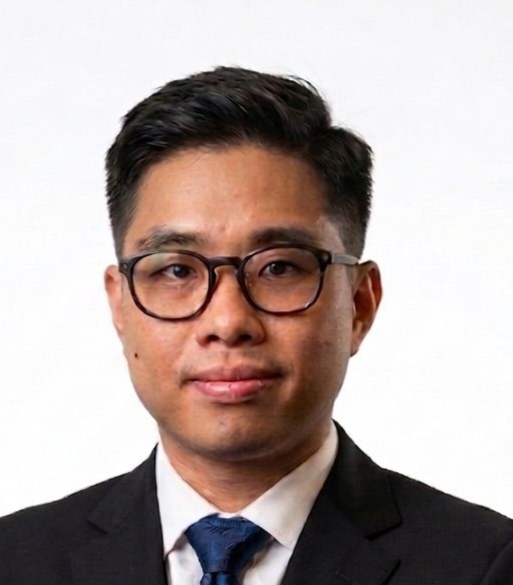
By Brendon Beliku
Brendon Beliku is a corporate immigration and employment compliance professional based in Kota Kinabalu. He writes independently on Sabah’s economic governance, labour market policy, regulatory affairs, logistics, transport and KDMR empowerment.
-Preparing More Than a Generation-
For decades, governments have rightly regarded youth development as an investment in the future. Education prepares students for employment. Technical and Vocational Education and Training (TVET) develops technical capability.
Leadership programmes cultivate future decision makers. Entrepreneurship initiatives encourage innovation and enterprise.
Across Sabah, these efforts have become increasingly visible through the Sabah Maju Jaya (SMJ) 2.0 agenda, expanded TVET initiatives and continued investment in human capital.
These achievements deserve recognition because they demonstrate a long term commitment to strengthening Sabah’s workforce and economic competitiveness. A more fundamental question is now beginning to emerge.
“What if Sabah’s next development challenge is no longer preparing its youth, but preparing its institutions for the generation they have already built?”
This question represents an important shift in perspective. Public policy has traditionally concentrated on preparing young people to enter existing institutions.
Comparatively little attention has been devoted to whether those same institutions are evolving quickly enough to receive a generation that is increasingly more educated, digitally connected, globally exposed and professionally ambitious than any before it.
The defining challenge may therefore be institutional readiness rather than youth readiness.
-Human Capital Has Advanced. Have Institutions?-
There is little doubt that Sabah has made meaningful progress in developing human capital. Nationally, graduate employability has reached 95.9 percent, while TVET continues to receive unprecedented policy attention under the Thirteenth Malaysia Plan (RMK13).
State initiatives have similarly prioritised education, digital capability, entrepreneurship and youth development as strategic drivers of long term growth. These investments strengthen human capital. However, they do not automatically strengthen institutional capital.
Human capital refers to the capabilities, knowledge and competencies developed within individuals. Institutional capital, by contrast, reflects the capacity of organisations to recognise, utilise and continuously develop those capabilities through effective governance, adaptive leadership and responsive public administration.
The distinction matters because development succeeds only when both evolve together.
Malaysia’s graduate labour force has expanded to 5.14 million people, while graduate unemployment has fallen to 3.2 percent, reflecting continued progress in workforce development.
These indicators demonstrate that human capital is advancing. They reveal comparatively little, however, about whether institutions are adapting at the same pace.
A highly capable generation entering systems designed for a previous era creates an increasingly visible mismatch between human potential and institutional readiness.
Young professionals may become more innovative, collaborative and technologically proficient, rather still encounter recruitment systems, organisational structures and administrative practices that struggle to accommodate new ways of working.
The issue is therefore no longer whether Sabah is producing capable people.
It is whether Sabah is building institutions equally capable of unlocking their potential.
-Partnership Requires More Than Participation-
Recent discussions describing youths as strategic partners in Sabah’s development reflect an encouraging evolution in public policy.
The language itself is significant because it recognises young people not merely as future beneficiaries of development, but as contributors to it. Partnership, however, carries important implications. Strategic partners do more than participate. They influence.
They contribute ideas, shape implementation, challenge existing assumptions and become active participants in institutional learning. Preparing youths for leadership is therefore only one side of the equation.
Institutions must also become prepared to trust emerging leaders with greater responsibility, meaningful participation and opportunities to influence decisions that affect Sabah’s long term development.
This extends beyond youth councils, volunteerism or consultation exercises. It requires organisations capable of listening, adapting and learning.
Without that institutional evolution, participation risks becoming symbolic rather than strategic.
-Institutions Must Learn as Quickly as People-
Perhaps the greatest misconception surrounding youth development is the assumption that learning occurs primarily within classrooms.
Increasingly, institutions themselves must become learning organisations. Technology continues transforming industries.
Artificial intelligence is reshaping professional work. Digital government is redefining public service delivery.
Global labour mobility is expanding career opportunities across jurisdictions. Today’s graduates are entering workplaces fundamentally different from those that existed even a decade ago. Institutional adaptation can therefore no longer proceed at yesterday’s pace.
Governments, employers, universities and public agencies should continuously evaluate whether existing recruitment practices, leadership pathways, organisational cultures and decision making processes remain aligned with the workforce they seek to attract and retain.
Experience remains invaluable. Experience without adaptability, however, can gradually become institutional inertia.
-The Next Quantum Leap-
Sabah’s next quantum leap is therefore unlikely to be defined solely by new infrastructure, technological investment or expanded educational opportunities. It will increasingly be determined by “institutional maturity”.
The jurisdictions that sustain long term competitiveness rarely succeed because they simply produce more graduates than others. They succeed because their institutions continually evolve alongside changing economic realities and emerging generations.
For Sabah, this means recognising that youth development and institutional development should no longer proceed as separate policy conversations.
The relationship should instead become reciprocal. Educational institutions should inform industry transformation. Industry should influence curriculum development.
Public institutions should integrate younger professionals into policy innovation. Leadership should become progressively more intergenerational rather than sequential.
Development is no longer measured solely by how effectively institutions shape the next generation. It is equally measured by how willing institutions are to be reshaped by that generation in return.
-Preparing Institutions for Tomorrow-
Sabah has already demonstrated considerable commitment to preparing its young people for an increasingly competitive future.
That commitment should continue because investment in human capital remains one of the state’s most valuable long term assets.
The defining challenge ahead, however, is no longer whether young Sabahans are prepared for tomorrow’s economy.
It is whether Sabah’s institutions possess the confidence, adaptability and strategic foresight to evolve alongside the very generation they have spent decades preparing.
Every generation eventually becomes ready for the future. The greater question is whether the institutions entrusted with shaping that future are equally prepared to meet them there.
That may well become Sabah’s most important quantum leap.