By Datuk Ts Dr. Hj Ramli Amir, former President of the Chartered Institute of Logistics and Transport (CILT) Malaysia and Vice-President of CILT International for Southeast Asia
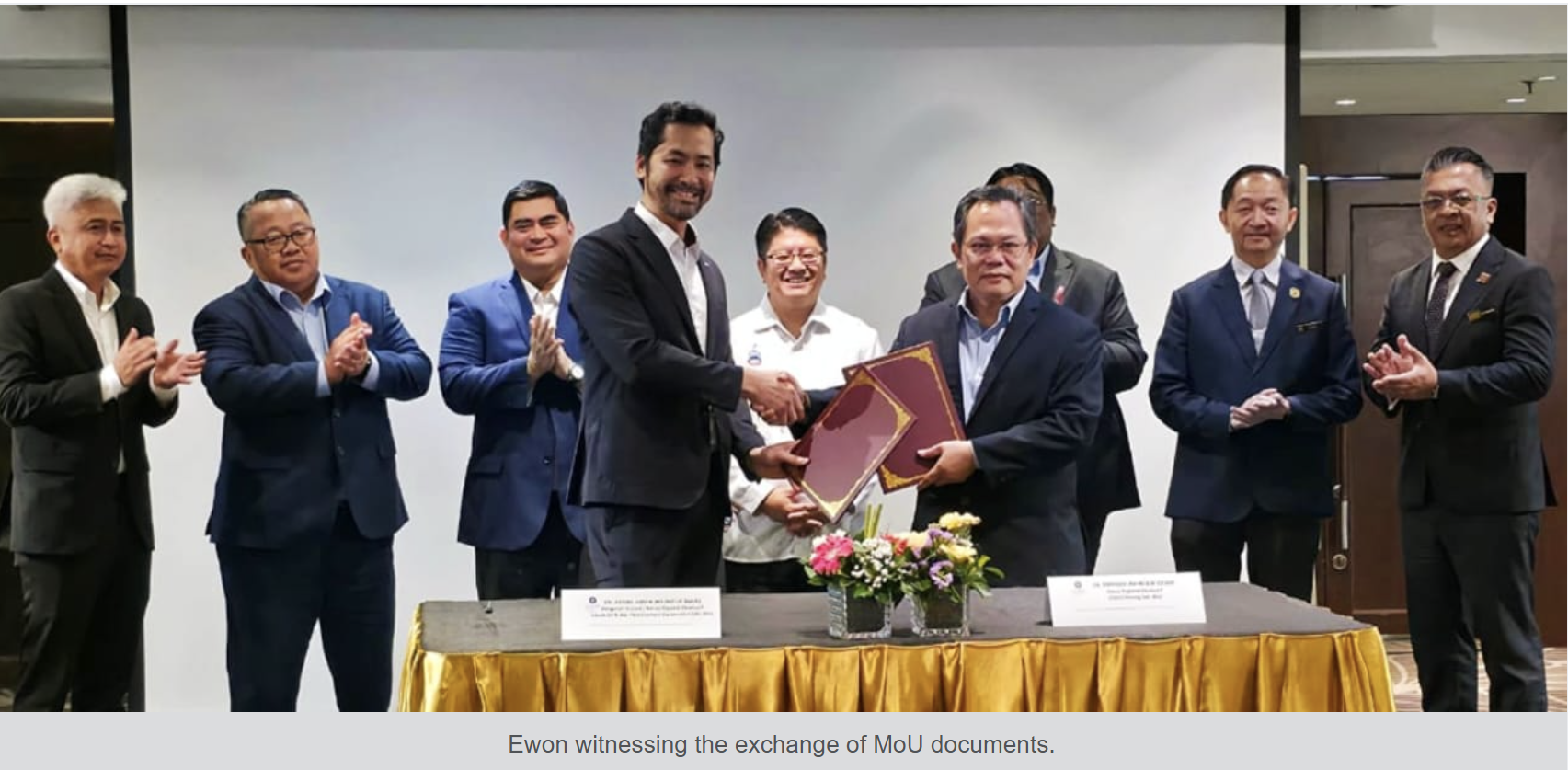
KOTA KINABALU: The recent Memorandum of Understanding between Sabah Oil&Gas Development Corporation (SOGDC) and Sedco Mining Sdn Bhd signifies more than just an administrative partnership between two state-affiliated entities.
It reflects a strategic economic move to realise the full industrial potential of the Sipitang Oil and Gas Industrial Park (SOGIP) and to enhance Sabah’s position within regional value chains.
This kind of collaboration between SOGDC and Sedco Mining has a very clear economic rationale for SOGIP and for Sabah as a whole.
By aligning resources, planning, and implementation capacity across agencies, the State effectively aims to reduce the “friction costs” that have traditionally hindered project delivery and weakened investor confidence in large-scale industrial zones.
Building Industrial Competitiveness Through Infrastructure
At its core, the cooperation concentrates on physical and logistical improvements: land reclamation at SOGIP and enhanced shipping access at Sawit Kinabalu Sandakan Industrial Park (SKSIP). These actions have several economic consequences.
Expanding industrial land supply reduces entry barriers for investors, encourages the clustering of related industries, and facilitates long-term expansion strategies rather than piecemeal, fragmented development.
Expanding port access to accommodate larger vessels reduces per-unit shipping costs, enhances supply chain reliability, and boosts Sabah’s appeal as a processing and transhipment hub for oil, gas, and palm-based products.
Enhanced maritime connectivity can reduce trade routes and shift Sabah from mainly a resource supplier to a processing and distribution centre for the broader BIMP-EAGA and ASEAN markets.
Taken together, these measures improve SOGIP’s cost structure and competitiveness vis-à-vis other regional industrial parks in Peninsular Malaysia, Indonesia, and the Philippines.
Strengthening the Industrial Value Chain
The State’s stated aim is to develop a more comprehensive industrial value chain that maximises the benefits from Sabah’s natural resources.
Economically, this involves shifting from exporting raw or minimally processed commodities towards more advanced downstream activities.
In oil and gas, this could encompass gas-related industries such as petrochemicals, fertilisers, speciality chemicals, plastics, power generation, and support services.
In palm oil and related agro-industries connected through SKSIP, further downstream activities such as oleochemicals, biofuels, and food processing can be incorporated with logistics and storage facilities.
When upstream extraction, midstream processing, and downstream manufacturing co-locate within or around SOGIP and SKSIP, several multiplier effects arise:
Higher value-added per unit of resource extracted.
Broader SME participation in support services (maintenance, engineering, logistics, catering, transport).
Increased tax and royalty yields for the State from a broader base of activities, rather than relying mainly on raw resource rents.
A useful illustration is the development of industrial hubs such as Kertih in Terengganu or Jurong Island in Singapore, where coordinated planning and investment transformed basic hydrocarbon resources into complex, high-value industrial ecosystems.
Institutional Coordination as an Economic Asset
One of the often-overlooked economic constraints in developing industrial parks is institutional fragmentation: overlapping mandates, slow approval processes, and misaligned priorities among land, infrastructure, regulatory, and promotional agencies.
The SOGDC–Sedco Mining cooperation is important because it:
Consolidates planning and execution efforts for land development, reclamation, and infrastructure projects.
Offers investors a more streamlined “single window” interface for land availability, utilities, and timelines.
Reduces project risk by signalling a strong state-level commitment to deliver enabling infrastructure on time.
From an investor’s point of view, this reduces uncertainty—effectively lowering the “risk premium” linked to locating in SOGIP. In capital-heavy industries like oil and gas, even small improvements in certainty and timelines can sway investment choices in favour of a specific location.
Employment, Skills, and Local Business Opportunities
Economic development is ultimately assessed not only by investment figures but also by its effect on people. A coordinated effort to fully activate SOGIP can produce:
Direct employment in construction, plant operations, logistics, and port services.
Indirect jobs within supply chains (haulage, maintenance, fabrication, warehousing, ICT, security, hospitality).
Induced employment resulting from increased local consumption as wages and business incomes grow.
When combined with targeted skills development—particularly technical and vocational training in process engineering, marine logistics, safety, and plant maintenance—Sabah can enhance both the quantity and quality of employment. This aligns directly with the State’s aim of creating more “quality jobs” for Sabahans, decreasing the outmigration of skilled workers, and developing a more substantial local talent pool that, in turn, attracts more advanced industries.
Enhancing Sabah’s Position as a Regional Hub
The decision to link initiatives at SOGIP with improvements at SKSIP reflects a broader strategy: to establish Sabah as a regional industrial and trading hub instead of a peripheral supplier of raw materials. Economically, this involves:
Leveraging Sabah’s strategic position along vital shipping routes in the South China Sea and close to expanding markets in Kalimantan, the southern Philippines, and Brunei.
Providing comprehensive solutions for investors: access to feedstock, industrial land, deepwater port facilities, and connectivity to both export and domestic markets.
Positioning Sabah to benefit from broader regional trends, such as Indonesia’s new capital in Kalimantan, ASEAN supply chain diversification, and global demand for low-carbon and sustainable products (including gas and bio-based industries).
If executed effectively, SOGIP can serve as a “gateway platform” through which both domestic and foreign investors access the broader Borneo and ASEAN markets.
Fiscal and Developmental Sustainability
From a public finance perspective, the cooperative development of SOGIP provides several benefits:
Shared investments and coordinated planning minimise duplication and optimise the use of limited state capital.
Higher-value downstream activities and clustering enhance the long-term tax base (corporate tax, personal income tax, service tax, land premiums, port dues).
Better utilisation of state-owned land assets increases their yield over time, improving the balance sheet of state-linked entities.
However, for this to be sustainable, the cooperation must balance short-term land monetisation with long-term industrial strategy. Reserving land and port capacity for higher-value, employment-generating activities—rather than purely speculative or low-impact uses—will be key.
Managing Risks and Execution Challenges
While the economic benefits are clear, several risks must be managed:
Infrastructure delays can erode investor confidence and raise costs.
Environmental and social impacts of land reclamation and industrial expansion must be carefully managed to avoid long-term liabilities.
Coordination between multiple agencies and private investors requires clear governance structures, transparent processes, and consistent policy signals.
If SOGDC and Sedco Mining can institutionalise robust project management, stakeholder engagement, and environmental governance, the cooperation can improve not only SOGIP’s economic prospects but also Sabah’s reputation as a responsible and predictable investment destination.
We will deliberate further on this strategic collaboration in an article on “SOGIP’s Next Frontier: How Sedco and Sawit Kinabalu Anchor Sabah’s Industrial Transformation”.