By Datuk Ts Dr. Hj Ramli Amir, former President of the Chartered Institute of Logistics and Transport (CILT) Malaysia and Vice-President of CILT International for Southeast Asia
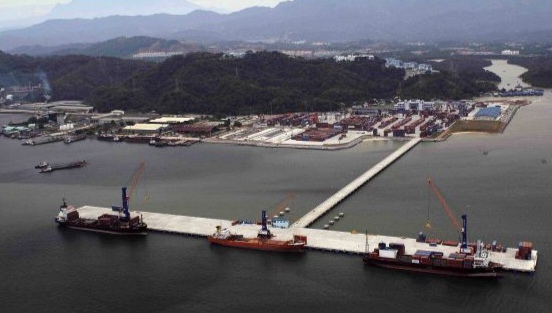
KOTA KINABALU: Congestion at Sapangar Port has evolved from an operational inconvenience into a serious economic concern for Sabah.
This is no longer a niche complaint from port users alone. State leaders, businesses, and logistics players now broadly recognise that port delays are threatening trade flows, raising costs, and undermining confidence in Sabah’s supply chain.
The ministry responsible for industry, entrepreneurship, and transport has openly acknowledged that congestion at Sapangar is now its top priority.
What the evidence shows—both from official statements and from those working on the ground—is that the problem has two clear and interconnected causes.
First, there are weaknesses in the port’s current operations. Second, there is structural pressure caused by the port’s delayed expansion, which has left existing facilities overstretched.
What is happening on the ground
For the public and port users, the most visible symptoms are long vessel waiting times, slow container clearance, and congestion in the container yard when new shipments arrive. These problems become particularly severe during peak periods, when trucks queue for hours, and container movement slows to a crawl.
Stakeholders have noted that congestion often spikes when port equipment is either insufficient in number or not optimally deployed. When quay cranes, yard equipment, trucks, and manpower are poorly coordinated between seaside operations (ships) and landside operations (yards and gates), even a modest increase in volume can trigger bottlenecks.
The minister’s own findings—that efficiency-related factors are contributing to congestion—confirm that internal planning, resource allocation, and coordination within the terminal are part of the problem.
In simple terms, when crane availability, yard space planning, truck scheduling, and documentation systems are not tightly synchronised, the entire system slows down. At Sapangar, this occurs in an environment where capacity is already stretched to near capacity. As a result, even small disruptions quickly lead to queues, delays, and higher logistics costs for businesses and consumers.
The deeper structural problem: delayed expansion
At the same time, Sapangar Port is under significant structural pressure due to delays in its expansion project. The expansion aims to increase capacity from around 500,000 TEU to about 1.2 million TEU annually. Until this is completed, the port must handle growing demand with facilities that were never designed for current volumes.
This means there is very little buffer to absorb peak traffic, seasonal surges, or operational hiccups. Even with perfectly managed operations, congestion risks would remain high. When inefficiencies occur—equipment downtime, slow paperwork, poor yard planning—the system becomes congested almost immediately.
For this reason, the delayed expansion is not a secondary issue. It is a major structural driver of current congestion. The authorities have acknowledged that while long-term solutions, such as the expansion, will take time, the port cannot afford to wait idly. That is why interim or stop-gap measures are now being proposed to keep the system functioning while construction continues.
Interim measures on the table
Reports from the government and the media indicate that a package of interim measures is taking shape to stabilise operations in the short term. These include:
Upgrading and better utilising port equipment to enable both vessel operations and container yard handling to move faster.
Integrating the vehicle booking system with container yard operations, using digital scheduling to smooth truck arrivals and reduce peak-time bunching.
Extending port operations to 24 hours so that work is spread across the full day rather than compressed into office hours.
Encouraging importers to collect cargo after office hours, easing daytime congestion and making better use of night-time capacity.
Extending container depot operating hours, so containers do not get stuck simply because depots are closed.
Strengthening oversight of the expansion project to reduce further slippage and ensure clearer accountability.
Taken together, these measures directly address operational friction—equipment, systems, operating hours, and user behaviour—while recognising the urgent need to keep the expansion on track.
A realistic assessment
From both policy and user perspectives, these steps make sense. However, their success will depend entirely on how seriously they are implemented. Extending operating hours or adding equipment will not solve congestion if yard planning, ship scheduling, and documentation remain weak, or if users have no real incentive to change their behaviour.
Similarly, a vehicle-booking system will only work if it is reliable, enforced, and properly coordinated with truckers, depots, and freight forwarders. Half-hearted implementation will only add another layer of frustration.
Most importantly, interim measures must not be used as an excuse for further delay to the expansion. The expansion is the only solution that truly addresses the port’s structural capacity deficit. Without it, Sapangar will remain vulnerable to recurring congestion whenever trade volumes rise or economic conditions improve.
The need for transparency and firm decisions
Public confidence will be restored only if people can clearly see what actions are being taken, who is responsible, and when results are expected. Regular public updates on congestion indicators, operational reforms, and the physical progress of the expansion would demonstrate seriousness, transparency, and good governance.
The Cabinet is therefore being closely watched. The public is not looking for incremental adjustments alone but for decisive, time-bound action. Reasonable expectations include:
Treating the expansion as a no-slip project, with a publicly announced completion deadline and consequences for unjustified delays.
Mandating performance targets for the port operator, such as ship turnaround time, truck turnaround time, and yard dwell time, and publishing these regularly.
Making interim measures mandatory rather than optional, with clear start dates and key performance indicators.
Hardwiring transparency through monthly public reporting and a joint task force involving government, the port operator, and industry stakeholders.
Removing bureaucratic bottlenecks by fast-tracking approvals and granting temporary regulatory flexibility where congestion-related reforms are delayed by red tape.
The bigger picture
Ultimately, Sapangar Port’s congestion reflects a dual challenge: operational weaknesses that must be fixed immediately and infrastructure delays that must be addressed without further excuses. Addressing one without the other will only deliver temporary relief.
If Sabah is serious about safeguarding its supply chain, supporting trade-dependent industries, and sustaining long-term growth, strong execution, firm oversight, and transparent communication are no longer optional. They are essential.
On 13 January 2026, the latest report stated that the minister is holding talks with the operator, a positive sign. The message indicates that congestion remains at Sapangar Port, even though it may appear “fine” at times during the day.
At the time of the update, four ships were reported to be anchored and awaiting berths, confirming that quay capacity and/or vessel turnaround remain under strain and that the situation is not yet fully stabilised.