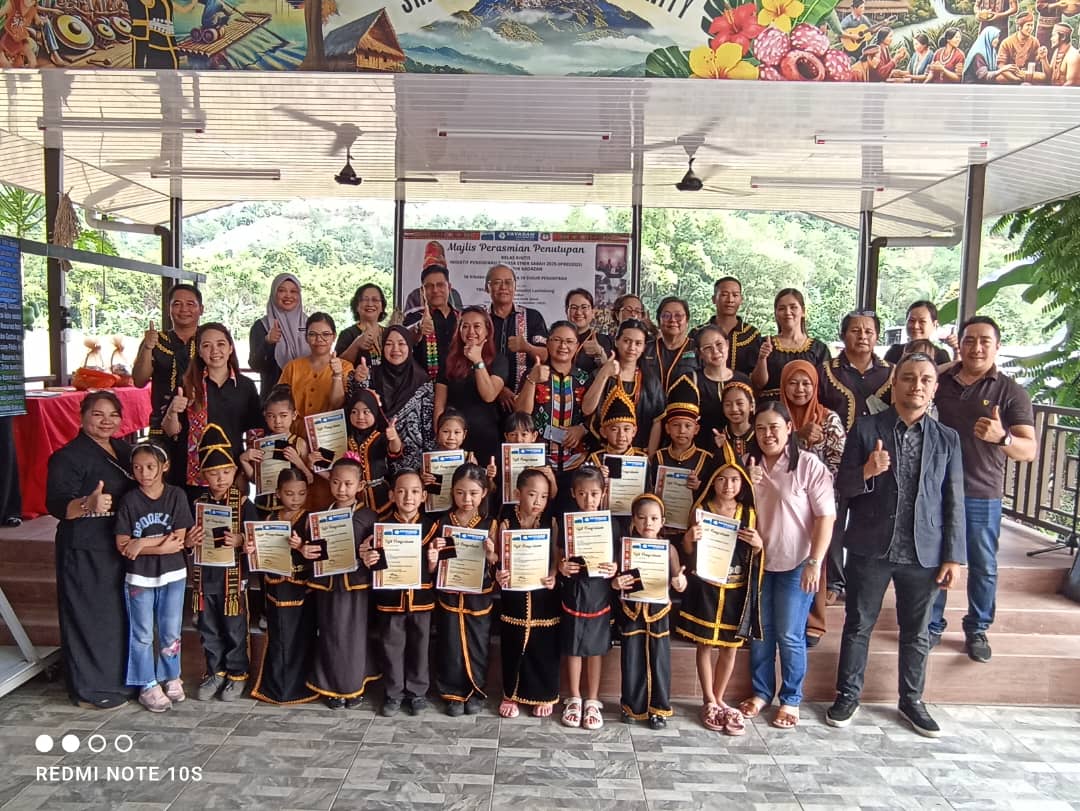
PENAMPANG: A total of 30 Year 1 students from two primary schools in Penampang received certificates of completion of learning the Kadazan language in the Pilot Project (Projek Rintis) organised by the Sabah Ethnic Language Association (SELA) at the Pacost Trust Hall here on Saturday.
They are 15 students from SK Kibabaig and another 15 from SK Sugud who successfully completed the Tangaa language learning session, which is a dialect spoken by the Kadazan people of Penampang.
These selected students are involved in the 12-week Kadazan ethnic language class pilot project, which began in August and continues until November 2025, organised by SELA. The class was held in their respective school.
SELA Advisor Datuk Philip Benedict Lasimbang in his speech said this Kadazan Ethnic Language Pilot Class Project is an excellent platform to promote and preserve the Kadazan language used by the people of the Penampang district.
“It is also a platform to introduce our cultural and traditional richness to the younger generation.
“I am confident that this project will benefit the community and serve as a benchmark for other ethnic language projects in Sabah,” he said at the closing ceremony of the pilot project here on Saturday.
The ceremony was enlivened by a singing and dancing performance by 30 students who sang Kadazan songs, a video screening of the pilot class and a sharing session between parents and students.
The other three ethnic languages selected for this first pilot project are the Timugon, Lotud and Tatana ethnicities, which were held in the language-speaking districts. These four ethnic languages were chosen as the focus of SELA, which was established in 2024.
Philip wanted to invite all members of the Kadazandusun and Murut clans to continue to work together to preserve and promote their respective ethnic languages and introduce their unique cultures to the world.
He said that the work process and actions taken by SELA since it was established in 2024 require cooperation through the concept of ‘mitatabang’ or working together to make the project a success.
Although it has only been a year, he is happy to see the implementation of this project, which involves many parties, including teachers, participants and volunteers who have worked hard to ensure its success.
He said that in the future this pilot project would not only be held in schools, but any organisation or village could also request that this Kadazan language class be held there.
“I am happy that the headmasters of two schools in Penampang have cooperated, and they even see how important this project is, which encourages children as young as six years old to learn their mother tongue.”
“I call on all members of our community to carry out ‘mitatabang’ activities in preserving and promoting the Kadazan language, as well as introducing cultural wealth to the world to ensure the sustainability of our language and culture.
“I and the SELA leadership very much welcome participation, support and also financial contributions from any party to make ethnic language sustainability programmes in Sabah a success,” said Philip.
Philip, who is also the former chairman of Yayasan Bank Rakyat (YBR), shared his efforts with the YBR management to help develop ethnic languages in Sabah through YBR’s financial sponsorship.
“YBR has provided a financial contribution of RM400 thousand to cover the expenses of implementing various training programmes and preparing modules and curricula for teaching ethnic languages in Sabah.
“YBR has also allocated a sponsorship of RM7.5 million to Universiti Pendidikan Sultan Idris to start ethnic language studies at UPSI as an effort to increase the prestige of the ethnic language of Sabah in this country,” he said.
Meanwhile, SELA Chairman Monih Epin said that SELA members, who consist of various individuals with expertise in various fields, are always ready to establish strategic collaborations.
“We receive useful inputs from external parties to achieve the goal of sustainability of the ethnic language and culture of the people of Sabah.
“I appreciate all the teachers who have been involved in the Kadazan ethnic language class project led by Bernadette Peter Lidadun as well as the researchers and parents of the participants.
“Without your participation, hard work and dedication, this project would not have been a success,” he added.
He said that the cooperation of the management of SK Kibabaig and SK Sugud, as well as the parents of the students who were willing to make the Kadazan ethnic language pilot class a success, is a very valuable journey for the Kadazan community here.
Monih stressed that efforts to preserve and develop the Sabah ethnic language are a challenge and require the cooperation of all parties.
“Our mother tongue is a gift from God, and we must all strive to play our role and responsibility to preserve God’s free gift to us,” he said.