By Brendon Beliku CMILT, writing independently on Sabah’s economic governance, labour policy, logistics, transport and regulatory affairs
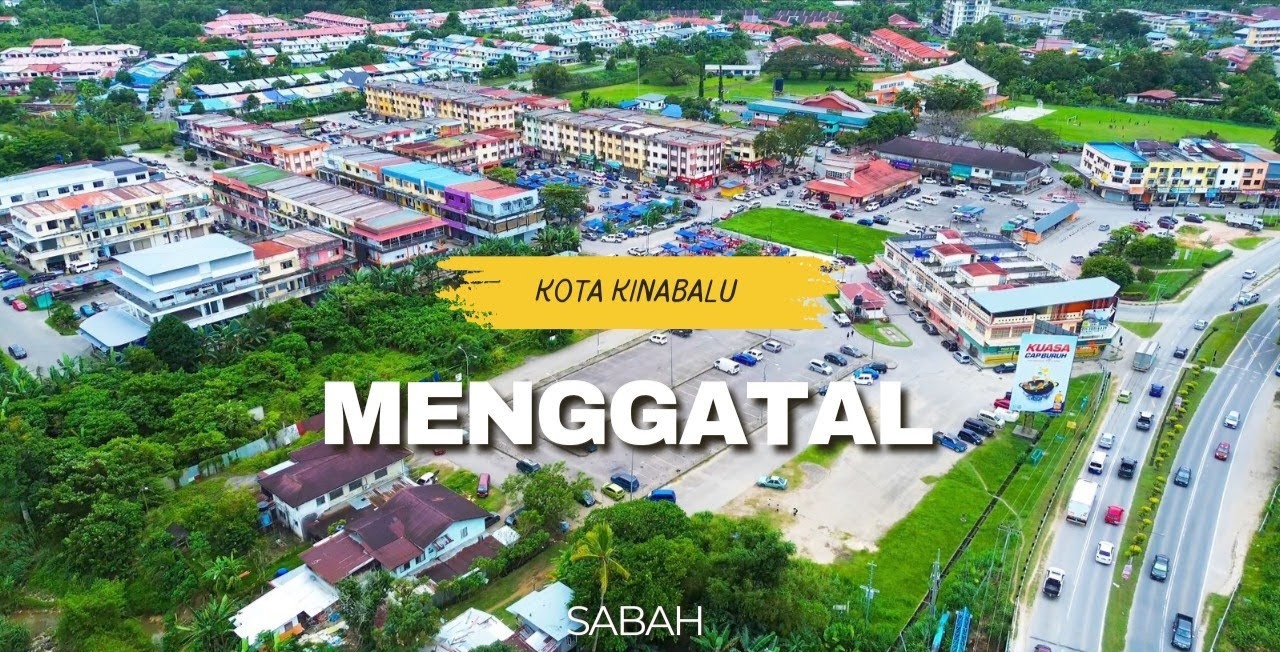
KOTA KINABALU: Most people know Manggatal (or Menggatal) as the place where Jalan Tuaran stops moving. Visitors photograph the road sign and laugh at the name, commuters curse the junction and drive on, and very few ever stop to ask how a town came to sit here at all, or why it still matters.
-A Town Built by People Who Came to Stay-
Even the name is argued over.
Some say it comes from a mango tree whose fruit left an itch, the mangga gatal; others say it took shape in the Chartered Company era and softened over generations, passed between Dusun and Hakka neighbours, into a name still spelt two ways today.
Neither version has been settled, fitting for a place that has always belonged to more than one community.
The town itself began with an arrival. In 1913, under a settlement drive by the North Borneo Chartered Company and the Basel Mission, Hakka Christian families from China were settled along the coastal strip north of Jesselton, at Inanam, Manggatal and Telipok.
The Company was not after passing labour; it wanted families who would settle, farm and stay, and that is exactly what they did.
When Sabah marked the centenary of their arrival in 2013, it remembered them as founders of all three towns, while noting that other Chinese clans had shared in the work.
A generation later, the town found itself on the front line of a war. When the Kinabalu Guerrillas led by Albert Kwok rose against the Japanese occupation, they drew their fighters from many of Sabah’s communities, and the hills around Manggatal became their place of retreat.
The reprisals that followed were severe, and those who lost their lives are remembered today at the Petagas War Memorial.
For Manggatal, that chapter is a reminder that the town has long shared in the wider story of Sabah’s people, including its cost.
-Absorbed, Not Planned-
What came after is a quieter story, though no less important. Kota Kinabalu grew northwards until it reached the town, and Manggatal now sits under City Hall (DBKK), with Universiti Malaysia Sabah and 1Borneo close by and housing estates spreading along the Tuaran corridor.
Yet the growth has come around the town rather than for it. Residents pay their assessment to the same City Hall as the city centre, but the town has little to show for it in planning terms.
A university now educates young Sabahans next door, yet no published figure shows how many of them find work, or a home, in Manggatal itself. Meanwhile the road through town carries traffic from Tuaran, Telipok and beyond, low lying kampung turn up in flood reports again and again, and each problem is handled on its own, by a different agency, only once it becomes urgent.
City wide plans exist, but none treats Manggatal’s town centre as a whole.
The tamu is where Manggatal still trades as itself, which is why the latest figures deserve attention.
In June, the head of the Inanam Community Development Leader Unit (UPPM) said traders’ associations estimate that more than 60 percent of traders at the Inanam and Manggatal tamu come from outside the two areas.
That figure is unverified, and that is precisely the point, because no complete record exists of who trades there.
The Inanam traders’ association alone counts about 180 registered members, and their complaints have gone unresolved for years.
That says less about the traders than about a system with no record to act on. UPPM’s proposed fix is a sensible one: register every trader, take the numbers to DBKK, aim for at least 70 percent local traders, and hold the Manggatal tamu on a fixed day.
-Three Asks-
None of this calls for a mega project, only sustained attention.
The first is to publish the tamu data. Once UPPM’s registration is complete, DBKK should release the count of local and outside traders, put the allocation rules in writing and set a date to review the 70 percent target, so that residents can see for themselves whether anything has changed.
The second is to take stock of the old town. Sabah’s State Heritage Enactment 2017 allows the State to gazette places of historical value and support their preservation, and residents deserve to know whether anything in Manggatal’s old town has ever been assessed under it.
The third is to give the town a plan of its own: one public plan for the town centre that treats traffic, drainage and the tamu ground together, and asks what work and housing the town can offer the young people it raises.
The early settlement, the wartime uprising and a fixed tamu day together make a story worth telling, and a reason for visitors to stop rather than simply drive through.
Manggatal is worth far more than its reputation as a bottleneck.
It was a town long before it was a suburb, built by people who came to stay, and it should be planned for the people who still do.
[Disclaimer]: The views expressed are solely the author’s and do not necessarily reflect those of the Jesselton Times or the Chartered Institute of Logistics and Transport (CILT) Malaysia. This article is published for analytical and public discussion purposes.