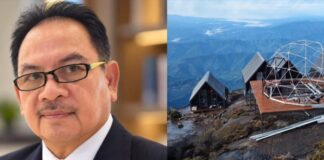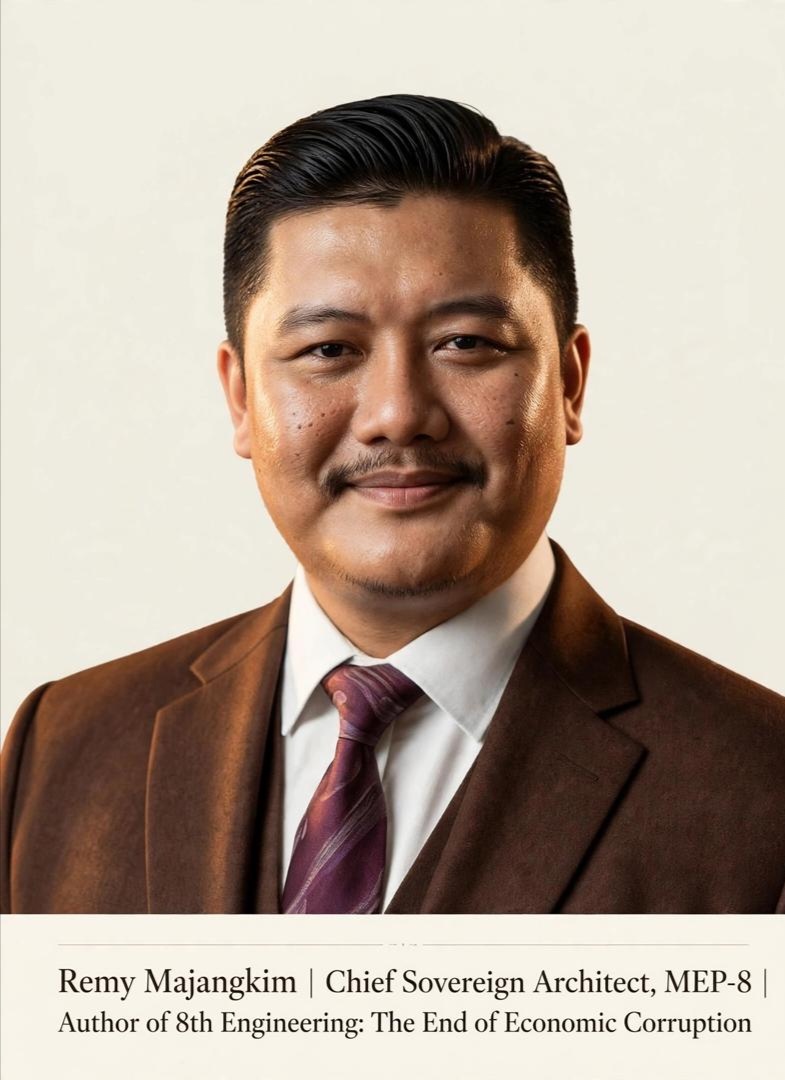
By Remy Majangkim Chief Sovereign Architect, Majangkim Economic Protocol 8 (MEP-8)
KOTA KINABALU: Every few months in Sabah, the same tragic script plays out. A public structure fails, a highway stalls for another decade, or millions vanish into “sick projects.”
Immediately, the chorus of public outrage begins. Politicians demand investigations, youth wings call for Malaysian Anti-Corruption Commission (MACC) probes, and citizens take to social media demanding accountability.
Yet, amidst all the noise, one critical element is consistently missing: a structural solution.
We saw this pattern again with the shocking collapse of the RM500,000 public hawker market in Goshen, Kota Marudu.
The structure caved in during a downpour at 80% completion before a single trader could even set foot inside.
We see it on a massive scale with the Sabah Pan Borneo Highway, where the Auditor-General’s report laid bare a 10-year delay, over RM1 billion in cost overruns, RM144 million in unpaid land compensation, and dozens of unauthorized variation orders.
Calling for investigations after a roof collapses or a highway stalls is like mopping the floor while the main water pipe remains burst.
You cannot fix an engineering and financial failure with moral appeals or post-mortem reports. As I detailed in my book, 8th Engineering:
The End of Economic Corruption, when a system is designed to operate in darkness, leakage is not an accident. It is the inevitable outcome.
To end Sabah’s cycle of delayed projects, liquidity hoarding, and endemic corruption, we must stop patching a broken system and replace the plumbing altogether. This is precisely what the Majangkim Economic Protocol 8 (MEP-8) is engineered to do.
1. Ring-Fenced Accounts and Pre-Registered Subcontractors (Law 4 & Law 6)
Under legacy procurement, lump-sum advances are deposited into a main contractor’s general corporate account. Once the cash enters their account, it disappears into unrelated ventures, leaving local subcontractors and laborers unpaid until site work grinds to a halt.
MEP-8 eliminates this vulnerability before a single shovel hits the ground:
• Dedicated Project Wallets: Every appointed contractor must open a ring-fenced, project-specific escrow account logged on the Glass Ledger (Law 4).
Every ringgit spent is permanently recorded with exact financial weight, unit pricing, timestamp, and GPS coordinates tied to the construction site.
• Locked Mobilization Funds: Initial mobilization funds are ring-fenced inside the project wallet strictly for site setup, machinery, and verified initial material orders. This prevents upfront cash diversion.
• Pre-Registered Subcontractor Terms: Before construction begins, the main contractor must register every subcontractor, supplier, and their agreed payment terms directly into the escrow protocol. Ghost vendors and arbitrary payment delays become impossible.
2. Periodic Area-Based Tranches and Direct Payouts (Law 1, Law 6 & Law 7)
Instead of releasing capital based on calendar dates or political pressure, MEP-8 splits project budgets into strict, milestone-bound tranches. Consider a RM10 million public project:
• Controlled Periodic Releases: After a ring-fenced mobilization stage, funds are released periodically (for example, in RM2 million tranches) strictly as designated physical areas are completed and verified.
• 4-Gate Proof-of-Work (Law 7): Each completed zone must pass independent structural and material-grade verification gates before the next tranche unlocks. If a roof frame is substandard, the next RM2 million stays locked in escrow until the defect is rectified.
• Automated Downstream Settlement (Law 1 & Law 6): Once an area claim is approved, the escrow engine automatically splits the payout using the pre-registered terms.
Funds route directly into the Universal Wallets of lower-tier subcontractors and suppliers with zero transfer fees, ensuring main contractors can no longer hoard liquidity or hold Sabah’s builders hostage.
3. Anchoring Sabah’s Capital Locally (Law 3 & Law 5)
Why do critical land compensations and local municipal upgrades wait years for federal disbursements? Because legacy finance pulls wealth upward and outward, leaving local communities begging for their own money.
Through Law 3 (Auto Flow-Down 8%) and Law 5 (Sovereign Trustee), 8% of transactional flow is automatically partitioned by code into localized Sabah Escrow Trusts. Whether in Sandakan, Kota Marudu, or Kota Kinabalu, local wealth stays anchored in the district that generated it. Trustees can deploy or collateralize this verified community balance immediately to settle land clearances and fund urgent local infrastructure without bureaucratic paralysis.
4. Replacing Institutional Immunity with Personal Skin in the Game (Law 8)
Today, when a public building collapses, blame is diffused across ministries, agencies, and consultants until the public forgets. Nobody pays a personal price for failing to supervise public money.
Law 8 (Circuit Breaker) ends institutional immunity. Trustees and project administrators overseeing MEP-8 escrows are bound by a three-tier audit structure backed by personal financial bonds and individual asset liability. If early structural warnings are ignored or fiduciary standards are breached, the decision-makers face severe personal financial downside. Supervision becomes rigorous overnight when administrators have their own assets on the line.
The Light at the End of the Tunnel
Sabahans do not suffer from a lack of resources or talent; we suffer from opaque, leaky financial architecture. Public demands for justice are valid, but justice without a better mechanism merely resets the clock until the next failure.
By combining ring-fenced project wallets, pre-registered subcontractor payouts, and periodic area-based tranches under MEP-8, we can put an end to these devastating loops. I have built the system. It is a framework of hope engineered to revolutionize the delivery of projects not only in Sabah, but around the globe. It is a system built not in darkness, but in the light.
Remy Majangkim is the Chief Sovereign Architect of the Majangkim Economic Protocol 8 (MEP-8) and the author of 8th Engineering: The End of Economic Corruption, available on Amazon.