

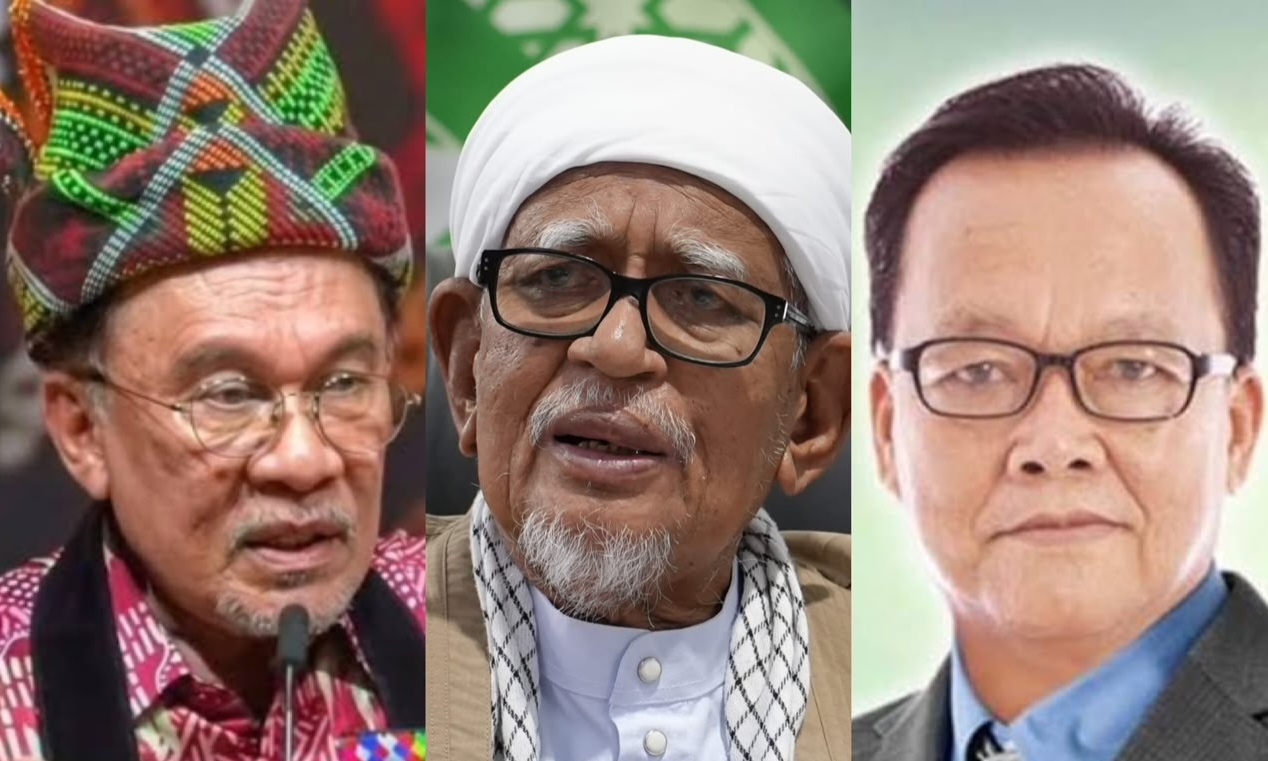
(The ballot box should reward merit, not race or religion)
By Lesaya L. Sorudim
KOTA KINABALU: The recent election in Michigan, United States, offers an important lesson for countries struggling with racial, religious and political divisions.
Democrat Abdul El-Sayed has won Michigan’s US Senate election, defeating Republican Mike Rogers and making history as the first Muslim elected to the United States Senate.
But beyond the historical significance of electing a Muslim senator, there is a much bigger political lesson worth considering, particularly for Malaysians: voters should choose their leaders based on merit, integrity, competence and policies, rather than simply on race, religion or communal identity.
A candidate should be judged by what he can contribute, not who he is
Abdul El-Sayed is a Muslim, the son of Egyptian immigrants and a progressive politician.
In a politically competitive American state, his religious and ethnic background could easily have become an obstacle.
Nevertheless, his campaign focused on issues affecting ordinary Americans: the rising cost of living, affordable healthcare, economic inequality, corporate influence in politics and the accountability of elected representatives.
His victory demonstrates that a candidate’s religious background does not necessarily determine his electoral success.
Voters can look beyond identity and consider what a candidate proposes to do for their country.
Of course, we should not assume that every Michigan voter supported him for exactly the same reasons.
Elections are influenced by many factors, including party loyalty, political circumstances, policies and personal convictions.
Nevertheless, his victory provides an important example of a candidate building support across a broader political constituency.
Malaysia: Are we still voting along racial and religious lines?
Malaysia is a nation blessed with extraordinary cultural, ethnic and religious diversity. Malays, Chinese, Indians, Kadazandusun, Murut, Iban and many other communities share this country.
Our diversity should be our strength. Unfortunately, racial and religious identity have frequently become instruments of political mobilisation.
Too often, voters are encouraged to support a candidate simply because that person belongs to their ethnic community or professes the same religion.
Political loyalty sometimes takes precedence over integrity. Communal interests sometimes take precedence over national interests.
And the ability to mobilize voters through racial or religious sentiments can become more important than the ability to govern effectively.
We must ask ourselves: Is this the kind of political culture we want to leave for the next generation?
Should a candidate automatically receive our support simply because he is Malay, Chinese, Indian, Kadazandusun or Iban?
Should a candidate be considered more qualified simply because he shares our religious beliefs?
I believe the answer should be no.
A person’s ethnicity or religion should neither automatically qualify nor disqualify that person from public office.
Meritocracy must become the foundation of political leadership
Malaysia needs a political culture in which meritocracy is taken seriously.
When choosing our representatives, we should ask:
Does this candidate possess the integrity and honesty required to serve the public?
Does this candidate have the knowledge, experience and leadership qualities necessary to govern?
Does this candidate have realistic policies to address the rising cost of living, education, healthcare and unemployment?
Does this candidate respect the Federal Constitution, the rule of law and the rights of all citizens?
Is this candidate prepared to serve every Malaysian, including those who do not share the same ethnicity, religion or political beliefs?
Can this candidate be held accountable for promises made during the election campaign?
These questions should matter far more than the candidate’s racial or religious identity.
Meritocracy does not mean ignoring the rights of minority communities or denying the importance of cultural and religious identities. It means ensuring that opportunities, responsibilities and public leadership are not determined merely by communal affiliation.
A capable leader should be able to represent people beyond the boundaries of his or her own community.
We need leaders who unite, not leaders who divide
One of Malaysia’s greatest challenges is developing a national identity strong enough to unite our diverse communities.
We should reach a point where a Malay voter can confidently vote for a Chinese candidate, a Chinese voter can support an Indian candidate, and an Indian voter can elect a Malay candidate, provided that the candidate demonstrates the integrity, competence and commitment required to serve the nation.
Similarly, Malaysians in Sabah and Sarawak should be able to choose their representatives based on leadership and performance rather than being confined to political calculations based on ethnic or religious affiliation.
Our political choices should be guided by the question: What can this person contribute to Malaysia?
Not: What race does this person belong to?
Not: What religion does this person profess?
And certainly not: Which community can this person mobilise against another?
We can preserve our individual identities while building a common commitment to the welfare of our country.
The responsibility ultimately belongs to the voters
Politicians do not operate in a vacuum. They respond to the political incentives created by the electorate.
If voters consistently reward racial and religious rhetoric, politicians will continue using it.
If voters tolerate corruption, incompetence and unfulfilled promises because a candidate belongs to their community, there will be little incentive for political improvement.
But when voters begin demanding integrity, competence, transparency and accountability, political parties will eventually have to respond.
The ballot box is not merely a mechanism for changing governments. It is an instrument through which citizens express the kind of political culture they want to establish.

