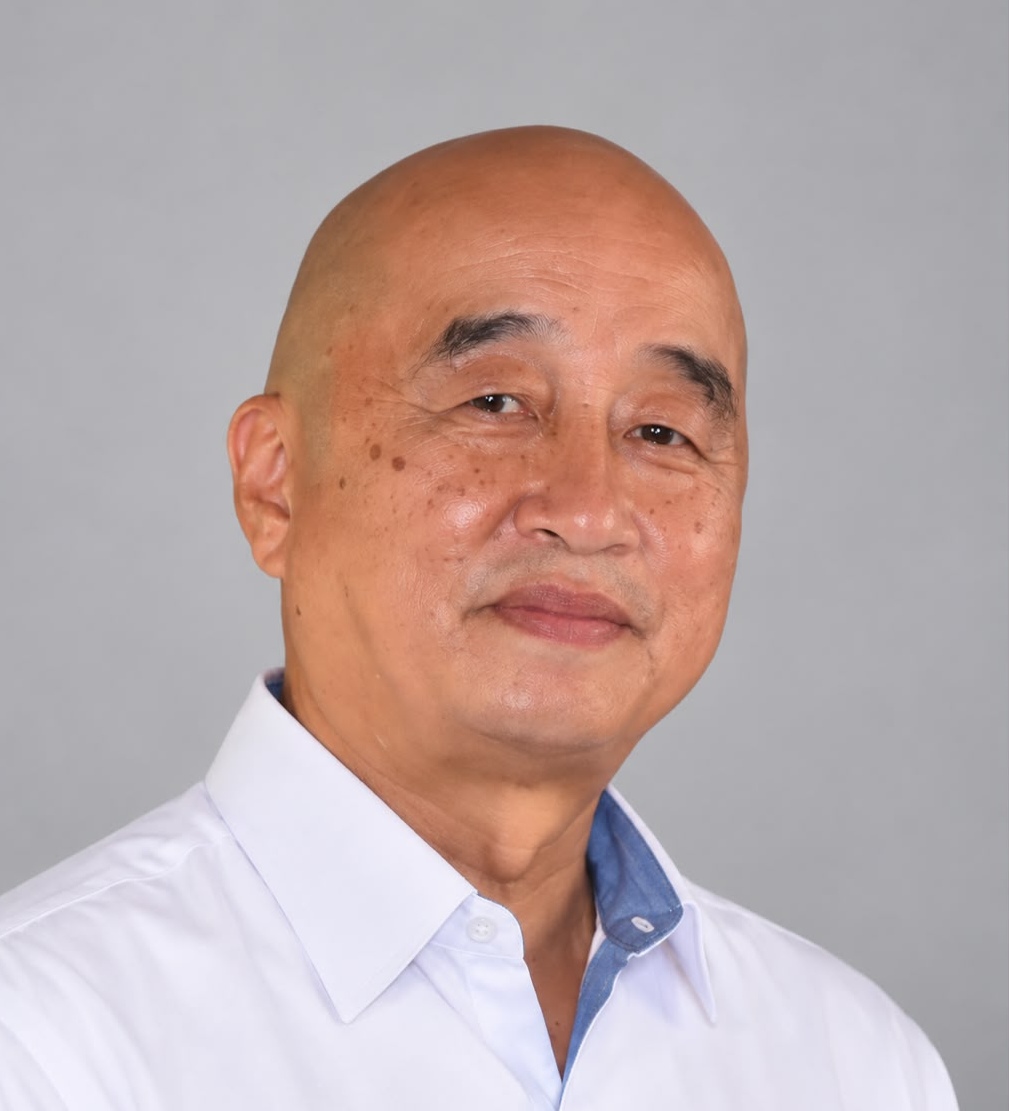
Statement by YB DATUK DONALD PETER MOJUNTIN, Deputy President of UPKO, State Assemblyman for N.26 Moyog
KOTA KINABALU: I take note of the statement by the Minister in the Prime Minister’s Department (Sabah and Sarawak Affairs), YB Datuk Mustapha Sakmud, as reported by Utusan Borneo on 18 October and the Daily Express on 20 October, that the actual amount due to Sabah under its 40% net revenue entitlement has yet to be finalised, and that negotiations are also taking into consideration the Federal Government’s financial capacity.
I appreciate the Federal Government’s efforts to continue negotiations and increase interim payments to Sabah.
However, there is one fundamental principle that we must uphold clearly and firmly.
Sabah’s 40% entitlement is not a question of the Federal Government’s financial capacity or generosity.
It is a right firmly enshrined in the Federal Constitution, and that right must be respected and fulfilled.
We recognise that the Federal Government faces significant fiscal challenges and substantial financial responsibilities.
Indeed, Article 112D of the Federal Constitution itself provides that the financial position of the Federation is among the factors to be considered in reviewing the special grant.
However, I sincerely hope there will be no misunderstanding that leads to the people of Sabah being labelled as selfish or self-centred simply for asserting our constitutional rights, as though we are insensitive to, or fail to appreciate, the fiscal challenges confronting the Federal Government.
Demanding what is rightfully ours under the Constitution is not selfishness. It is a legitimate, principled and just pursuit of what is right.
The people of Sabah fully understand that the Federal Government bears responsibilities towards the entire nation.
But equally, the Federal Government has constitutional obligations towards Sabah that cannot simply be set aside.
What matters most to the people of Sabah at this stage is the clear and unequivocal recognition of Sabah’s 40% constitutional entitlement, followed by a transparent and accurate determination of the actual amount owed by the Federal Government to Sabah, including any outstanding arrears to which Sabah is legally entitled.
This is the fundamental issue that must first be resolved.
First, recognise Sabah’s rights. Then, determine the actual amount owed to Sabah.
Only after that should we discuss the mechanism, timeframe and schedule of payment.
I firmly believe that the people of Sabah are reasonable and responsible enough to understand if payments need to be made progressively, taking into account the nation’s financial circumstances.
However, considerations of affordability must never be allowed to obscure or diminish the actual amount that rightfully belongs to Sabah.
We must make a clear distinction between determining Sabah’s lawful constitutional entitlement and negotiating the mechanism and timetable for fulfilling that entitlement.
The Federation’s financial position must not become a justification for setting aside constitutional obligations or indefinitely delaying the settlement of Sabah’s rights without a clear and definite timeline.
The Kota Kinabalu High Court’s decision on 17 October 2025 further underscores the importance of respecting Sabah’s constitutional rights.
While the ongoing legal process must be respected, negotiations should continue in good faith, with transparency and a firm commitment to justice.
In this regard, I believe the RM1.5 billion interim payment should be acknowledged as a positive step.
However, it must not be regarded as a final or comprehensive settlement of Sabah’s entire 40% entitlement, including the question of outstanding arrears from previous years.
The people of Sabah have every right to know the actual amount due to their state, how that amount is calculated, the status of outstanding arrears, and the timeline for their settlement.
Should negotiations continue to reach an impasse, consideration should also be given to the independent assessor mechanism provided under Article 112D(6) of the Federal Constitution, in accordance with its constitutional provisions.
I believe this issue should not be viewed as a confrontation between Sabah and the Federal Government.
Rather, it presents an opportunity to rebuild and strengthen trust, honour the spirit upon which Malaysia was formed in 1963, and demonstrate that Federal–State relations are founded upon justice, mutual respect and the faithful observance of constitutional commitments.
Sabah is not demanding anything that does not belong to it. Sabah is simply asking for what was promised and guaranteed under the Constitution.
We must also remember that behind the figure of 40% lie the very real needs and aspirations of the people of Sabah — access to clean and reliable water, safer roads, better healthcare facilities, quality education and greater economic opportunities.
This is why the struggle for Sabah’s 40% entitlement goes far beyond legal arguments or political considerations.
It is a struggle for the dignity, welfare and future of the people of Sabah — not only for this generation, but for generations yet to come.
I remain confident that the Sabah State Government, under the leadership of YAB Datuk Seri Panglima Haji Hajiji bin Haji Noor, will continue to pursue this constitutional entitlement consistently, firmly and responsibly, while preserving a constructive and cooperative relationship with the Federal Government.
We can be flexible on the manner of implementation, but we must never compromise on the fundamental principle that Sabah’s constitutional rights must be respected and honoured.
The people of Sabah are not demanding that everything be paid tomorrow. We are simply asking for our rights to be acknowledged, the actual amount owed to be determined, and a clear and binding commitment that those obligations will be fulfilled.
Because ultimately, Sabah’s rights are not meant to be negotiated away until they lose their value.
They are meant to be honoured and fulfilled, so that the people of Sabah can finally experience the benefits that are rightfully theirs.